JSTOR Global Plants Home
  • Home
  • Browse
  • About
  • Access
  • Account
    • Saved Items
    • Profile
  • Log in

Global Plants

Skip to Main Content
  • JSTOR Global Plants Home
  • Global Plants

    • Browse
    • About
    • Access
    • Account
      • Saved Items
      • Profile
Log in
  • Browse
  • About
  • Access
  • Account
    • Saved Items
    • Profile
Advanced Search

Compilation
Hypolepis punctata

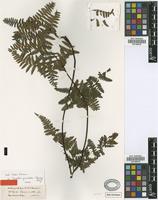
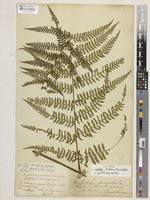
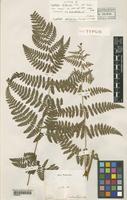
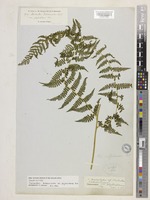
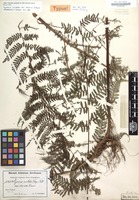
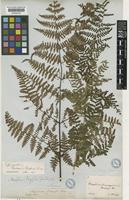
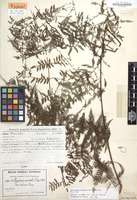
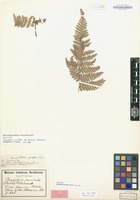
19 Images see all

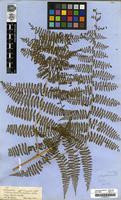
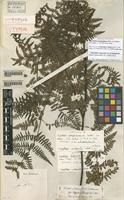
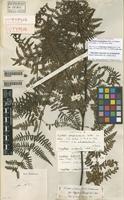
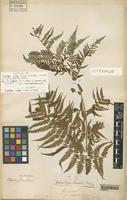
Type of Hypolepis poeppigiana Mett. [family PTERIDOPHYTA]
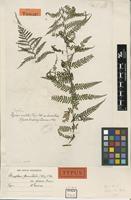
Isotype of Hypolepis beddomei N.C.Nair & S.R.Ghosh [family DENNSTAEDTIACEAE]
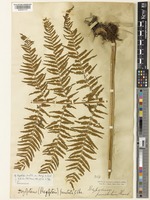
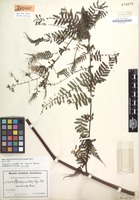
Syntype of Dryopteris punctata (Thunb.) C. Chr. [family DRYOPTERIDACEAE]
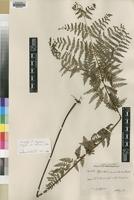
Cheilanthes dicksonioides Endl. var. phyllochaena Kunze [family ADIANTACEAE]
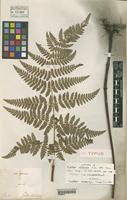
Filed as Hypolepis punctata (Thunb.) Mett. [family DENNSTAEDTIACEAE]
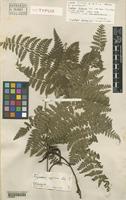
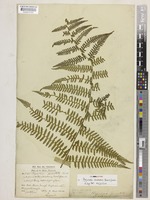
Type of Hypolepis punctata (Thunb.) Mett. var. obscura Brause [family HYPOLEPIDACEAE]
Syntype of Dryopteris punctata (Thunb.) C. Chr. [family DRYOPTERIDACEAE]
Macrothelypteris torresiana (Gaudich.) Ching [family THELYPTERIDACEAE]
Holotype of Hypolepis punctata var. obscura Brause [family POLYPODIACEAE]
Type of Hypolepis poeppigiana Mett. [family DENNSTAEDTIACEAE]
Holotype of Hypolepis punctata var. obscura Brause [family POLYPODIACEAE]
Holotype of Phegopteris punctata var. flaccida Hillebrand [family POLYPODIACEAE]
Isolectotype of Dryopteris punctata (Thunb.) C. Chr. [family DRYOPTERIDACEAE]
Syntype of Dryopteris punctata (Thumb.) C. Chr. [family DRYOPTERIDACEAE]
Isotype of Hypolepis rugosula C.Chr. var. africana [family UNKNOWN]
Isotype of Hypolepis beddomei N.C.Nair & S.R.Ghosh [family DENNSTAEDTIACEAE]
Syntype of Dryopteris punctata (Thumb.) C. Chr. [family DRYOPTERIDACEAE]
Holotype of Hypolepis punctata var. obscura Brause [family POLYPODIACEAE]
Syntype of Dryopteris punctata (Thunb.) C. Chr. [family DRYOPTERIDACEAE]
Previous
Next

Name

Identification
Hypolepis punctata (Thunb.) Mett. [family DENNSTAEDTIACEAE ] (stored under name); Verified by P.K. Higashino, 1981
Related name
  • Polypodium
  • Hypolepis punctata
  • Hypolepis rugosula

Flora

Entry for HYPOLEPIS sparsisora (Schrad.) Kuhn [family DENNSTAEDTIACEAE]
Herbarium
Royal Botanic Gardens, Kew (K)
Collection
Flora of Tropical East Africa
Resource Type
Reference Sources
Entry From
Flora of Tropical East Africa, page 1, (1999) Author: B. Verdcourt, B.Sc., Ph.D.
Names
HYPOLEPIS sparsisora (Schrad.) Kuhn [family DENNSTAEDTIACEAE], Fil. Afr.: 120 (1868); Sim, Ferns S. Afr., ed. 2: 236, t. 117 (1915); R.E. & T.C.E. Fr. in N.B.G.B. 9: 184 (1924); C. Chr. in Dansk Bot. Arkiv 7: 122 (1932); Chiov., Racc. Bot. Miss. Consol. Kenya: 145 (1935); Tardieu in Mém. I.F.A.N. 28: 59, t. 7/1–2 (1953) & Fl. Madag. 5(1): 8, fig. 1/1–2 (1958); Alston, Ferns W.T.A.: 33 (1959); Tardieu, Fl. Cameroun 3, Ptérid.: 95, t. 11/1–2 (1964); Schelpe, F.Z., Pterid.: 92, t. 28 (1970); Faden in U.K.W.F.: 30 (1974); Schelpe & Diniz, Fl. Moçamb., Pterid.: 94 (1979); W. Jacobsen, Ferns S. Afr.: 211, t. 148, map 46 (1983); Pic. Serm. in B.J.B.B. 53: 260 (1983); Schelpe & N.C. Anthony, F.S.A., Pterid.: 87, fig. 23, map 69 (1986); J.E. Burrows, S. Afr. Ferns: 106, t. 16/3, fig. 23/107, map (1990); Kramer in Kubitzki, Fam. Gen. Vasc. Pl. 1: 87, fig. 36 (1990); Faden in U.K.W.F., ed. 2: 24 (1994). Type: South Africa, Cape Province, Hesse (?LE, holo.)
Cheilanthes sparsisora Schrad. [family ADIANTACEAE], in Gött. Gel. Anz. 1818: 918 (1818)
Cheilanthes aspera Kaulf. [family ADIANTACEAE], in Linnaea 6: 186 (1831). Type: South Africa, Cape Peninsula, Table Mt, Ecklon (LZ†, holo., L, iso., BM!, BOL, photo.)
Cheilanthes anthriscifolia [family ADIANTACEAE], [sensu Schltdl., Adumbr. Pl.: 52 (1832) quoad spec. Mundt & Maire, non Willd.]
Hypolepis aspera (Kaulf.) C. Presl [family DENNSTAEDTIACEAE], Tent. Pterid.: 162 (1836) & in Abh. Königl. Böhm. Ges. Wiss., ser. 4, 5: 162 (1837)
Cheilanthes commutata Kunze [family ADIANTACEAE], in Linnaea 10: 542 (1836). Based on C. anthriscifolia sensu Schltdl. Type: South Africa, Roodemuur, between Langekloof & Plettenbergsbai, Drège (?LZ†, holo., K!, iso.)
Hypolepis punctata [family DENNSTAEDTIACEAE], [sensu Hieron. in E.J. 28: 345 (1900) quoad Goetze 287, non (Thunb.) Kuhn]
Hypolepis tenuifolia [family DENNSTAEDTIACEAE], [sensu Peter, F.D.-O.A.: 42 (1929), pro parte, non Bernh.]
Information
Rhizome up to 5 mm in diameter, covered with multicellular brown hairs ± 1 mm long. Fronds erect, 20 cm or more apart with pinnae held horizontally, 1–1.8 m tall but occasionally forming thickets up to 3 m high; stipe straw-coloured, up to 1 m long, slightly or distinctly pubescent, usually finally glabrous; lamina 3–5-pinnatifid; pinnae up to 1 m long, usually less, ovate-deltate, with oblong acute crenate to pinnatifid adnate ultimate segments up to 1 cm long, glabrous except for a few scattered pale hairs on rachis branches and veins above and below, or slightly to distinctly grey-pubescent; rachis pale-brown, glabrous. Sori ± 1 mm in diameter, borne singly on the acroscopic margin of lobes of ultimate segments; false indusium semi-transparent, subentire. Fig. 3.
Range
DISTR. U 2; K 3, 4, 7; T 2, 3, 6, 7
Altitude range
900–2800 m
Distribution
UGANDA Toro District Ruwenzori, Mobuku Valley, 7 Jan. 1939, Loveridge 328!;KENYA Naivasha District Aberdares, S Kinangop, 24 Nov. 1957, Molesworth-Allen 3640!;TANZANIA Moshi District Kilimanjaro, near Bismarck Hut, 8 July 1956, Pichi Sermolli 5156!;UGANDA Kigezi District below L. Mutanda, Nyamapana Swamp, 25 Mar. 1952, Norman 19! & L. Mutanda, Mushongero [Mushengera], 24 May 1963, Kertland !KENYA Kiambu District Gatamayu Forest, 8 Mar. 1964, Verdcourt 3989!;KENYA Teita District Taita Hills, Chawia Bluff, Feb. 1955, H.D. van Someren 855!TANZANIA Lushoto District Amani, Bomole, 23 Nov. 1906, Braun 1432!;TANZANIA Morogoro District NE Uluguru Mts, Kinole, 28 Sept. 1970, Faden et al. 70/673!;TANZANIA Mbeya District Poroto Mts, Ngozi Crater, 16 Oct. 1956, Richards 6534!
Distribution (external)
; Sierra Leone
W Cameroon
Bioko
São Tomé
Congo (Kinshasa) (Kivu)
Rwanda
Burundi
Ethiopia
Malawi
Mozambique
Zimbabwe
South Africa
Madagascar
Mascarenes
Notes
This is by no means such a glabrous plant as sometimes implied – Eggeling speaks of it as ‘whole plant grey hairy’ but it is glabrescent and lacks the rough indumentum of the next species; the stipes are never purple-brown.

Related Materials

  • Terms and Conditions
  • Privacy Policy
  • Cookie Policy
  • Cookie Settings
  • Accessibility
  • Help
  • Contact Us
  • Facebook
  • Twitter
ITHAKA

JSTOR is part of ITHAKA, a not-for-profit organization helping the academic community use digital technologies to preserve the scholarly record and to advance research and teaching in sustainable ways.

©2000-2026 ITHAKA. All Rights Reserved. JSTOR®, the JSTOR logo, JPASS®, Aluka®, and ITHAKA® are registered trademarks of ITHAKA.

╳