JSTOR Global Plants Home
  • Home
  • Browse
  • About
  • Access
  • Account
    • Saved Items
    • Profile
  • Log in

Global Plants

Skip to Main Content
  • JSTOR Global Plants Home
  • Global Plants

    • Browse
    • About
    • Access
    • Account
      • Saved Items
      • Profile
Log in
  • Browse
  • About
  • Access
  • Account
    • Saved Items
    • Profile
Advanced Search

Compilation
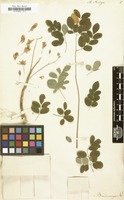
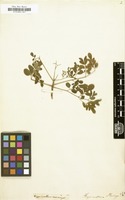
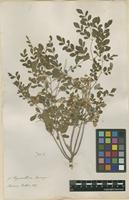
Hyperanthera moringa

3 Images see all

Filed as Hyperanthera moringa [family MORINGACEAE]
Filed as Guilandina indet. [family FABACEAE]
Previous
Next

Name

Identification
Guilandina indet. Not on sheet [family FABACEAE ] (stored under name); Verified by Not on sheet, Hyperanthera moringa (L.) Vahl [family MORINGACEAE ] Verified by Smith, Sir James Edward / Rottler, J.P.,
Related name
  • Hyperanthera moringa
  • Guilandina indet.
Common name
  • Drumstick or horseradish or Ben tree, Flora of North America Vol. 7

Flora

Entry for Moringa oleifera Lamarck [family MORINGACEAE]
Herbarium
Flora of North America (FNA)
Collection
Flora of North America
Resource Type
Reference Sources
Entry From
Flora of North America, Vol 7,
Names
Moringa oleifera Lamarck [family MORINGACEAE], in J. Lamarck et al., Encycl., 1: 398. 1785
Guilandina moringa Linnaeus [family LEGUMINOSAE-CAESALPINIOIDEAE], Sp. Pl., 1: 381. 1753
Hyperanthera moringa (Linnaeus) Vahl [family MORINGACEAE]
Information
Plants 1–10 m, to 40 cm diam. Roots tuberous when young, woody with age. Bark pale gray or tan, smooth or finely rugose. Stems often canelike, becoming pendent with age, glabrous or finely puberulent. Leaves with pungent odor of horseradish; 30–60 cm, leaflets distributed on 4–8 pairs of pinnae; pinnae largest near base of leaf, 2 or 3 pinnate; leaflets 75–150, distalmost pairs represented by pairs of single leaflets along main rachis; blades bright to dark green, (0.5–)1–2(–3) × (0.3–)0.5–1.5(–2) mm, base rounded to cuneate, apex rounded to emarginate, glands 3–5 mm (smaller at blade apex). Panicles (5–)10–25(–35) cm, each flower subtended by glandular bract. Pedicels 5–10(–20) mm; bracteoles 2. Flowers sweet-scented, 2–3 cm; sepals 10–20 × 3–4 mm, proximal ones usually reflexed, usually puberulent, distalmost pair usually largest, ± erect, enclosing banner petal, or ± reflexed; petals cream, 1–2 cm, distalmost banner petal ± erect, others usually ± reflexed; filaments and staminodes 7–10 mm, basally pubescent, adherent distally proximal to banner petal and anthers in a 3-tiered presentation; receptacle cup-shaped, 3–4 mm; gynophore 2–3 mm, appressed to banner petal; ovary 3–5 mm, with 3 ridges. Capsules tan, 10–30(–55) × 1.5–3 cm, apex beaked, 3 (or 4)-angled; valves silvery inside. Seeds pale to dark brown, globular, 3-winged; cotyledons exuding oil when compressed.
Altitude range
0–1000 m;
Distribution
Asia (India)introduced widely elsewhere.USA Ariz.USA Calif.USA Fla.
Discussion
Moringa oleifera is probably native to lowland dry tropical forests of northwestern India; recent collection information is lacking. It is cultivated in tropical countries as an ornamental and agricultural crop. It is occasionally reported as re-seeding along roadways and in other disturbed areas; there are no reports of M. oleifera invading intact habitats.
Moringa oleifera is often mistaken for a papilionoid legume or for a member of the Bignoniaceae. It is easily distinguished from both by stalked glands at the leaf base and at rachis articulations and by its pungent horseradish odor. The three-valved fruits with three-winged seeds also readily distinguish M. oleifera from both of those families. All parts of the plant are of economic importance: leaves are highly nutritious, flowers are edible, seeds contain large quantities of high-quality oil, and presscake remaining after oil extraction contains one of the most powerful plant-derived flocculants known, used for clarifying turbid water. Roots are used as a horseradishlike condiment. Moringa oleifera is extremely fast growing (to 7 m in first year from seed), with fruit yields ca. 10 tons/ha/yr.
Moringa pterygosperma Gaertner is a commonly cited synonym of M. oleifera. However, the name is illegitimate as it is based on Guilandia moringa.
Native/Introduced
introduced;

Related Materials

  • Terms and Conditions
  • Privacy Policy
  • Cookie Policy
  • Cookie Settings
  • Accessibility
  • Help
  • Contact Us
  • Facebook
  • Twitter
ITHAKA

JSTOR is part of ITHAKA, a not-for-profit organization helping the academic community use digital technologies to preserve the scholarly record and to advance research and teaching in sustainable ways.

©2000-2026 ITHAKA. All Rights Reserved. JSTOR®, the JSTOR logo, JPASS®, Aluka®, and ITHAKA® are registered trademarks of ITHAKA.

╳