JSTOR Global Plants Home
  • Home
  • Browse
  • About
  • Access
  • Account
    • Saved Items
    • Profile
  • Log in

Global Plants

Skip to Main Content
  • JSTOR Global Plants Home
  • Global Plants

    • Browse
    • About
    • Access
    • Account
      • Saved Items
      • Profile
Log in
  • Browse
  • About
  • Access
  • Account
    • Saved Items
    • Profile
Advanced Search

Compilation
Hyparrhenia viridescens

5 Images see all

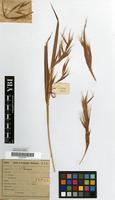
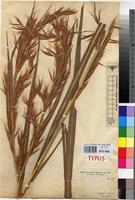
Type of Hyparrhenia viridescens Robyns [family GRAMINEAE]
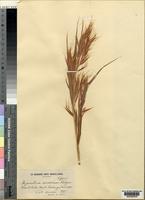
Isotype of Hyparrhenia viridescens Robyns [family POACEAE]
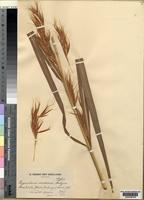
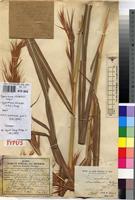
Type of Hyparrhenia viridescens Robyns [family POACEAE]
Previous
Next

Name

Identification
Hyparrhenia viridescens Robyns [family POACEAE ] Verified by Not on sheet, Hyparrhenia schimperi (Hochst. ex A.Rich.) Stapf [family POACEAE ] (stored under name); Verified by Not on sheet,
Related name
  • Hyparrhenia schimperi
  • Hyparrhenia viridescens

Flora

Entry for HYPARRHENIA schimperi (A. Rich.) Stapf [family POACEAE]
Herbarium
Royal Botanic Gardens, Kew (K)
Collection
Flora of Tropical East Africa
Resource Type
Reference Sources
Entry From
Flora of Tropical East Africa, page 451, (1982) Author: W. D. CLAYTON and S.A. RENVOIZE
Names
HYPARRHENIA schimperi (A. Rich.) Stapf [family POACEAE], in F.T.A. 9: 341 (1919); Ann. list grasses Ug.: 24 (1947); R.K.G.: 61 (1958); I.G.U.: 37 (1960); G.T.: 109 (1965). Types: Ethiopia, Shire [Chiré], Quartin Dillon (P, syn.) & Mt. Sholoda [Shelleuda], Schimper 408 (K, isosyn.!)
Andropogon schimperi A. Rich. [family POACEAE], Tent. Fl. Abyss. 2: 466 (1851)
Cymbopogon schimperi (A. Rich.) Rendle [family POACEAE], Cat. Afr. Pl. Welw. 2: 155 (1899)
Hyparrhenia viridescens Robyns [family POACEAE], Fl. Agrost. Congo Belge 1: 182 (1929) & in B.J.B.B. 8: 238 (1930). Type: Zaire, Kambikila, Quarré 295 (K, iso.!)
Information
Robust perennial, forming coarse tufts from a short rhizome; culms 2–4 m. high, up to 8 mm. in diameter, often supported by stilt roots. Leaf-blades up to 60 cm. long, 2 cm. wide. False panicle large, dense, 30–60 cm. long; spatheoles narrowly lanceolate, 2.2–3.2 cm. long, russet-brown, the peduncles up to 1/2 as long(7–15 mm.); racemes 1.2–1.6 cm. long, 6–8-awned per pair (this being the maximum number in a given panicle), at length deflexed; raceme-bases subequal, the upper 0.5–1.5 mm. long, flattened to subterete, stiffly bearded, with a scarious lobe up to 0.6 mm. long at its tip. Homogamous pairs 1 at the base of the lower raceme only. Sessile spikelet 4–6 mm. long, glabrescent to sparsely pubescent; callus cuneate, 0.5–0.8 mm. long, narrowly obtuse to acute; awn 2–3.3 cm. long. Pedicelled spikelet glabrous to shortly and sparsely pilose with, or sometimes without, an awn-point up to 6 mm. long.
Range
DISTR. U1, 3; K3, 4, 6; T2–7 eastern Africa and Ethiopia to Natal
Altitude range
700–1700 m.
Distribution
KENYA Machakos District Kibwezi Plains, 19 Apr. 1938, Bally 8091!KENYA Masai District Owor Oringenai gorge, 14 July 1962, Glover & Samuel 3051!TANZANIA Masai District Lolkisale, 12 June 1965, Leippert 5884!TANZANIA Mpwapwa, 24 June 1947, van Rensburg 471!TANZANIA Morogoro District Lusunguru Forest Reserve, 11 Sept. 1959, Mgaza 310!UGANDA Mbale District near Mt. Elgon, 15 Aug. 1927, Snowden 1168!
Distribution (external)
Madagascar
Notes
H. schimperi is rather indistinctly separated from H. variabilis, of which it may be a tetraploid derivative. It includes specimens with both glabrous and sparsely pilose pedicelled spikelets, which intergrade so gradually that they can scarcely be separated; they do not approach the hoary villous condition found in H. rudis. The scarious rim of the upper raceme-base is very variable, and may, at its extreme, approach the condition found in truly appendaged species, but the latter have few-awned racemes.

Related Materials

  • Terms and Conditions
  • Privacy Policy
  • Cookie Policy
  • Cookie Settings
  • Accessibility
  • Help
  • Contact Us
  • Facebook
  • Twitter
ITHAKA

JSTOR is part of ITHAKA, a not-for-profit organization helping the academic community use digital technologies to preserve the scholarly record and to advance research and teaching in sustainable ways.

©2000-2026 ITHAKA. All Rights Reserved. JSTOR®, the JSTOR logo, JPASS®, Aluka®, and ITHAKA® are registered trademarks of ITHAKA.

╳