JSTOR Global Plants Home
  • Home
  • Browse
  • About
  • Access
  • Account
    • Saved Items
    • Profile
  • Log in

Global Plants

Skip to Main Content
  • JSTOR Global Plants Home
  • Global Plants

    • Browse
    • About
    • Access
    • Account
      • Saved Items
      • Profile
Log in
  • Browse
  • About
  • Access
  • Account
    • Saved Items
    • Profile
Advanced Search

Compilation
Hyparrhenia pilgeriana

14 Images see all

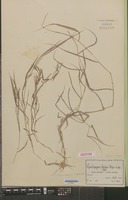
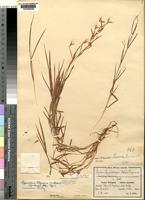
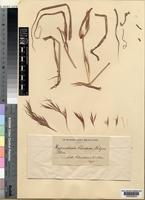
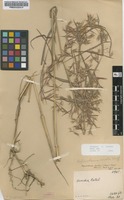
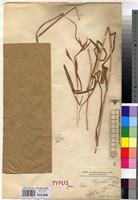
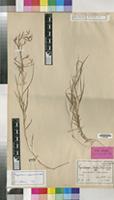
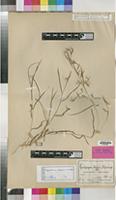
Isotype of Cymbopogon stolzii Pilg. [family GRAMINEAE]
Isotype of Cymbopogon stolzii Pilg. [family POACEAE]
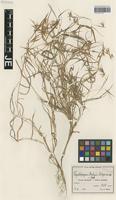
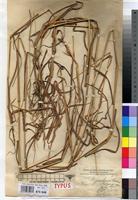
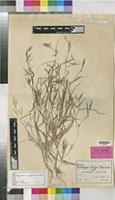
Type of Hyparrhenia claessensii Robyns [family POACEAE]
Type of Cymbopogon stolzii Pilg. [family POACEAE]
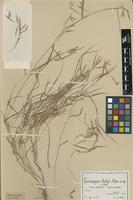
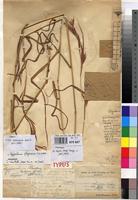
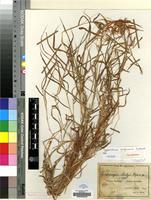
Isotype of Cymbopogon stolzii Pilger [family POACEAE]
Type of Cymbopogon stolzii Pilg. [family GRAMINEAE]
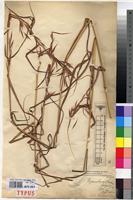
Type of Hyparrhenia claessensii Robyns [family POACEAE]
Isotype of Hyparrhenia claessensii Robyns [family POACEAE]
Filed as Hyparrhenia pilgeriana C.E.Hubb. [family POACEAE]
Type of Hyparrhenia claessensii Robyns [family POACEAE]
Type of Cymbopogon stolzii Pilg. [family GRAMINEAE]
Isotype of Hyparrhenia pilgeriana C.E.Hubb. [family GRAMINEAE]
Previous
Next

Name

Identification
Hyparrhenia claessensii Robyns [family POACEAE ] Verified by Not on sheet, Hyparrhenia pilgeriana C.E.Hubb. [family POACEAE ] (stored under name); Verified by Not on sheet,
Related name
  • Hyparrhenia pilgeriana
  • Cymbopogon stolzii
  • Hyparrhenia claessensii

Flora

Entry for Hyparrhenia pilgeriana C.E. Hubb. [family GRAMINEAE]
Herbarium
Royal Botanic Gardens, Kew (K)
Collection
Flora Zambesiaca
Resource Type
Reference Sources
Entry From
FZ, Vol 10, Part 4, (2002) Author: T. A. Cope
Names
Hyparrhenia pilgeriana C.E. Hubb. [family GRAMINEAE], in Bull. Misc. Inform., Kew 1928: 39 (1928), based on Cymbopogon stolzii Pilg. —Clayton in Kew Bull., Addit. Ser. 2: 53 (1969), as “pilgerana”. —Simon in Kirkia 8: 18, 51 (1971). —Clayton & Renvoize in F.T.E.A., Gramineae: 807 (1982). —Gibbs Russell et al., Grasses South. Africa [Mem. Bot. Surv. S. Africa No. 58]: 186 (1990). TAB. 38. Type from Tanzania.
Cymbopogon stolzii Pilg. [family GRAMINEAE], in Bot. Jahrb. Syst. 54: 286 (1917), non Hyparrhenia stolzii Stapf (1918). Type as above.
Hyparrhenia claessensii Robyns [family GRAMINEAE], Fl. Agrost. Congo Belge 1: 180 (1929). Type from Dem. Rep. Congo.
Hyparrhenia formosa [family GRAMINEAE], auct. non Stapf. —Stent & Rattray in Proc. & Trans. Rhodesia Sci. Assoc. 32: 15 (1933). —Sturgeon in Rhodesia Agric. J. 51: 136 (1954), in part. —Jackson & Wiehe, Annot. Check List Nyasal. Grass.: 44 (1958).
Information
Laxly caespitose perennial arising from a short rhizome clad in scaly white cataphylls; culms up to 60 cm high and 1–2 mm in diameter, slender, weakly ascending or untidily rambling. Leaf sheaths glabrous; leaf laminas 5–10(15) cm × 2–4 mm, usually rather thin, glabrous. False panicle 5–30 cm long, open and scanty, often only with 10–20 raceme-pairs but sometimes denser with more numerous pairs; spatheoles 2–3 mm long, narrowly lanceolate, reddish-brown, glabrous; peduncles 0.9–3 cm long, from half as long as to slightly longer than the spatheole, pilose with yellow or sometimes white hairs above; racemes 1–1.5 cm long, (4)6–7-awned per pair, exserted laterally with or without a sinuous hook in the peduncle, not or tardily deflexed; raceme-bases subequal and up to 0.5 mm long, or rather unequal with the superior up to 1.5 mm long, subterete, typically with a scarious rim up to 0.2 mm long at the summit, or rarely with a short appendage up to 0.5 mm long. Homogamous spikelets 4–5.5 mm long, a single pair at the base of the inferior raceme only, glabrous except for the ciliolate margins. Sessile spikelets 3.5–5 mm long; callus 0.4–0.7 mm long, oblong or sometimes square, broadly rounded at the apex; inferior glume lanceolate, glabrous or white-puberulous; awn 0.7–1.7 cm long, the column white-puberulous. Pedicelled spikelets 4–4.5 mm long, purple, glabrous, awnless or with a short awn-point up to 1.5 mm long; callus scarcely developed; pedicel-tooth obscure.
Habitat
Growing in the uplands in seasonal swamps, on forest margins and on grassy slopes, sometimes descending into the lowlands in deciduous bushland, wooded grassland and old fallow fields
Range
Eastern Africa from Ethiopia southwards to Malawi and then sporadically to South Africa (KwaZulu-Natal).
Altitude range
1050–1500 m.
1500
1050
Distribution
Zambia N Samfya Distr., Lake Bangweulu, Mboyalubambe Is., 10 km south of Lake Chali, 1062 m, 7.iii.1996, Renvoize 5766 (K).Zimbabwe C Harare (Salisbury), 1460 m, 21.iii.1927, Eyles 4768 (K; PRE; SRGH).Malawi N Nyika, 16.vi.1951, Jackson 529 (K).Zambia W Copperbelt Distr., Mufulira, 23.v.1934, Eyles 8393 (K; SRGH).Zimbabwe E Camp site near Chimanimani (Melsetter), 1500 m, 22.v.1972, Simon 2233 (K).Malawi C Mchinji (Fort Manning), Bua River, 31.i.1952, Jackson 721 (K).
Notes
The species is best distinguished from H. cymbaria and H. formosa by its slender straggling habit and relatively long peduncle. The longer spatheoles will separate it from depauperate (and similarly straggling) specimens of H. cymbaria. It bears a superficial resemblance to H. gazensis, but this has longer raceme-bases and awns.

Related Materials

  • Terms and Conditions
  • Privacy Policy
  • Cookie Policy
  • Cookie Settings
  • Accessibility
  • Help
  • Contact Us
  • Facebook
  • Twitter
ITHAKA

JSTOR is part of ITHAKA, a not-for-profit organization helping the academic community use digital technologies to preserve the scholarly record and to advance research and teaching in sustainable ways.

©2000-2026 ITHAKA. All Rights Reserved. JSTOR®, the JSTOR logo, JPASS®, Aluka®, and ITHAKA® are registered trademarks of ITHAKA.

╳