JSTOR Global Plants Home
  • Home
  • Browse
  • About
  • Access
  • Account
    • Saved Items
    • Profile
  • Log in

Global Plants

Skip to Main Content
  • JSTOR Global Plants Home
  • Global Plants

    • Browse
    • About
    • Access
    • Account
      • Saved Items
      • Profile
Log in
  • Browse
  • About
  • Access
  • Account
    • Saved Items
    • Profile
Advanced Search

Compilation
Hyparrhenia claessensii

6 Images see all

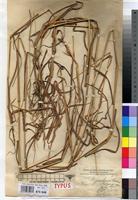
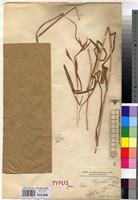
Type of Hyparrhenia claessensii Robyns [family POACEAE]
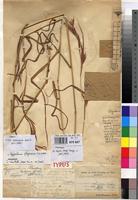
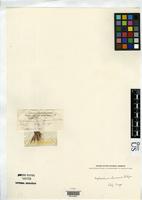
Isotype of Hyparrhenia claessensii Robyns [family POACEAE]
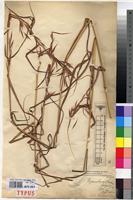
Type of Hyparrhenia claessensii Robyns [family POACEAE]
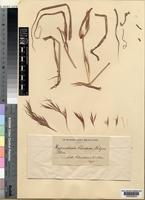
Filed as Hyparrhenia claessensii Robyns, W. 1929 [family POACEAE]
Previous
Next

Name

Identification
Hyparrhenia claessensii Robyns [family POACEAE ] Verified by Not on sheet, Hyparrhenia pilgeriana C.E.Hubb. [family POACEAE ] (stored under name); Verified by Not on sheet,
Related name
  • Hyparrhenia pilgeriana
  • Hyparrhenia claessensii

Flora

Entry for HYPARRHENIA pilgerana C.E. Hubbard [family POACEAE]
Herbarium
Royal Botanic Gardens, Kew (K)
Collection
Flora of Tropical East Africa
Resource Type
Reference Sources
Entry From
Flora of Tropical East Africa, page 451, (1982) Author: W. D. CLAYTON and S.A. RENVOIZE
Names
HYPARRHENIA pilgerana C.E. Hubbard [family POACEAE], in K.B. 1928: 39 (1928), as “ pilgeriana ”; Ann. list grasses Ug.: 24 (1947); F.P.N.A. 3: 65 (1955); R.K.G.: 61 (1958); I.G.U.: 37 (1960); G.T.: 109 (1965). Type: Tanzania, Rungwe District, Kyimbila, Stolz 960 (K, iso.!)
Cymbopogon stolzii Pilg. [family POACEAE], in E.J. 54: 286 (1917), non Hyparrhenia stolzii Stapf (1919). Type as for species
Hyparrhenia claessensii Robyns [family POACEAE], Fl. Agrost. Congo Belge 1: 180 (1929) & in B.J.B.B. 8: 236 (1930). Type: Zaire, Ituri, Claessens 1400 (K, iso.!)
Information
Perennial, forming lax tufts from a short, scaly rhizome; culms slender, 30–60 cm. high, 1–2 mm. diameter, weakly ascending or untidily straggling. Leaf-blades 5–10(–15) cm. long, 2–6 mm. wide. False panicle 5–30 cm. long, open and scanty, often with only 10–20 raceme-pairs but sometimes denser and with more numerous pairs; spatheoles narrowly lanceolate, 2–3 cm. long, reddish brown, the peduncles from 1/2 to slightly exceeding the spatheole, pilose with yellow or sometimes white hairs towards the tip; racemes 1–1.5 cm. long, (4–)6–8-awned per pair, not or tardily deflexed; raceme-bases stiffly bearded, subequal flattened and up to 0.5 mm. long, or rather unequal with the upper subterete and up to 1.5 mm. long, typically with a scarious frill up to 0.3 mm. long at the tip. Homogamous pairs 1 at the base of the lower raceme only. Sessile spikelet 3.5–5 mm. long, glabrous or puberulous; callus oblong or sometimes square, 0.4–0.7 mm. long, obtusely rounded at the base; awn 0.7–1.7 cm. long. Pedicelled spikelet glabrous, purple, awnless or with an awn-point up to 1.5 mm. long.
Range
DISTR. U1–4; K2–6; T1, 2, 4, 7 eastern Africa from Ethiopia to Malawi, with scattered records southward to Natal
Altitude range
800–2700 m.
Distribution
KENYA W. Suk District Cherangani Hills, 13 km. SE. of Kapenguria, 9 Mar. 1958, Bogdan 4513!KENYA Nakuru District Sitoton Camp, 10 Jan. 1946, Bally 4749!KENYA Kericho District Timbilil catchment, Jan. 1961, Kerfoot 2721!TANZANIA Moshi District Machame, Feb. 1928, Haarer 1048!TANZANIA Ufipa District near Sumbawanga, Mbisi Forest, 18 Mar. 1959, McCallum Webster T.133!TANZANIA Iringa District Mufindi, 15 Oct. 1931, R.M. Davies 26!UGANDA Karamoja District Napak, 28 May 1940, A.S. Thomas 3648!UGANDA Kigezi District Chahafi, 15 Oct. 1929, Snowden 1466! & Kisoro, 13 Feb. 1945, Greenway & Eggeling 7130!
Notes
H. pilgerana is distinguished from H. cymbaria and H. formosa by its slender straggling culms and relatively long peduncles. The longer spatheoles also help to separate it from depauperate specimens of H. cymbaria. It bears some resemblance to H. gazensis, being distinguished by its shorter raceme-base and awns.

Related Materials

  • Terms and Conditions
  • Privacy Policy
  • Cookie Policy
  • Cookie Settings
  • Accessibility
  • Help
  • Contact Us
  • Facebook
  • Twitter
ITHAKA

JSTOR is part of ITHAKA, a not-for-profit organization helping the academic community use digital technologies to preserve the scholarly record and to advance research and teaching in sustainable ways.

©2000-2026 ITHAKA. All Rights Reserved. JSTOR®, the JSTOR logo, JPASS®, Aluka®, and ITHAKA® are registered trademarks of ITHAKA.

╳