JSTOR Global Plants Home
  • Home
  • Browse
  • About
  • Access
  • Account
    • Saved Items
    • Profile
  • Log in

Global Plants

Skip to Main Content
  • JSTOR Global Plants Home
  • Global Plants

    • Browse
    • About
    • Access
    • Account
      • Saved Items
      • Profile
Log in
  • Browse
  • About
  • Access
  • Account
    • Saved Items
    • Profile
Advanced Search

Compilation
Hymenoxys ambigens

4 Images see all

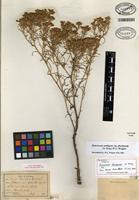
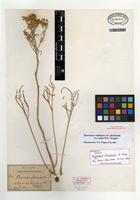
Isotype of Hymenoxys ambigens var. floribunda (A. Gray) W.L. Wagner [family ASTERACEAE]
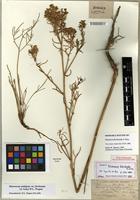
Holotype of Hymenoxys ambigens (S. F. Blake) Bierner var. neomexicana W. L. Wagner [family ASTERACEAE]
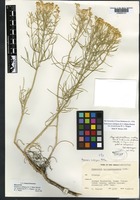
Isotype of Hymenoxys ambigens var. floribunda (A. Gray) W.L. Wagner [family ASTERACEAE]
Previous
Next

Name

Identification
Isotype of Hymenoxys ambigens Not on sheet [family ASTERACEAE ] (stored under name); Verified by W.L. Wagner,, Plummera floribunda A. Gray [family ASTERACEAE ] Verified by Mark W. Bierner,, Isotype of Plummera floribunda A. Gray [family ASTERACEAE ] Verified by Not on sheet,
Related name
  • Plummera floribunda
  • Hymenoxys ambigens
Common name
  • Pinaleno Mountains rubberweed, Flora of North America Vol. 21

Flora

Entry for Hymenoxys ambigens (S. F. Blake) Bierner [family COMPOSITAE]
Herbarium
Flora of North America (FNA)
Collection
Flora of North America
Resource Type
Reference Sources
Entry From
Flora of North America, Vol 21,
Names
Hymenoxys ambigens (S. F. Blake) Bierner [family COMPOSITAE], Sida, 16: 6. 1994
Plummera ambigens S. F. Blake [family COMPOSITAE], J. Wash. Acad. Sci., 19: 276, fig. 1a–i. 1929
Treatment Author(s)
Mark W. Bierner
Information
Perennials, 30–150 cm (poly-carpic, with sparingly branched, woody caudices). Stems 1–3, usually purple-red-tinted proximally, branched distally, glabrous or ± hairy. Leaves: blades simple or lobed (lobes 3–19+), glabrous or sparsely hairy, gland-dotted; mid leaves lobed (lobes 3–19+, terminal lobes 0.7–1.3 mm wide). Heads 25–400+ per plant, in paniculiform to corymbiform arrays. Peduncles 0.4–2 cm, glabrous or ± hairy. Involucres campanulate to narrowly campanulate, 5–7.5 × 2.2–4.5 mm. Phyllaries in 2 series, unequal; outer 3–5, basally connate 1/2–3/4 their lengths, obovate to oblanceolate, 4–6 mm, apices acuminate, acute, obtuse, or rounded; inner 3–5, obovate to oblanceolate, 2.5–4.5 mm, apices acuminate, acute, obtuse, or rounded, sometimes mucronate. Ray florets 3–5; corollas yellow, extending beyond phyllaries, 3.4–6 × 1.7–4 mm. Disc florets 6–15 (functionally staminate); corollas 3–4 mm. Cypselae obconic, 1.7–3.5 mm (hairy, hairs straight or wavy); pappi 0, or of 2–6 ± lanceolate scales 1–2.5 mm.
Distribution
sw United States.

Related Materials

  • Terms and Conditions
  • Privacy Policy
  • Cookie Policy
  • Cookie Settings
  • Accessibility
  • Help
  • Contact Us
  • Facebook
  • Twitter
ITHAKA

JSTOR is part of ITHAKA, a not-for-profit organization helping the academic community use digital technologies to preserve the scholarly record and to advance research and teaching in sustainable ways.

©2000-2026 ITHAKA. All Rights Reserved. JSTOR®, the JSTOR logo, JPASS®, Aluka®, and ITHAKA® are registered trademarks of ITHAKA.

╳