JSTOR Global Plants Home
  • Home
  • Browse
  • About
  • Access
  • Account
    • Saved Items
    • Profile
  • Log in

Global Plants

Skip to Main Content
  • JSTOR Global Plants Home
  • Global Plants

    • Browse
    • About
    • Access
    • Account
      • Saved Items
      • Profile
Log in
  • Browse
  • About
  • Access
  • Account
    • Saved Items
    • Profile
Advanced Search

Compilation
Hydnora africana

17 Images see all

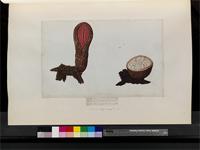
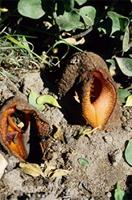
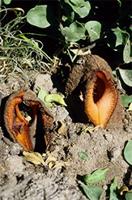
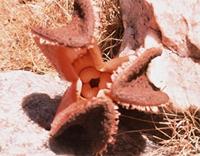
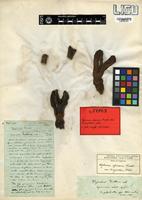
Hydnora africana Thunb., from South Africa
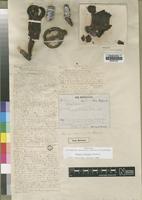
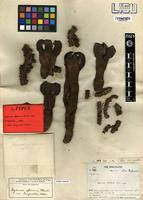
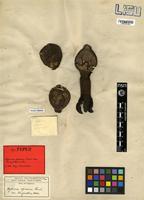
Type of Hydnora africana Welw. var. longicollis [family HYDNORACEAE]
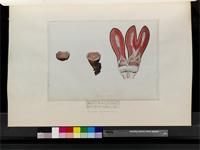
Hydnora africana Thunb., from South Africa
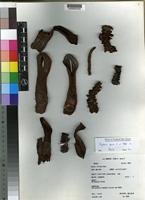
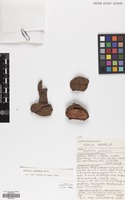
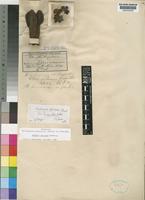
Holotype of Hydnora africana Thunb. [family HYDNORACEAE]
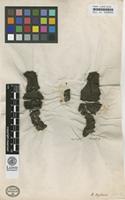
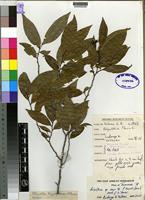
Syntype of Hydnora africana var. longicollis Welw. [family HYDNORACEAE]
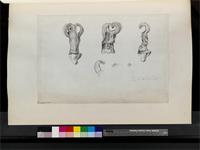
Type of Hydnora africana Thunb. [family HYDNORACEAE]
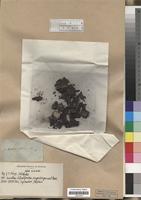
Filed as Hydnora africana Thunb. [family HYDNORACEAE]
Hydnora africana Thunb.
Syntype of Hydnora africana var. longicollis Welw. [family HYDNORACEAE]
Hydnora africana Thunb.
Hydnora africana Thunb., from South Africa
Hydnora africana Thunb.
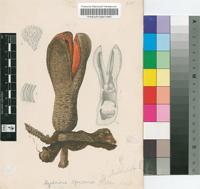
Hydnora abyssinica A.Br. [family HYDNORACEAE]
Holotype of Hydnora africana Thunb. [family HYDNORACEAE]
Filed as Hydnora africana Thunb. [family HYDNORACEAE]
Hydnora africana Thunb.
Syntype of Hydnora africana var. longicollis Welw. [family HYDNORACEAE]
Previous
Next

Name

Identification
Hydnora africana Thunb. [family HYDNORACEAE ]
Related name
  • Hydnora africana

Flora

Entry for HYDNORA africana Thunb. [family HYDNORACEAE]
Herbarium
Royal Botanic Gardens, Kew (K)
Collection
Flora Capensis
Resource Type
Reference Sources
Entry From
Flora Capensis, Vol 5, page 485, (1912) Author: By A. W. HILL.
Names
HYDNORA africana Thunb. [family HYDNORACEAE], in Vet. Akad. Handl. Stockh. 1775, 69, t. 2, figs. 1–3, and 1777, 144, t. 4, figs. 1–2;—Thunb. Nov. Gen. Pl. 24, and Fl. Cap. ed. Schultes, 499; F. Meyer in Nov. Act. Acad. Nat. Cur. xvi. 2, 775, t. 58; R. Br. in Trans. Linn. Soc. xix. 234, 245, tt. 27–30; Wedd. in Ann. Sc. Nat. 3 me sér. xiv. 173, t. 8, figs. 5–10; Chatin, Anat. t. 92 bis; Griff. in Trans. Linn. Soc. xix. 319; Hook. f. in DC. Prodr. xvii. 109; Marloth in Trans. S. Afr. Phil. Soc. xvi. 465, with fig.
HYDNORA Acharii Hook. f. [family HYDNORACEAE], l.c.
Aphyteia Hydnora Acharius [family ], Diss. de Planta Aphyteia, 1776, 10, with plate, and in Linn. Amœn. Acad. viii. 315; Syst. Veg. ed. xiv. 609; Gærtn. De Fruct. ii. 262, t. 137, fig. 3; Lam. Illustr. t. 568; Tratt. Archiv. ii. 145, t. 190.
Information
rhizome horizontal angular, tuberculate, 1/4– 3/4 in. in diam.; tubercles obtuse; roots absent; flower erect, sessile or shortly pedunculate; perianth fleshy, tubular, flesh-coloured, externally rugose, smooth within, 5–6 in. long; segments 3 or very rarely 4, 2–3 in. long, oblong-ovate, subacute, apices inflexed, connivent, margins 1/2– 3/4 in. thick, furnished with ciliate ramenta, a large snow-white spongy body is present on the inner side of each segment; staminal column inserted below the middle of the perianth-tube forming a very short subcylindric ring; anthers numerous 2-celled, with the cells opening extrorsely and introrsely; ovary slightly broader than the perianth-tube; stigma short, cushion-like; fruit 3–4 in. in diam., thick, fleshy, subtrilobed. null
Distribution
CENTRAL REGION Jansenville Div.; Zwartruggens, parasitic on roots of Euphorbia, MacOwan, Herb. Austr.-Afr., 1724!COAST REGION Robertson Div.; Karoo near Kokmans Kloof, Mund! Karoo, on roots of Euphorbia and Cotyledon, Thunberg.SOUTH AFRICA without locality, Ludwig, Zeyher, 1511!
Notes
“ Planta Aphyteia ,” mentioned in DC. Prodr. xvii. 109, is the title of the dissertation by Acharius, and is not used by him as a plant name. Marloth (l.c.) draws attention to a white spongy body on the inner face of each perianth-segment, which is eaten by a beetle (Dermestes rulpinus), the insect responsible for the pollination of the flower. The white body on decaying emits an offensive odour of putrefaction.

Related Materials

  • Terms and Conditions
  • Privacy Policy
  • Cookie Policy
  • Cookie Settings
  • Accessibility
  • Help
  • Contact Us
  • Facebook
  • Twitter
ITHAKA

JSTOR is part of ITHAKA, a not-for-profit organization helping the academic community use digital technologies to preserve the scholarly record and to advance research and teaching in sustainable ways.

©2000-2026 ITHAKA. All Rights Reserved. JSTOR®, the JSTOR logo, JPASS®, Aluka®, and ITHAKA® are registered trademarks of ITHAKA.

╳