JSTOR Global Plants Home
  • Home
  • Browse
  • About
  • Access
  • Account
    • Saved Items
    • Profile
  • Log in

Global Plants

Skip to Main Content
  • JSTOR Global Plants Home
  • Global Plants

    • Browse
    • About
    • Access
    • Account
      • Saved Items
      • Profile
Log in
  • Browse
  • About
  • Access
  • Account
    • Saved Items
    • Profile
Advanced Search

Compilation
Hybanthus hirtus

3 Images see all

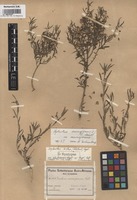
Syntype of Hybanthus hirtus (Klotzsch) Engl. var. glabrescens Engl. [family VIOLACEAE]
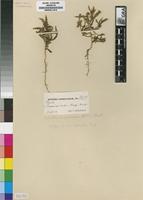
Isotype of Hybanthus hirtus (Klotzsch) Engl. var. glabrescens Engl. [family VIOLACEAE]
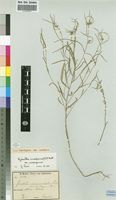
Isosyntype of Hybanthus hirtus Engl. var. klotzschii Engl. [family VIOLACEAE]
Previous
Next

Name

Identification
Hybanthus enneaspermus Not on sheet [family VIOLACEAE ] (stored under name); Verified by Paiva, J., 1967 Hybanthus hirtus Engl. [family VIOLACEAE ] Verified by Not on sheet, Ionidium enneaspermum Vent. [family VIOLACEAE ] Verified by Not on sheet,
Related name
  • Hybanthus hirtus
  • Ionidium enneaspermum
  • Hybanthus enneaspermus

Flora

Entry for HYBANTHUS enneaspermus (L.) F. Muell. [family VIOLACEAE]
Herbarium
Royal Botanic Gardens, Kew (K)
Collection
Flora Somalia
Resource Type
Reference Sources
Entry From
Flora Somalia, Vol 1, (1993) Author: by M. Thulin [updated by M. Thulin 2008]
Names
HYBANTHUS enneaspermus (L.) F. Muell. [family VIOLACEAE], (1876).
HYBANTHUS hildebrandtii Engl. [family VIOLACEAE], (1919);. type: N2, “Serrut”, near “Meid”, Hildebrandt 1363 (B holo., destr.).
HYBANTHUS hirtus Engl. var. glabrescens [family VIOLACEAE], Bot. Jahrb. 55: 399 (1919);. types from Kenya, Tanzania, Mozambique, Dem. Rep. Congo, South Africa and Somalia: N1, Lort Phillips & Cole s.n. (BM syn.).
Information
Annual or perennial herb, or a subshrub, glabrous to pubescent. Leaves alternate, with blade linear to oblanceolate, 5–80 x 1–14 mm, narrowing below into a petiole-like base, acute to subobtuse at the apex, subentire to crenate-serrate, glabrous to pubescent. Flowers solitary, axillary; pedicels 5–15 mm long, with a pair of subulate bracteoles. Sepals lanceolate, 2.5–4 mm long, glabrous or pubescent. Petals pink, violet or white, the lowermost 8–19 mm long and much larger than the others. Capsule 5–8 mm long, usually glabrous.
Range
N1–3; C1, 2; S1–3 widespread in Africa, also in Asia.
Altitude range
50–1500 m.
Distribution
SOMALIA Hansen & Heemstra 6312; Bally 11151; Gillett & Hemming 24179.
Notes
Din-din, habmale (Som.). A very variable taxon that has been subdivided into a number of infraspecific taxa in East Africa (see Grey-Wilson in Kew Bull. 36: 103 (1981) and 39: 771 (1984). Most Somali plants probably belong to the widespread and ± weedy var. enneaspermus, but there are also a number of deviating obviously indigenous forms in need of further study. Hansen & Heemstra 6312 from N2–3 (8°25’N, 48°45’E) is a form with broadly cuneate to rounded leaf-bases, Thulin, Hedrén & Abdi Dahir 7443A is a form with linear leaves from coastal dunes in C1, and Thulin, Hedrén & Abdi Dahir 7584 and 7658 represent a densely pubescent, small-flowered form from shallow soil over limestone in S1.

Related Materials

  • Terms and Conditions
  • Privacy Policy
  • Cookie Policy
  • Cookie Settings
  • Accessibility
  • Help
  • Contact Us
  • Facebook
  • Twitter
ITHAKA

JSTOR is part of ITHAKA, a not-for-profit organization helping the academic community use digital technologies to preserve the scholarly record and to advance research and teaching in sustainable ways.

©2000-2026 ITHAKA. All Rights Reserved. JSTOR®, the JSTOR logo, JPASS®, Aluka®, and ITHAKA® are registered trademarks of ITHAKA.

╳