JSTOR Global Plants Home
  • Home
  • Browse
  • About
  • Access
  • Account
    • Saved Items
    • Profile
  • Log in

Global Plants

Skip to Main Content
  • JSTOR Global Plants Home
  • Global Plants

    • Browse
    • About
    • Access
    • Account
      • Saved Items
      • Profile
Log in
  • Browse
  • About
  • Access
  • Account
    • Saved Items
    • Profile
Advanced Search

Compilation
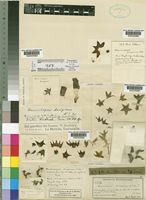
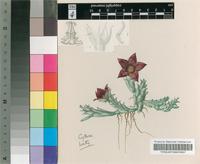
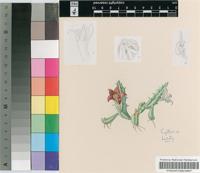
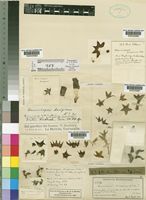
Huerniopsis decipiens

6 Images see all

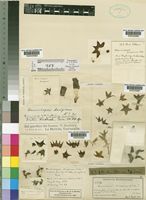
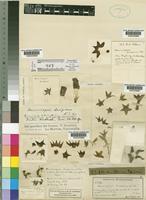
Huerniopsis decipiens N.E.Br. [family ASCLEPIADACEAE]
Huerniopsis decipiens N.E.Br.
Huerniopsis decipiens N.E.Br. [family ASCLEPIADACEAE]
Type of Huerniopsis decipiens N.E.Br. [family ASCLEPIADACEAE]
Previous
Next

Name

Identification
Huerniopsis decipiens N.E.Br. [family APOCYNACEAE ]
Related name
  • Huerniopsis decipiens

Flora

Entry for HUERNIOPSIS decipiens N. E. Br. [family ASCLEPIADACEAE]
Herbarium
Royal Botanic Gardens, Kew (K)
Collection
Flora Capensis
Resource Type
Reference Sources
Entry From
Flora Capensis, Vol 4, page 518, (1909) Author: By N. E. BROWN.
Names
HUERNIOPSIS decipiens N. E. Br. [family ASCLEPIADACEAE], in Journ. Linn. Soc. Bot. xvii. 171, t. 12, figs. 9–13;—K. Schum. in Engl. und Prantl, Pflanzenfam. iv. ii. 277; Schlechter in Journ. Bot. 1898, 476; N. E. Br. in Dyer, Fl. Trop. Afr. iv. i. 499.
Information
stems decumbent, more or less clavate, 1–3 in. long, 1/3– 1/2 in. thick, obtusely 4-angled, with spreading teeth 1–1 1/2 lin. long, glabrous, dull green or purplish tinted; teeth with a minute tooth on each side at the base of the ultimately marcescent tips; flowers 2–4 together at the middle or towards the top of the young stems, opening successively; pedicels 1–3 lin. long, stout, glabrous; sepals 1/4– 1/3 in. long, lanceolate, acuminate, glabrous; corolla in bud glabrous, ellipsoid, acuminate, 5-angled, when expanded about 1 in. in diam., glabrous outside and within, fringed at the base of the lobes with a few vibratile clavate dark purple hairs, outside pale greyish-green spotted and streaked with purplish-grey, inside brownish-red or rich brownish-crimson, more or less mottled with yellow, the intensity of colour varying even in flowers of the same cluster; tube 4–5 lin. long, and as much in diam., campanulate; lobes 4–5 lin. long, 3–4 lin. broad at the base, deltoid-ovate, acuminate or very acute, recurved; corona-lobes about 2 1/2 lin. long, very stout, nearly square in transverse section at the lower adnate part, with subulate acute connivent-erect tips much exceeding the anthers, purplish on the back and at the apex, yellowish on the slightly concave sides below the middle. null
Range
Also in Tropical German South-west Africa.
Distribution
KALAHARI REGION Griqualand East; near Griquatown, Pillans, 1313! near Douglas, Pillans. Bechuanaland; near Vryburg, Miss Fry in Herb. Pillans, 122!SOUTH AFRICA without locality, MacOwan, 2246! and cultivated specimens!
Notes
Described from living plants. Under cultivation the flowers emit their very nauseous odour most strongly during the evening, the next morning it has almost disappeared, so this plant is probably fertilised by a late-flying insect. The corona-lobes secrete a sweet fluid copiously upon their backs and sides.

Related Materials

  • Terms and Conditions
  • Privacy Policy
  • Cookie Policy
  • Cookie Settings
  • Accessibility
  • Help
  • Contact Us
  • Facebook
  • Twitter
ITHAKA

JSTOR is part of ITHAKA, a not-for-profit organization helping the academic community use digital technologies to preserve the scholarly record and to advance research and teaching in sustainable ways.

©2000-2026 ITHAKA. All Rights Reserved. JSTOR®, the JSTOR logo, JPASS®, Aluka®, and ITHAKA® are registered trademarks of ITHAKA.

╳