JSTOR Global Plants Home
  • Home
  • Browse
  • About
  • Access
  • Account
    • Saved Items
    • Profile
  • Log in

Global Plants

Skip to Main Content
  • JSTOR Global Plants Home
  • Global Plants

    • Browse
    • About
    • Access
    • Account
      • Saved Items
      • Profile
Log in
  • Browse
  • About
  • Access
  • Account
    • Saved Items
    • Profile
Advanced Search

Compilation
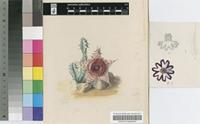
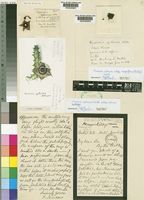
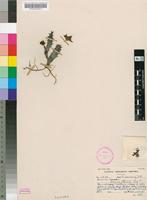
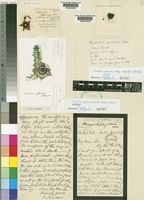
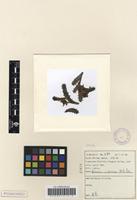
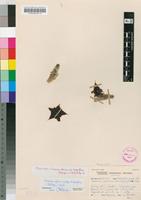
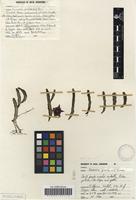
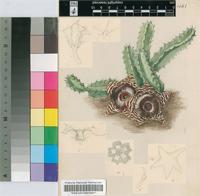
Huernia zebrina

8 Images see all

Huernia zebrina N.E.Br. subsp. magniflora (E.Phillips) L.C.Leach
Lectotype of Huernia zebrina N.E.Br. subsp. zebrina [family ASCLEPIADACEAE]
Type of Huernia confusa E.Phillips [family APOCYNACEAE]
Huernia zebrina N.E.Br. [family ASCLEPIADACEAE]
Filed as Huernia zebrina N.E.Br. [family APOCYNACEAE]
Holotype of Huernia zebrina N.E.Br. subsp. magniflora (E.Phillips) L.C.Leach [family APOCYNACEAE]
Filed as Huernia zebrina N.E.Br. [family APOCYNACEAE]
Huernia zebrina N.E.Br. subsp. zebrina
Previous
Next

Name

Identification
Huernia zebrina N.E.Br. [family APOCYNACEAE ]
Related name
  • Huernia zebrina

Flora

Entry for HUERNIA zebrina N. E. Br. [family ASCLEPIADACEAE]
Herbarium
Royal Botanic Gardens, Kew (K)
Collection
Flora Capensis
Resource Type
Reference Sources
Entry From
Flora Capensis, Vol 4, page 518, (1909) Author: By N. E. BROWN.
Names
HUERNIA zebrina N. E. Br. [family ASCLEPIADACEAE]
Information
stems 2–3 in. high, 4–5 lin. in diam. without the teeth, 5-angled? green; angles compressed, with stout conical acute spreading teeth 2–2 1/2 lin. long; flowers 2 (or more?) together near the base of the young stems, successively developed; pedicels 6–7 lin. long, glabrous; sepals 3–4 lin. long, spreading, subulate-acuminate from an ovate-lanceolate base, glabrous; corolla 1 1/2–1 3/4 in. in diam., puberulous on the lobes within, elsewhere glabrous; tube very shortly campanulate, constricted and about 1/4 in. in diam. at the mouth; limb slightly saucer-shaped very abruptly spreading from the tube, raised around its mouth into a broad thick convex ring; lobes about 5 lin. long and 1/2 in. broad at the base, deltoid, very acute; inner surface sulphur-yellow or pale greenish-yellow, marked with transverse purple-brown broken bands which pass into spots upon the smooth shining annulus, and in the only dried flower seen are very evident on the back of the lobes; outer corona 5-lobed; lobes contiguous, 1/2– 2/3 lin. long, 1 1/3 lin. broad, transversely oblong, subtruncate with a notch at the middle; inner corona-lobes scarcely 1/2 lin. long, deltoid-lanceolate, acute, with a dorsal transverse ridge at the base, closely incumbent upon the backs of the anthers and not produced beyond them. null
Distribution
EASTERN REGION “received from my daughter-in-law at Eshowe, Zululand, but I have as yet had no particulars as to where it was found,” Mrs. K. Saunders!
Notes
A well-marked species, easily recognised by the zebra-like markings on the pubescent corolla-lobes.

Related Materials

  • Terms and Conditions
  • Privacy Policy
  • Cookie Policy
  • Cookie Settings
  • Accessibility
  • Help
  • Contact Us
  • Facebook
  • Twitter
ITHAKA

JSTOR is part of ITHAKA, a not-for-profit organization helping the academic community use digital technologies to preserve the scholarly record and to advance research and teaching in sustainable ways.

©2000-2026 ITHAKA. All Rights Reserved. JSTOR®, the JSTOR logo, JPASS®, Aluka®, and ITHAKA® are registered trademarks of ITHAKA.

╳