JSTOR Global Plants Home
  • Home
  • Browse
  • About
  • Access
  • Account
    • Saved Items
    • Profile
  • Log in

Global Plants

Skip to Main Content
  • JSTOR Global Plants Home
  • Global Plants

    • Browse
    • About
    • Access
    • Account
      • Saved Items
      • Profile
Log in
  • Browse
  • About
  • Access
  • Account
    • Saved Items
    • Profile
Advanced Search

Compilation
Honckenya ficifolia

8 Images see all

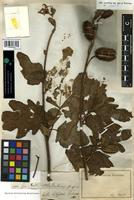
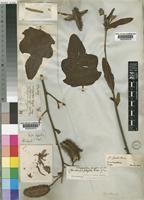
Isotype of Honckenya ficifolia Willd. [family TILIACEAE]
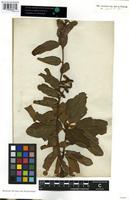
Clappertonia ficifolia (Willd.) Decne. [family TILIACEAE]
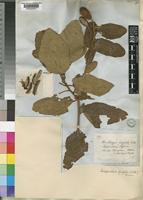
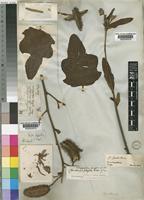
Isotype of Honckenya ficifolia Willd. [family TILIACEAE]
Clappertonia ficifolia (Willd.) Decne. [family TILIACEAE]
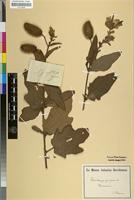
Filed as Honckenya ficifolia Willd. [family TILIACEAE]
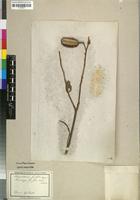
Filed as Honckenya ficifolia [family CARYOPHYLLACEAE]
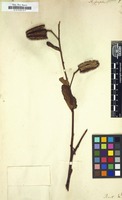
Clappertonia ficifolia (Willd.) Decne. [family TILIACEAE]
Type? of Clappertonia ficifolia (Willd.) DC. [family TILIACEAE]
Previous
Next

Name

Identification
Clappertonia ficifolia (Willd.) Decaisne [family TILIACEAE ] (stored under name); Verified by Not on Sheet, Isotype of Honckenya ficifolia Willd. [family TILIACEAE ] Verified by Not on Sheet,
Related name
  • Clappertonia ficifolia
  • Honckenya ficifolia

Flora

Entry for CLAPPERTONIA ficifolia (Willd.) Decne. [family TILIACEAE]
Herbarium
Royal Botanic Gardens, Kew (K)
Collection
Flora of Tropical East Africa
Resource Type
Reference Sources
Entry From
Flora of Tropical East Africa, page 1, (2001) Author: C. WHITEHOUSE, M. CHEEK, S. ANDREWS & B. VERDCOURT
Names
CLAPPERTONIA ficifolia (Willd.) Decne. [family TILIACEAE], in Deless., Icon. Sel. Pl. 5: t. 1 (1846); F.P.N.A. 1: 574 (1948); T.T.C.L.: 613 (1949); F.P.S. 1: 215, fig. 117 (1950); C.F.A. 1: 238 (1951); F.W.T.A., ed. 2, 1: 310 (1958); F.F.N.R.: 232 (1962); Wild in F.Z. 2: 80, t. 7 (1963); R. Wilczek in F.C.B. 10: 78 (1963); Wild & Gonç. in Fl. Moçamb. 28: 54 (1969); F.P.U., ed. 2: 59 (1971); Hepper, W. Afr. Herb. Isert & Thonning: 124 (1976). Type: Benin [Dahomey], Ouidah, Isert s.n. (B-W, 7249, holo., C, iso.)
Honckenya ficifolia Willd. [family ], in Usteri, Del. Op. Bot. 2: 201, t. 4 (1793); Mast. in F.T.A. 1: 260 (1868); K. Schum. in P.O.A. C: 262 (1895); Hook.f. in Bot. Mag.: t. 7836 (1901); Burret in Z.A.E.: 495 (1912); V.E. 3(2): 351, fig. 169 (1921); Burret in N.B.G.B. 9: 862 (1926); F.W.T.A. 1: 241 (1927)
Information
Shrub 0.8–3 m tall, branched; branchlets reddish when young, stellate-tomentellous with fulvous hairs. Leaves ovate to oblong, 4–15 cm long, 1.2–12 cm wide, rounded at the apex, rounded to subcordate at the base, the lower 3–5-lobed, irregularly toothed, subcoriaceous, puberulous or scabrid above, tomentellous to densely white-pubescent beneath; domatia absent; stipules lanceolate, 0.8–1.2 cm long, pubescent and ciliate, persistent; petiole 0.5–9 mm long, tomentellous. Inflorescences up to 15 cm long, tomentellous; primary and secondary peduncles 1–3.5 cm long; pedicels 2–10 mm long. Sepals pinkish to purplish red, oblong, up to 3.6 cm long, 6 mm wide with apical broad rounded projection, tomentellous. Petalsbright pink, purple or blue-mauve, ± round, up to 3 cm long, 2 cm wide, clawed. Fertile stamens 16, yellow or pink, the inner 8 of which are the longest. Ovary oblong, 4–8-locular, setose with dense yellow hairs; style pink, glabrous; stigmas pink, 6–7, erect or spreading. Capsules 3–7 cm long, 1.8–2.5 cm wide, entirely covered with pilose prickles, each with a stiff seta at apex. Seeds greyish, subglobose, ± 2 mm diameter, slightly flattened, smooth. Fig. 16.
Range
DISTR. U 4 also cultivated in Sri Lanka, Singapore, Borneo and New Guinea (and doubtless in many other tropical gardens)
Altitude range
1105–1200 m
Distribution
UGANDA Masaka District NW side of L. Nabugabo, 9 Oct. 1953, Drummond & Hemsley 4685! & Sese Is., Bukasa, 7 June 1932, A.S. Thomas 141! & Sese Is., ?Bekeke (? Bubeke), July 1945, Purseglove 1726!
Distribution (external)
; Senegal
Guinea
Sierra Leone
Liberia
Ivory Coast
Ghana
Togo
Benin
Nigeria
Cameroon
Central African Republic
Congo (Kinshasa)
Burundi
Sudan
Angola
Mozambique;

Related Materials

  • Terms and Conditions
  • Privacy Policy
  • Cookie Policy
  • Cookie Settings
  • Accessibility
  • Help
  • Contact Us
  • Facebook
  • Twitter
ITHAKA

JSTOR is part of ITHAKA, a not-for-profit organization helping the academic community use digital technologies to preserve the scholarly record and to advance research and teaching in sustainable ways.

©2000-2026 ITHAKA. All Rights Reserved. JSTOR®, the JSTOR logo, JPASS®, Aluka®, and ITHAKA® are registered trademarks of ITHAKA.

╳