JSTOR Global Plants Home
  • Home
  • Browse
  • About
  • Access
  • Account
    • Saved Items
    • Profile
  • Log in

Global Plants

Skip to Main Content
  • JSTOR Global Plants Home
  • Global Plants

    • Browse
    • About
    • Access
    • Account
      • Saved Items
      • Profile
Log in
  • Browse
  • About
  • Access
  • Account
    • Saved Items
    • Profile
Advanced Search

Compilation
Homeria humilis

2 Images see all

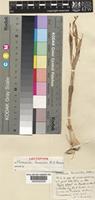
Lectotype of Homeria humilis N.E.Br. [family IRIDACEAE]
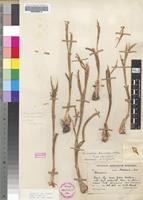
Isolectotype of Homeria humilis N.E.Br. [family IRIDACEAE]
Previous
Next

Name

Identification
Homeria pallida Baker [family IRIDACEAE ] (stored under name); Verified by Unknown, Homeria humilis N.E.Br. [family IRIDACEAE ] Verified by Unknown,
Related name
  • Moraea pallida
  • Homeria humilis
  • Homeria pallida

Flora

Entry for Homeria pallida Baker [family IRIDACEAE]
Herbarium
Royal Botanic Gardens, Kew (K)
Collection
Flora Zambesiaca
Resource Type
Reference Sources
Entry From
FZ, Vol 12, Part 4, (1993) Author: P. Goldblatt
Names
Homeria pallida Baker [family IRIDACEAE], Handb. Irid.: 75 (1892). — Goldblatt in Ann. Missouri Bot. Gard. 68: 445 (1981). TAB. 7 fig. B. Type from South Africa (Cape Province).
Moraea glauca J.M. Wood & M.S. Evans [family IRIDACEAE], in J. Bot. 35: 352 (1897). Type from South Africa (Natal).
Homeria glauca J.M. Wood & M.S. Evans N.E. Br. [family IRIDACEAE], in Trans. Roy. Soc. S. Africa 17: 350 (1929).
Homeria townsendii N.E. Br. [family IRIDACEAE], in Trans. Roy. Soc. S. Africa 17: 351 (1929). Type from South Africa (Transvaal).
Homeria humilis N.E. Br. [family IRIDACEAE], in Trans. Roy. Soc. S. Africa 17: 351 (1929). Type from South Africa (Transvaal).
Homeria mossii N.E. Br. [family IRIDACEAE], in Trans. Roy. Soc. S. Africa 17: 351 (1929). Type from South Africa (Transvaal).
Homeria pura N.E. Br. [family IRIDACEAE], in Trans. Roy. Soc. S. Africa 17: 351 (1929). Type from South Africa (Orange Free State).
Information
Plants (10)20–40 cm high. Corms 1–2 mm in diameter; tunics of coarse black fibres. Foliage leaf solitary, much exceeding the stem in length and 5–15 mm wide, often bent and trailing, usually sheathing the lower part of the stem, often somewhat glaucous; cauline leaves entirely sheathing and similar to the inflorescence spathes. Stem usually branched. Rhipidia solitary; spathes 3.5–5(6) cm long, the inner slightly longer than the outer. Flowers yellow (rarely pink), darker toward the centre and with minute dark-greenish spots near the bases of the tepals, lasting for one day; tepals 18–24(27) mm long, claws c. 3 mm long and appressed to the filament column, limb 5–8(12) mm wide. Filaments 5–7 mm long, partly united into a slender column, free and diverging in the upper 1.5–2 mm; anthers straight and diverging, becoming arched after anthesis, 4–6 mm long, exceeding the style branches. Ovary c. 10 mm long, style branches 5–6 mm long and c. 1 mm wide with crests c. 1 mm long, stigma bilobed. Capsules 1–2 cm long, oblong. Seeds angular.
Habitat
In open grassland, sometimes in vleis, or in rocky sites.
Distribution
Botswana SE near Gaborone Dam, ix.1967, Lambrecht 324 (K; SRGH). Mochudi, Rogers 6229 (Z).
Distribution (external)
central Namibia
South Africa (N Cape Province, Orange Free State, Transvaal, Natal)
Lesotho
Notes
Flowering in August to October, usually before the rains.Known to be toxic to stock, especially in the early stages of growth; fatal if eaten in any quantity.

Related Materials

  • Terms and Conditions
  • Privacy Policy
  • Cookie Policy
  • Cookie Settings
  • Accessibility
  • Help
  • Contact Us
  • Facebook
  • Twitter
ITHAKA

JSTOR is part of ITHAKA, a not-for-profit organization helping the academic community use digital technologies to preserve the scholarly record and to advance research and teaching in sustainable ways.

©2000-2026 ITHAKA. All Rights Reserved. JSTOR®, the JSTOR logo, JPASS®, Aluka®, and ITHAKA® are registered trademarks of ITHAKA.

╳