JSTOR Global Plants Home
  • Home
  • Browse
  • About
  • Access
  • Account
    • Saved Items
    • Profile
  • Log in

Global Plants

Skip to Main Content
  • JSTOR Global Plants Home
  • Global Plants

    • Browse
    • About
    • Access
    • Account
      • Saved Items
      • Profile
Log in
  • Browse
  • About
  • Access
  • Account
    • Saved Items
    • Profile
Advanced Search

Compilation
Homalium dentatum

6 Images see all

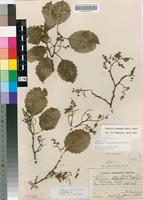
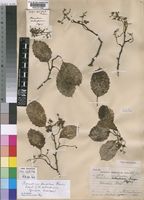
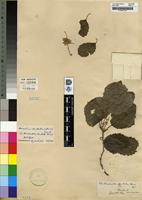
Isotype of Homalium subsuperum Sprague [family SALICACEAE]
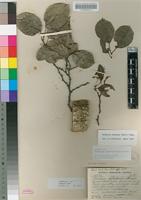
Type? of Homalium subsuperum Sprague [family SALICACEAE]
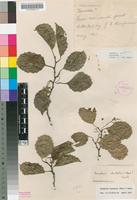
Type of Homalium subsuperum Sprague [family SALICACEAE]
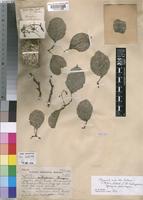
Paratype of Homalium subsuperum Sprague [family FLACOURTIACEAE]
Homalium dentatum (Harv.) Warb. [family FLACOURTIACEAE]
Holotype of Homalium dentatum Harv. [family FLACOURTIACEAE]
Previous
Next

Name

Identification
Homalium subsuperum Sprague [family FLACOURTIACEAE ] Verified by Sleumer, H., Homalium dentatum (Harv.) Warb. [family FLACOURTIACEAE ] (stored under name); Verified by Sleumer, H., Homalium subsuperum Sprague [family FLACOURTIACEAE ]
Related name
  • Homalium subsuperum
  • Homalium dentatum
  • Blackwellia dentata

Flora

Entry for Homalium dentatum [family SALICACEAE]
Herbarium
South African National Biodiversity Institute, Compton Herbarium, Cape Town (SAM)
Collection
Flora of Southern Africa
Resource Type
Reference Sources
Entry From
Flora of South Africa, (2003) Author: Dr J.P. Roux
Names
Homalium dentatum [family SALICACEAE]
Common names
Blackwellia dentata Harv. in F.C. 2: 585 (1862). Type as for H. dentatum. Homalium subsuperum Sprague in Kew Bull. 1923: 184 (1923); Gilg in Pflanzenfam. ed. 2, 21: 427 (1925). Henkel, Woody PI. Natal 86 (1934). Type: Cape, Ndindini Forest, Transkei, Kaufmann sub PRF3225 (subPRE 2571) (K, holo!; PRE!).
Information
Tree 6-30 m high; branchlets glabrous or tomentulose. Leaf-blade broadly elliptic, 5,5-10 cm long, 3,5-7 cm wide, apex abruptly acuminate often with oblique point, obtuse or rounded, base broadly cuneate to rounded, margin crenate-serrate, midrib and lateral veins fairly prominent below, lateral veins 5-8, Vi-angled, looping near margin, coriaceous, glabrous or tomentulose, often with tufts of hair in lower axils; petioles up to 2,2 cm long, glabrous or tomentulose. Inflores­cence of axillary and terminal panicles, divari­cately branched; peduncles 2,5-4 cm long, glabrous or puberulous; pedicels 0,2-2 mm long, puberulous. Calyx-tube puberulous; sepals 6-8, narrowly elliptic, 1,2-1,75 cm long, 0,3-0,7 mm wide, puberulous to tomentulose; glands adnate to base of sepals, round, sessile, brown, tomentulose. Petals 6-8, elliptic, 1,5-1,8 mm long, 0,8-1,2 mm wide, puberulous to tomentulose. Stamens 6-8, terete, 0,2-0,4 mm long. Ovary narrowly conical, 1,2 mm long, tomentulose; styles 3 or 4, joined at base, with
Habitat
The leaves of young coppice shoots are much thinner than the adult leaves, the petioles are shorter and the hairy pockets in the leaf axils are more conspicuous. In the southern part of the Kruger National Park there is a form with densely tomentulose leaves and branchlets represented by Codd 5257, Codd & De Winter 5161, Van der Schijff '2507, etc. This form resembles H. chasei Wild from Rhodesia in its pubescence, but has the paniculate inflorescence of//, dentatum. According to a note on Hutchinson 1848 the flowers of//, dentatum '' smell like sweet chestnut."
Use
1. Homalium dentatum (Harv.) Warb. in Pflanzenfam. 3,6a: 36 (1893); Engl., Pfanzenw. Afr. 3,2: 581 (1921); Gilg in Pflanzenfam. ed. 2, 21: 427 (1925); Wild in F.Z. 1: 289 (1960); Sleumerin Bull. Jard. Bot. Belg. 43: 239 (1973); Wild & Vidigal, Fl. Mocamb. Flacourt. 31 (1973). Type: Natal, "near Port Natal", Gerrard & McKen 50 (TCD, holo.!; PRE, photo.).
Range
Found in scrub and forest in the Transvaal, Natal, eastern Cape, Rhodesia, Malawi and Swaziland.

Related Materials

  • Terms and Conditions
  • Privacy Policy
  • Cookie Policy
  • Cookie Settings
  • Accessibility
  • Help
  • Contact Us
  • Facebook
  • Twitter
ITHAKA

JSTOR is part of ITHAKA, a not-for-profit organization helping the academic community use digital technologies to preserve the scholarly record and to advance research and teaching in sustainable ways.

©2000-2026 ITHAKA. All Rights Reserved. JSTOR®, the JSTOR logo, JPASS®, Aluka®, and ITHAKA® are registered trademarks of ITHAKA.

╳