JSTOR Global Plants Home
  • Home
  • Browse
  • About
  • Access
  • Account
    • Saved Items
    • Profile
  • Log in

Global Plants

Skip to Main Content
  • JSTOR Global Plants Home
  • Global Plants

    • Browse
    • About
    • Access
    • Account
      • Saved Items
      • Profile
Log in
  • Browse
  • About
  • Access
  • Account
    • Saved Items
    • Profile
Advanced Search

Compilation
Hibiscus zanzibaricus

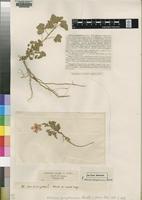
2 Images see all

Holotype of Hibiscus zanzibaricus Exell [family MALVACEAE]
Hibiscus zanzibaricus Exell [family MALVACEAE]
Previous
Next

Name

Identification
Hibiscus zanzibaricus Exell [family MALVACEAE ] (stored under name); Hibiscus zanzibaricus Exell [family MALVACEAE ] Verified by Exell,A.W.,
Related name
  • Hibiscus micranthus
  • Hibiscus zanzibaricus

Flora

Entry for Hibiscus migeodii Exell [family MALVACEAE]
Herbarium
Royal Botanic Gardens, Kew (K)
Collection
Flora Zambesiaca
Resource Type
Reference Sources
Entry From
FZ, Vol 1, Part 2, page 420, (1961) Author: A. W. Exell
Names
Hibiscus zanzibaricus Cufod. [family MALVACEAE], tom. cit.: 58 (1948) pro parte quoad specim. Mozamb.
Hibiscus sp. [family MALVACEAE], — Garcia, tom. cit.: 41 (1946) quoad specim. Carvalho.
Hibiscus migeodii Exell [family MALVACEAE], in Journ. of Bot. 68: 83 (1930). — Cufod. in Ann. Naturh. Mus. Wien, 56: 52 (1948). Type from Tanganyika.
Hibiscus micranthus [family MALVACEAE], sensu Bak. f. in Journ. Linn. Soc., Bot. 40: 28 (1911) pro parte quoad specim. Swynnerton 2052. — Garcia in Bol. Soc. Brot., Sér. 2, 20: 39 (1946).
Information
Annual or perennial herb up to c. 1 m. tall; stems ± patent-stellate-setose with additional smaller simple or branched hairs. Leaf-lamina up to 7 × 5 cm., broadly ovate to narrowly oblong, sometimes hastate, with a tendency to become shallowly or deeply 3-lobed, sparsely to densely stellate-setose on both surfaces, apex usually acute, margin irregularly bluntly toothed, base rounded to cordate 5–7-nerved; petiole up to 4·5 cm. long; stipules 2–4 mm. long, setaceous. Flowers up to 1·5 cm. in diam., red, solitary, axillary and forming terminal racemes or panicles by reduction of the upper leaves; peduncle up to 3·5 cm. long, articulated 3–5 (10) mm. below the apex. Epicalyx of 6–7 bracts; bracts 2–3 mm. long, linear. Calyx 6 mm. long; lobes 4–5 mm. long, lanceolate. Petals 8–9 mm. long, obovate, stellate-setose outside, glabrous inside. Staminal tube 4–5 mm. long; free parts of filaments 0·5–1 mm. long. Style-branches 2–2·5 mm. long. Capsule 6–8 × 8–9 mm., subglobose, minutely pubescent. Seeds with a white silky floss.
Habitat
Open woodland, wooded grassland and roadsides
Altitude range
up to 650 m.
650
0
inferred only top
Distribution
Mozambique GI Inhambane, Mongwe, fl. 20.vii.1954, Eccles 7 (BM).Mozambique MS Vila Machado, R. Mucuzi, fl. & fr. 23.iv.1948, Mendonça 4032 (BM; LISC).Mozambique N Metangula, fl. & fr. 25.v.1948, Pedro & Pedrógão 3904 (LMJ).Mozambique Z between Mocuba and Regulo Mataia, fr. 22.v.1949, Barbosa & Carvalho 2891 (LM).Malawi N 20 km. W. of Karonga, Nyanja Hill, 640 m., fl. 14.iv.1953, Williamson 247 (BM).
Distribution (external)
Tanganyika

Related Materials

  • Terms and Conditions
  • Privacy Policy
  • Cookie Policy
  • Cookie Settings
  • Accessibility
  • Help
  • Contact Us
  • Facebook
  • Twitter
ITHAKA

JSTOR is part of ITHAKA, a not-for-profit organization helping the academic community use digital technologies to preserve the scholarly record and to advance research and teaching in sustainable ways.

©2000-2026 ITHAKA. All Rights Reserved. JSTOR®, the JSTOR logo, JPASS®, Aluka®, and ITHAKA® are registered trademarks of ITHAKA.

╳