JSTOR Global Plants Home
  • Home
  • Browse
  • About
  • Access
  • Account
    • Saved Items
    • Profile
  • Log in

Global Plants

Skip to Main Content
  • JSTOR Global Plants Home
  • Global Plants

    • Browse
    • About
    • Access
    • Account
      • Saved Items
      • Profile
Log in
  • Browse
  • About
  • Access
  • Account
    • Saved Items
    • Profile
Advanced Search

Compilation
Hibiscus richardsiae

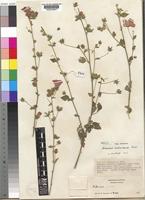
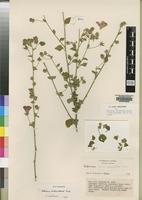
2 Images see all

Holotype of Hibiscus richardsiae Exell [family MALVACEAE]
Isotype of Hibiscus richardsiae Exell [family MALVACEAE]
Previous
Next

Name

Identification
Hibiscus richardsiae Exell [family MALVACEAE ] (stored under name); Isotype of Hibiscus richardsiae Exell [family MALVACEAE ]
Related name
  • Hibiscus richardsiae

Flora

Entry for Hibiscus richardsiae Exell [family MALVACEAE]
Herbarium
Royal Botanic Gardens, Kew (K)
Collection
Flora Zambesiaca
Resource Type
Reference Sources
Entry From
FZ, Vol 1, Part 2, page 420, (1961) Author: A. W. Exell
Names
Hibiscus richardsiae Exell [family MALVACEAE], in Bol. Soc. Brot., Sér. 2, 33: 176 (1959). Type: N. Rhodesia, Lake Tanganyika, Sumba, fl. & fr. S.iv.1957, Richards 9033 (BM; K, holotype).
Information
Perennial herb c. 0·6 m. tall; stems erect, ± patent-stellate-pubescent. Leaf-lamina 1–2·5 × 0·8–1·5 cm., ovate, ± densely pubescent above, rather sparsely setose below, hairs 2–3-pronged, apex acute, margin serrate, base obtuse or rounded; petiole up to 1·5 cm. long; stipules 3–5 mm. long, brown, subulate. Flowers c. 2·5 cm. in diam., red, solitary, axillary and forming corymbose clusters at the apices of the stems; peduncles up to 3–4 cm. long, articulated near the apex. Epicalyx of 8–9 bracts; bracts 3–5 mm. long, ciliate. Calyx 10–11 mm. long, pilose outside, glabrous inside; lobes up to 10 × 3 mm., lanceolate, acute. Petals 1·5–2 × 1–1·3 cm., obovate, stellate-pilose outside, glabrous inside. Staminal tube 9–10 mm. long; free parts of filaments 1–1·5 mm. long. Style-branches 6·5 mm. long. Capsule 9–10 mm. in diam., subglobose, minutely pubescent. Seeds (immature) with a floss.
Habitat
Among rocks (N. Rhodesia) and in dense bush (Tanganyika).
Distribution
Zambia N Mporokoso Distr., Lake Tanganyika, Sumba, escarpment road, fl. & fr. 5.iv.1957, Richards 9033 (BM; K).
Distribution (external)
Tanganyika (Ufipa Distr.)
Notes
Very close to H. aponeurus but strikingly different when dried, having a silvery-grey appearance in contrast with the tawny indumentum of H. aponeurus and more closely resembling H. praeteritus from which it differs by its more patent indumentum and more densely pubescent leaves.

Related Materials

  • Terms and Conditions
  • Privacy Policy
  • Cookie Policy
  • Cookie Settings
  • Accessibility
  • Help
  • Contact Us
  • Facebook
  • Twitter
ITHAKA

JSTOR is part of ITHAKA, a not-for-profit organization helping the academic community use digital technologies to preserve the scholarly record and to advance research and teaching in sustainable ways.

©2000-2026 ITHAKA. All Rights Reserved. JSTOR®, the JSTOR logo, JPASS®, Aluka®, and ITHAKA® are registered trademarks of ITHAKA.

╳