JSTOR Global Plants Home
  • Home
  • Browse
  • About
  • Access
  • Account
    • Saved Items
    • Profile
  • Log in

Global Plants

Skip to Main Content
  • JSTOR Global Plants Home
  • Global Plants

    • Browse
    • About
    • Access
    • Account
      • Saved Items
      • Profile
Log in
  • Browse
  • About
  • Access
  • Account
    • Saved Items
    • Profile
Advanced Search

Compilation
Hibiscus intermedius

5 Images see all

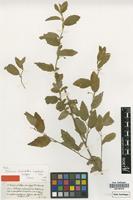
Hibiscus hochstetteri Cufod. [family MALVACEAE]
Isotype of Hibiscus hochstetteri Cufod. [family MALVACEAE]
Filed as Hibiscus intermedius Hochst. [family MALVACEAE]
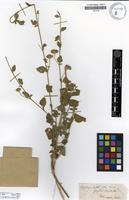
Hibiscus intermedius A.Rich. [family MALVACEAE]
Holotype of Hibiscus intermedius A.Rich. [family MALVACEAE]
Previous
Next

Name

Identification
Isotype of Hibiscus hochstetteri Cufod. [family MALVACEAE ] (stored under name); Verified by Wagenitz, G., 1980 Hibiscus intermedius Hochst. [family MALVACEAE ] Verified by Not on sheet,
Related name
  • Hibiscus micranthus
  • Hibiscus palmatus
  • Hibiscus scandens
  • Hibiscus hochstetteri
  • Hibiscus intermedius

Flora

Entry for Hibiscus palmatus Forsk. [family MALVACEAE]
Herbarium
Royal Botanic Gardens, Kew (K)
Collection
Flora Zambesiaca
Resource Type
Reference Sources
Entry From
FZ, Vol 1, Part 2, page 420, (1961) Author: A. W. Exell
Names
Hibiscus aristivalvis Garcke [family MALVACEAE], in Bot. Zeit. 7: 849 (1849) (\"aristaevalvis\"); in Peters, Reise Mossamb. Bot. 1: 124 (1861). — Exell & Mendonça, C.F.A. 1, 1: 173 (1937). — Mendonça & Torre, Contr. Conhec. Pl. Moçamb. 1: 13 (1950). Type: Mozambique, Sena, Peters (B†).
Hibiscus intermedius A. Rich. [family MALVACEAE], Tent. Fl. Abyss. 1: 58 (1847) non Bélanger (1834). — Mast. in Oliv., F.T.A. 1: 198 (1868). — Hochr. in Ann. Conserv. Jard. Bot. Genève, 4: 94 (1900). — Engl., Pflanzenw. Afr. 3, 2: 397, fig. 186 M-0 (1921). Type from Ethiopia.
Hibiscus palmatus Forsk. [family MALVACEAE], Fl. Aegypt.-Arab.: CXVII, 126 (1775). TAB. 89 fig. 5. Type from Arabia.
Information
Perennial ± prostrate herb; stems rather sparsely to densely setose or setulose and often with a longitudinal line of pubescence changing its radial position at each node. Leaf-lamina up to 12 × 16 cm. in outline (usually much smaller), 3–5-palmatilobed or -sect, sparsely setulose mainly on the nerves, apex rounded, base cordate; lobes elliptic to narrowly lanceolate or oblong-lanceolate, margins irregularly toothed or ± pinnatifid; petiole up to 6 cm. long, sparsely setulose; stipules 3 mm. long, filiform or subulate. Flowers 3·5–5 cm. in diam., pale yellow or yellow, with or without a dark centre. Epicalyx of 7–8 bracts; bracts 12–15 mm. long, ± filiform or narrowly linear. Calyx 10–15 mm. long; lobes sub-scarious, triangular or narrowly triangular, joined for 2–3 mm. at the base. Petals 3·5 × 2 cm., obliquely obovate, glabrous. Staminal tube c. 6 mm. long; free parts of filaments 3–5 mm. long; style-branches 3·5–4 mm. long. Capsule 8–9 mm. in diam., subglobose, sparsely pubescent; valves with awns 2–3 mm. long. Seeds 3 × 2 mm., angular-subreniform, appressed-sericeous-pubescent.
Habitat
Colophospermum mopane and other woodlandsmainly on alluvial soils.
Altitude range
from 0–1400 m.
1400
0
Distribution
Mozambique M between Umbeluzi and Catuene, fl. & fr. 16.ix.1944, Mendonça 2880 (BM; LISC).Mozambique GI between Massingire and Mapulanguene, fr. 8.v.1957, Carvalho 173 (BM; LM).Zimbabwe W Bulawayo, fl. & fr. i.1898. Rand 74 (BM).Mozambique T Tete, fl. & fr. ii.1859, Kirk (K).Zimbabwe N Urungwe Distr., near the Kessesse R., fl. 3–7.iii.1956, Goodier 40 (BM; SRGH).
Distribution (external)
India
Arabia
tropical and S. Africa
Notes
After examining the type of H. palmatus Forsk., by kind permission of the Director of the Copenhagen Botanical Museum, I have no doubt at all that it is the species usually known as H. aristivalvis Garcke. Some modern Arabian collections from the same region as the type match it very closely.

Related Materials

  • Terms and Conditions
  • Privacy Policy
  • Cookie Policy
  • Cookie Settings
  • Accessibility
  • Help
  • Contact Us
  • Facebook
  • Twitter
ITHAKA

JSTOR is part of ITHAKA, a not-for-profit organization helping the academic community use digital technologies to preserve the scholarly record and to advance research and teaching in sustainable ways.

©2000-2026 ITHAKA. All Rights Reserved. JSTOR®, the JSTOR logo, JPASS®, Aluka®, and ITHAKA® are registered trademarks of ITHAKA.

╳