JSTOR Global Plants Home
  • Home
  • Browse
  • About
  • Access
  • Account
    • Saved Items
    • Profile
  • Log in

Global Plants

Skip to Main Content
  • JSTOR Global Plants Home
  • Global Plants

    • Browse
    • About
    • Access
    • Account
      • Saved Items
      • Profile
Log in
  • Browse
  • About
  • Access
  • Account
    • Saved Items
    • Profile
Advanced Search

Compilation
Hexalobus mossambicensis

5 Images see all

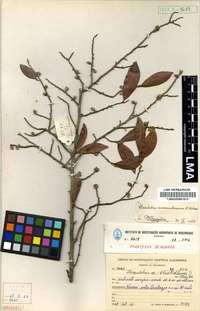
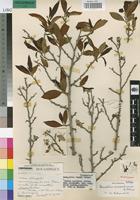
Paratype of Hexalobus mossambicensis N. Robson [family ANNONACEAE]
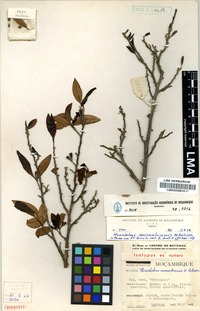
Isotype of Hexalobus mossambicensis N.Robson [family ANNONACEAE]
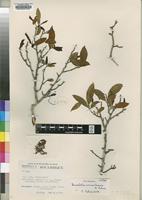
Paratype of Hexalobus mossambicensis N. Robson [family ANNONACEAE]
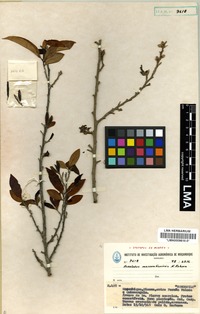
Holotype of Hexalobus mossambicensis N. Robson [family ANNONACEAE]
Previous
Next

Name

Identification
Hexalobus mossambicensis N.Robson [family ANNONACEAE ] (stored under name); Isotype of Hexalobus mossambicensis N.Robson [family ANNONACEAE ] Verified by 1958,
Related name
  • Hexalobus mossambicensis

Flora

Entry for Hexalobus mossambicensis N. Robson [family ANNONACEAE]
Herbarium
Royal Botanic Gardens, Kew (K)
Collection
Flora Zambesiaca
Resource Type
Reference Sources
Entry From
FZ, Vol 1, Part 1, page 104, (1960) Author: N. K. B. Robson
Names
Hexalobus mossambicensis N. Robson [family ANNONACEAE], in Bol. Soc. Brot., Sér. 2, 32: 153 (1958). Type: Mozambique, Nacala, between Fernão Velosa and Quissangulo, Barbosa 2428 (BM; LISC, holotype).
Information
Shrub or tree, 4–5 m. high, much branched. Branches spreading, appressed-pubescent at first, glabrescent, with persistent petiole-bases. Leaves petiolate; lamina 4–7 x 1.6–3.1 cm., elliptic to oblong-elliptic, acute or obtusely acuminate at the apex, ± narrowly cuneate at the base, subcoriaceous, concolorous, appressed-pubescent at first, soon completely glabrous, with midrib impressed above and prominent below, nerves not prominent on either side, with densely reticulate venation scarcely visible below; petiole 2–5 mm. long, pubescent. Flowers solitary, axillary, subsessile; bracteoles densely fawn- or greyish-sericeous outside. Sepals 6–8 mm. long, fawn- or greyish-sericeous outside. Petals yellow. Stamens 2 mm. long. Carpel 1 (? or more), densely pubescent. Fruit subsessile; fruiting carpels unknown. Otherwise similar to H. monopetalus.
Range
Known from the eastern part of Niassa Province only.
Distribution
Mozambique N between Quiterajo and R. Msalo, bud 12.ix.1948, Pedro & Pedrógão 5189 (SRGH).
Notes
H. mossambicensis differs from H. monopetalus by its acuminate or subacuminate leaves, paler buds, somewhat larger sepals and usually more \"twiggy\" habit. H. salicifolius Engl. from French Cameroons has somewhat larger acuminate leaves, but these have prominent nerves beneath and the buds are chocolate-brown and pedicellate, not subsessile.

Related Materials

  • Terms and Conditions
  • Privacy Policy
  • Cookie Policy
  • Cookie Settings
  • Accessibility
  • Help
  • Contact Us
  • Facebook
  • Twitter
ITHAKA

JSTOR is part of ITHAKA, a not-for-profit organization helping the academic community use digital technologies to preserve the scholarly record and to advance research and teaching in sustainable ways.

©2000-2026 ITHAKA. All Rights Reserved. JSTOR®, the JSTOR logo, JPASS®, Aluka®, and ITHAKA® are registered trademarks of ITHAKA.

╳