JSTOR Global Plants Home
  • Home
  • Browse
  • About
  • Access
  • Account
    • Saved Items
    • Profile
  • Log in

Global Plants

Skip to Main Content
  • JSTOR Global Plants Home
  • Global Plants

    • Browse
    • About
    • Access
    • Account
      • Saved Items
      • Profile
Log in
  • Browse
  • About
  • Access
  • Account
    • Saved Items
    • Profile
Advanced Search

Compilation
Heuchera sanguinea

14 Images see all

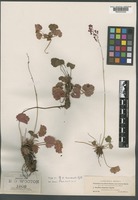
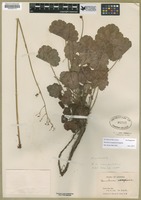
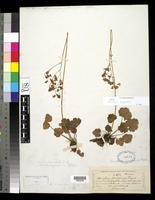
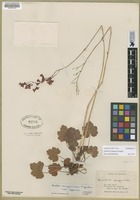
Isotype of Heuchera townsendii Rydb. [family SAXIFRAGACEAE]
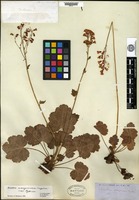
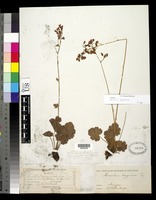
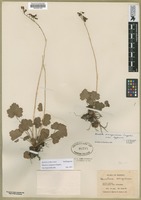
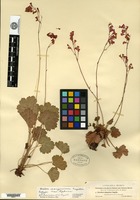
Type? of Heuchera sanguinea Engelmann [family SAXIFRAGACEAE]
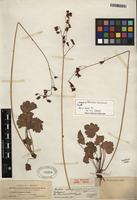
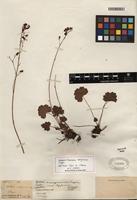
Type of Heuchera townsendii Rydb. [family SAXIFRAGACEAE]
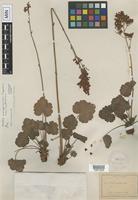
Holotype of Heuchera sanguinea Engelm. [family SAXIFRAGACEAE]
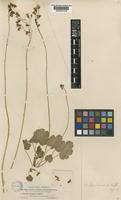
Filed as Heuchera sanguinea Engelm. [family SAXIFRAGACEAE]
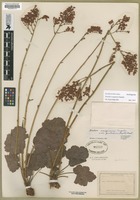
Heuchera sanguinea Engelm. [family SAXIFRAGACEAE]
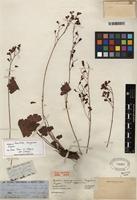
Isotype of Heuchera sanguinea Engelm. [family SAXIFRAGACEAE]
Holotype of Heuchera sanguinea Engelm. var. setulosa Rosend., Butters & Lakela [family SAXIFRAGACEAE]
Heuchera sanguinea Engelm. [family SAXIFRAGACEAE]
Filed as Heuchera sanguinea Engelm. [family SAXIFRAGACEAE]
Holotype of Heuchera sanguinea Engelm. [family SAXIFRAGACEAE]
Filed as Heuchera sanguinea Engelm. [family SAXIFRAGACEAE]
Isotype of Heuchera townsendii Rydberg [family SAXIFRAGACEAE]
Previous
Next

Name

Identification
Heuchera sanguinea Engelmann [family SAXIFRAGACEAE ] (stored under name); Verified by C. O. Rosendahl, F. K. Butters & O. Lakela, Isotype of Heuchera townsendii Rydberg [family SAXIFRAGACEAE ] Verified by Rydb., 1905
Related name
  • Heuchera townsendii
  • Heuchera sanguinea
Common name
  • Coralbells, Flora of North America Vol. 8

Flora

Entry for Heuchera sanguinea Engelmann [family SAXIFRAGACEAE]
Herbarium
Flora of North America (FNA)
Collection
Flora of North America
Resource Type
Reference Sources
Entry From
Flora of North America, Vol 8,
Names
Heuchera sanguinea Engelmann [family SAXIFRAGACEAE], in F. A. Wislizenus, Mem. Tour N. Mexico, 107. 1848 ,
Heuchera sanguinea var. pulchra (Rydberg) Rosendahl [family SAXIFRAGACEAE]
Treatment Author(s)
Elizabeth Fortson Wells
Barbara Greene Shipes
Information
Herbs acaulescent; caudex branched. Flowering stems 20–40 cm, short and sometimes long stipitate-glandular. Leaves: petiole long stipitate-glandular; blade reniform to orbiculate, shallowly 5–7-lobed, 2–5.5 cm, base cordate, lobes rounded, margins dentate, apex acute to obtuse, surfaces long stipitate-glandular on veins abaxially, glabrous or sparsely long stipitate-glandular adaxially. Inflorescences moderately dense to diffuse. Flowers: hypanthium weakly bilaterally to radially symmetric, free 2.5–2.8 mm, dark pink to red, broadly campanulate or urceolate, 4–8 mm, short stipitate-glandular proximally, sparsely long stipitate-glandular distally; sepals spreading, darker red-tipped, equal, 2–3 mm, apex oblong or rounded; petals spreading, pink or cream, narrowly oblanceolate, unlobed, 1.2–1.8 mm (shorter than sepals), margins entire; stamens included 1.5–3 mm; styles included 1.5–3 mm, 1.5–2 mm, 0.1+ mm diam. Capsules ovoid, 4.5–6 mm, beaks divergent, not papillose. Seeds dark brown, ellipsoid, 0.5–0.6 mm, bluntly spiny.
Phenology
Flowering Mar–Oct
Altitude range
1200–2600 m
Distribution
Mexico (Chihuahua).USA Ariz.USA N.Mex.
Discussion
Heuchera sanguinea occurs in the southwestern United States and northern Chihuahua, Mexico, and is widely cultivated throughout the cooler parts of North America.
Heuchera sanguinea varies considerably within populations in shape, lobing, and size of leaves, in amount of hairs, and in shape, form, and color of flowers. Rydberg recognized var. pulchra as characterized by denser inflorescences and longer hairs on its pedicels, inferior part of the ovary, and sepals. Mixed populations with individuals bearing longer and shorter hairs can be found throughout the range of the species, especially in Arizona. It seems best to recognize H. sanguinea as a variable species without infraspecific taxa.

Related Materials

  • Terms and Conditions
  • Privacy Policy
  • Cookie Policy
  • Cookie Settings
  • Accessibility
  • Help
  • Contact Us
  • Facebook
  • Twitter
ITHAKA

JSTOR is part of ITHAKA, a not-for-profit organization helping the academic community use digital technologies to preserve the scholarly record and to advance research and teaching in sustainable ways.

©2000-2026 ITHAKA. All Rights Reserved. JSTOR®, the JSTOR logo, JPASS®, Aluka®, and ITHAKA® are registered trademarks of ITHAKA.

╳