JSTOR Global Plants Home
  • Home
  • Browse
  • About
  • Access
  • Account
    • Saved Items
    • Profile
  • Log in

Global Plants

Skip to Main Content
  • JSTOR Global Plants Home
  • Global Plants

    • Browse
    • About
    • Access
    • Account
      • Saved Items
      • Profile
Log in
  • Browse
  • About
  • Access
  • Account
    • Saved Items
    • Profile
Advanced Search

Compilation
Heteranthera multiflora

8 Images see all

Heteranthera multiflora (Griseb.) Horn [family PONTEDERIACEAE]
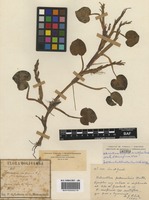
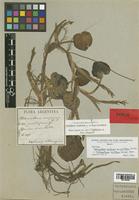
Holotype of Heteranthera pauciflora C. N. Horn [family PONTEDERIACEAE]
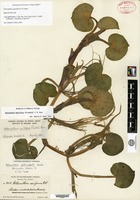
Holotype of Heteranthera reniformis Ruiz & Pav. var. multiflora Griseb. [family PONTEDERIACEAE]
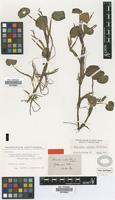
Isolectotype of Heteranthera reniformis Ruiz & Pav. var. multiflora Griseb. [family PONTEDERIACEAE]
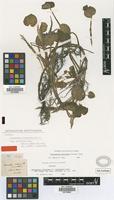
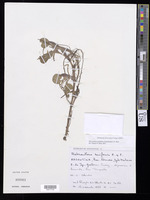
Isotype of Heteranthera reniformis Griseb. var. multiflora [family PONTEDERIACEAE]
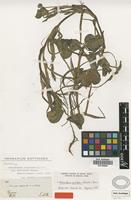
Isolectotype of Heteranthera reniformis Ruiz & Pav. var. multiflora Griseb. [family PONTEDERIACEAE]
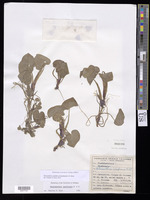
Heteranthera multiflora (Griseb.) C.N. Horn [family PONTEDERIACEAE]
Previous
Next

Name

Identification
Heteranthera multiflora (Griseb.) Horn [family PONTEDERIACEAE ] (stored under name); Verified by Ariza Espinar, L., 2011
Related name
  • Heteranthera reniformis
  • Heteranthera multiflora

Flora

Entry for Heteranthera multiflora (Grisebach) C. N. Horn [family PONTEDERIACEAE]
Herbarium
Flora of North America (FNA)
Collection
Flora of North America
Resource Type
Reference Sources
Entry From
Flora of North America, Vol 26,
Names
Heteranthera multiflora (Grisebach) C. N. Horn [family PONTEDERIACEAE], Phytologia, 59: 290. 1986
Heteranthera reniformis Ruiz & Pavón var. multiflora Grisebach [family PONTEDERIACEAE], Abh. Königl. Ges. Wiss. Göttingen, 24: 323. 1879
Information
Plants annual. Vegetative stems submersed with elongate inter-nodes, or emersed and procumbent. Flowering stems 1–4 cm, distal internode less than 1 cm. Sessile leaves alternate; blade linear to oblanceolate, thin, 37–70 × 4–6 mm, margins entire. Petiolate leaves floating or emersed; stipule 3–5 cm; petiole 5–15 cm; blade cordate, 2–5 × 2–5 cm, length usually greater than width, apex obtuse. Inflorescences spicate, 3–16-flowered, elongating in 1–2 days, longer than spathes (except on cleistogamous inflorescences); spathes 2–7 cm, glabrous; peduncle 4–11 cm, glabrous when emersed. Flowers opening ca. 2 hours after dawn, wilting early afternoon; perianth mauve or white, salverform, tube 3–12 mm, limbs zygomorphic, lobes narrowly elliptic, 3.3–5.9 mm, distal central lobe dark purple in basal 1/3, 2 yellow spots within dark area; stamens unequal, lateral stamens 1.3–2.4 mm, filaments linear, densely pubescent with purple multicellular hairs toward apex; central stamen 2.6–4 mm, filament sparsely pubescent with multicellular hairs; style pubescent with multicellular hairs. Seeds 9–12-winged, 0.6–0.9 × 0.4–0.5 mm. 2n = 32.
Phenology
jul-aug (summer), sep-nov (fall)
Altitude range
0–1800 m;
Distribution
South America (Argentina).South America (Brazil).South America (Paraguay).South America (Venezuela).USA Ark.USA Del.USA Ill.USA IowaUSA Kans.USA La.USA Md.USA Miss.USA Mo.USA Nebr.USA N.J.USA N.C.USA Okla.USA Pa.USA Tenn.USA Tex.USA Va.
Discussion
This species has in the past been incorrectly identified as either Heteranthera reniformis (J. A. Steyermark 1963) or H. peduncularis (R. B. Kaul and C. N. Horn 1986). However, detailed study of development, floral morphology, and chromosome number revealed distinct differences (C. N. Horn 1985, 1988).
Three distinct genetic forms of this species exist, two in the flora range. Populations along the Atlantic coast have white flowers and inflorescences with most of the flowers within the spathe. Populations in the Great Plains have blue flowers and inflorescences with most flowers typically beyond the spathe. These populations have not been, nor should they be, recognized at any taxonomic level.

Related Materials

  • Terms and Conditions
  • Privacy Policy
  • Cookie Policy
  • Cookie Settings
  • Accessibility
  • Help
  • Contact Us
  • Facebook
  • Twitter
ITHAKA

JSTOR is part of ITHAKA, a not-for-profit organization helping the academic community use digital technologies to preserve the scholarly record and to advance research and teaching in sustainable ways.

©2000-2026 ITHAKA. All Rights Reserved. JSTOR®, the JSTOR logo, JPASS®, Aluka®, and ITHAKA® are registered trademarks of ITHAKA.

╳