JSTOR Global Plants Home
  • Home
  • Browse
  • About
  • Access
  • Account
    • Saved Items
    • Profile
  • Log in

Global Plants

Skip to Main Content
  • JSTOR Global Plants Home
  • Global Plants

    • Browse
    • About
    • Access
    • Account
      • Saved Items
      • Profile
Log in
  • Browse
  • About
  • Access
  • Account
    • Saved Items
    • Profile
Advanced Search

Compilation
Hesperaloe funifera

5 Images see all

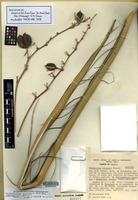
Type of Hesperaloe davyi Baker f. [family AGAVACEAE]
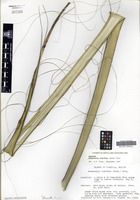
Neotype of Hesperaloe funifera (K. Koch) Trel. [family ASPARAGACEAE]
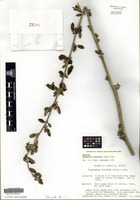
Holotype of Hesperaloe funifera G.D. Starr ssp. chiangii [family AGAVACEAE]
Neotype of Hesperaloe funifera (K. Koch) Trel. [family ASPARAGACEAE]
Type of Hesperaloe davyi Baker f. [family AGAVACEAE]
Previous
Next

Name

Identification
Hesperaloe funifera G.D. Starr [family AGAVACEAE ] (stored under name); Verified by E. Keith Longpre, 2003
Related name
  • Hesperaloe davyi
  • Hesperaloe funifera

Flora

Entry for Hesperaloe funifera (K. Koch) Trelease [family AGAVACEAE]
Herbarium
Flora of North America (FNA)
Collection
Flora of North America
Resource Type
Reference Sources
Entry From
Flora of North America, Vol 26,
Names
Hesperaloe funifera (K. Koch) Trelease [family AGAVACEAE], Rep. (Annual) Missouri Bot. Gard., 13: 36. 1902
Yucca funifera K. Koch [family AGAVACEAE], Belgique Hort., 12: 132. 1862
Agave funifera Lemaire [family AGAVACEAE]
Hesperaloe davyi Baker f. [family AGAVACEAE]
Treatment Author(s)
R. Laurie Robbins
Information
Leaf blades yellowish green, slightly constricted near base, widest near middle, 10–20 × 0.2–0.5 dm, margins with coarse threads. Panicles 2–2.5 m. Flowers: perianth broadly campanulate; tepals green, tinged with purple, ca. 2.5 cm. Capsules 8–9 × 5–7 mm. Seeds 8–9 × 5–7 mm.
Phenology
mar-may (spring)
Altitude range
500–1000(–2100) m;
Distribution
Mexico (Coahuila).Mexico (Nuevo León).Mexico (San Luis Potosí).USA Tex.
Discussion
Hesperaloe funifera is occasionally cultivated, although far less frequently than H. parviflora.

Related Materials

  • Terms and Conditions
  • Privacy Policy
  • Cookie Policy
  • Cookie Settings
  • Accessibility
  • Help
  • Contact Us
  • Facebook
  • Twitter
ITHAKA

JSTOR is part of ITHAKA, a not-for-profit organization helping the academic community use digital technologies to preserve the scholarly record and to advance research and teaching in sustainable ways.

©2000-2026 ITHAKA. All Rights Reserved. JSTOR®, the JSTOR logo, JPASS®, Aluka®, and ITHAKA® are registered trademarks of ITHAKA.

╳