JSTOR Global Plants Home
  • Home
  • Browse
  • About
  • Access
  • Account
    • Saved Items
    • Profile
  • Log in

Global Plants

Skip to Main Content
  • JSTOR Global Plants Home
  • Global Plants

    • Browse
    • About
    • Access
    • Account
      • Saved Items
      • Profile
Log in
  • Browse
  • About
  • Access
  • Account
    • Saved Items
    • Profile
Advanced Search

Compilation
Herminiera elaphroxylon

5 Images see all

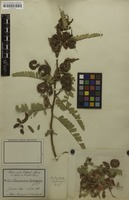
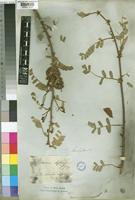
Isotype of Herminiera elaphroxylon Guill. & Perr. [family FABACEAE-PAPILIONOIDEAE]
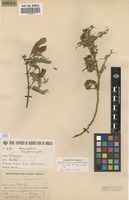
Filed as Aeschynomene elaphroxylon (Guill. & Perr.) Taub. [family FABACEAE]
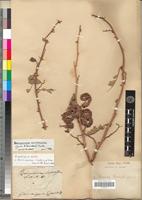
Type of Herminiera elaphroxylon Guill. & Perr. [family FABACEAE-PAPILIONOIDEAE]
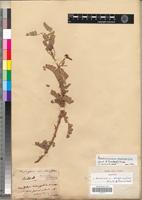
Aeschynomene elaphyroxylon (Guill. & Perr.) Taub. [family LEGUMINOSAE-PAPILIONOIDEAE]
Previous
Next

Name

Identification
Herminiera elaphroxylon Guill & Perr. [family LEGUMINOSAE-PAPILIONOIDEAE ] Aeschynomene elaphyroxylon (Guill. & Perr.) Taub. [family LEGUMINOSAE-PAPILIONOIDEAE ] (stored under name);
Related name
  • Herminiera elaphroxylon
  • Aeschynomene elaphyroxylon
Common name
  • ambatch (from Arabic); pith tree (of Nile Land); ‘balsa-wood’ tree (Sikes)., Burkill, H.M. 1985. The useful plants of west tropical Africa, Vol. 3
  • ambaj (JMD) fowo (JMD) torôro (JMD) (NIGERIA, ARABIC-SHUWA), Burkill, H.M. 1985. The useful plants of west tropical Africa, Vol. 3
  • mbilor (JMD; JB) (SENEGAL, WOLOF), Burkill, H.M. 1985. The useful plants of west tropical Africa, Vol. 3
  • fogo (JMD) fowo (C&H) fówú (A&S) (NIGERIA, KANURI), Burkill, H.M. 1985. The useful plants of west tropical Africa, Vol. 3
  • ambach (Sikes) fogo (Barth fide Sikes) marrea (JMD) (NIGERIA, YEDINA), Burkill, H.M. 1985. The useful plants of west tropical Africa, Vol. 3

Flora

Entry for AESCHYNOMENE elaphroxylon (Guill. & Perr.) Taub. [family LEGUMINOSAE-PAPILIONOIDEAE]
Herbarium
Royal Botanic Gardens, Kew (K)
Collection
Flora of Tropical East Africa
Resource Type
Reference Sources
Entry From
Flora of Tropical East Africa, page 1, (1971) Author: J. B. GILLETT, R. M. POLHILL & B. VERDCOURT
Names
AESCHYNOMENE elaphroxylon (Guill. & Perr.) Taub. [family LEGUMINOSAE-PAPILIONOIDEAE], in E. & P. Pf. 3 (3): 319, fig. 124/A–C (1894); Harms in V.E. 3 (1): 611, fig. 298/A–C (1915); L.T.A.: 289 (1929); F.P.N.A. 1: 320, fig. 15 (1948); T.T.C.L.: 405 (1949); I.T.U., ed. 2: 295 (1952); J. Léon. in F.C.B. 5: 261 (1954); Hepper in F.W.T.A., ed. 2, 1: 578, fig. 168 (1958); K.T.S.: 354 (1961); F.P.U.: 83, fig. 34 (1962); F.F.N.R.: 141 (1962). Type: Senegal, small island N’Gher (or Panié-Foul) at mouth of R. Marigot de Taoué, Perrottet (P, holo.)
Herminiera elaphroxylon Guill. & Perr. [family LEGUMINOSAE-PAPILIONOIDEAE], Fl. Seneg. Tent.: 210, t. 51 (1832); Bak. in F.T.A.: 144 (1871); F.W.T.A. 1: 415, fig. 149 (1928)
Information
Shrub or small tree, 2–9(–12) m. tall, with a swollen pithy often almost conical stem acting as a float. Stems with short and long sticky hairs and nearly always with short sharp spines 0.2–1.5 cm. long. Leaves 20–40-foliolate; leaflets oblong, 0.8–2.65 cm. long, 4–10 mm. wide, truncate or slightly emarginate at the apex, obliquely rounded at the base, entire, somewhat glaucous beneath, glabrescent above, pubescent with slightly tubercular-based short hairs and often minutely asperulous on the margins and midnerve beneath; venation dark beneath; petiole and rhachis together 4–16 cm. long, densely covered with stiff bristly hairs and shorter pubescence and also often with short spinelets; petiolules 0.5–1 mm. long; stipules broadly ovate, 1–1.3 cm. long, 6–9 mm. wide, auriculate on one side only, velvety, eventually deciduous. Inflorescences axillary, 1–4-flowered; rhachis 1–4.5 cm. long; peduncle 1.3 cm. long; pedicels 1.2–1.6 cm. long; bracts 6–7 mm. long, 3–5 mm. wide; bracteoles ovate or elliptic, asymmetrical, 1–1.6 cm. long, 5–10 mm. wide, velvety. Calyx densely pubescent and with longer sticky bristly hairs, 2-lipped, the lips entire or 2–3-toothed at the apex, one ovate-lanceolate, 1.9–2.5 cm. long, 0.6–1.2 cm. wide, the other ovate-oblong, 1.5–2 cm. long, 0.6–1.1 cm. wide. Standard yellow to orange, rounded, 3–4.7 cm. long and wide, emarginate, puberulous above on outer surface; wings and keel yellow, the petals of the latter laciniate along their lower margins. Pods spirally contorted, 10–14 cm. long when unrolled, 6–17-jointed, densely covered with glandular bristly tubercular-based hairs and with short pubescence as well; articles ± oblong or trapeziform, 6–8 mm. long, 7–9 mm. wide, venulose beneath the dense indumentum. Seeds dark purplish-brown, reniform, with a slightly eccentric hilum, slightly beaked resembling the front of a canoe, longest dimension 6 mm., shorter dimension 3.8 mm., 2 mm. thick. Fig. 54/1, p. 366.
Range
DISTR. U2–4; K5, ? 6; T1, 4, 6–8 throughout tropical Africa from Senegal, Sudan and Ethiopia to Angola, Zambia, Malawi and Mozambique; also in Madagascar and cultivated in Egypt
Altitude range
520–1350 m.
Distribution
KENYA S. Kavirondo District Kavirondo Gulf, July 1934, Napier 3441 in C.M. 6774 ! & Rusinga I., Mar. 1941, Opiko in C.M. 11201 !TANGANYIKA Mwanza, shores of Lake Victoria, July 1933, C. G. Rogers 537 !TANGANYIKA Mpanda District Mahali Peninsula, Silambula, 17 Sept. 1958, Jefford & Newbould 2048 !TANGANYIKA Songea District Liuli, 29 July 1960, Hay 95 !UGANDA Kigezi District Lake Edward shore, Mar. 1939, Purseglove 607 !UGANDA Masaka District Sese Is., Bugala I., Nov. 1931, Eggeling 295!UGANDA Mengo District Entebbe, Oct. 1931, Eggeling 10 !
Notes
The well-known ambatch tree, the soft wood of which is used for making canoes, fishing floats, etc. The root-system is discussed by Jenik & Kubikova in Preslia 41: 220–226 (1969). A specimen from Kenya, Mau, Battiscombe 327 would appear to be doubtfully localized. It appears to me that Smithia grandidieri Baill. (SW. coast of Madagascar, Grandidier 21 (P, holo.!)) is no more than a poor specimen of this species.

Related Materials

  • Terms and Conditions
  • Privacy Policy
  • Cookie Policy
  • Cookie Settings
  • Accessibility
  • Help
  • Contact Us
  • Facebook
  • Twitter
ITHAKA

JSTOR is part of ITHAKA, a not-for-profit organization helping the academic community use digital technologies to preserve the scholarly record and to advance research and teaching in sustainable ways.

©2000-2026 ITHAKA. All Rights Reserved. JSTOR®, the JSTOR logo, JPASS®, Aluka®, and ITHAKA® are registered trademarks of ITHAKA.

╳