JSTOR Global Plants Home
  • Home
  • Browse
  • About
  • Access
  • Account
    • Saved Items
    • Profile
  • Log in

Global Plants

Skip to Main Content
  • JSTOR Global Plants Home
  • Global Plants

    • Browse
    • About
    • Access
    • Account
      • Saved Items
      • Profile
Log in
  • Browse
  • About
  • Access
  • Account
    • Saved Items
    • Profile
Advanced Search

Compilation
Hermbstaedtia angolensis

7 Images see all

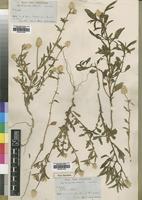
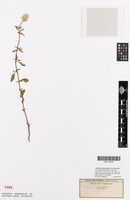
Type of Celosia welwitschii Schinz [family AMARANTHACEAE]
Isotype of Celosia welwitschii Schinz [family AMARANTHACEAE]
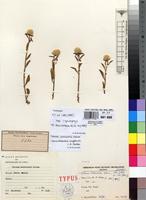
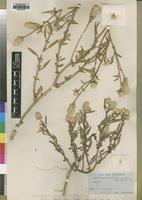
Type of Hermbstaedtia angolensis C.B.Clarke [family AMARANTHACEAE]
Isotype of Celosia welwitschii Schinz [family AMARANTHACEAE]
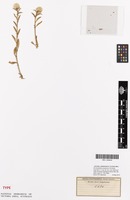
Type of Hermbstaedtia angolensis C.B.Clarke [family AMARANTHACEAE]
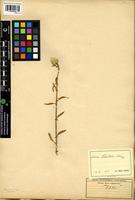
Type of Celosia welwitschii Schinz [family AMARANTHACEAE]
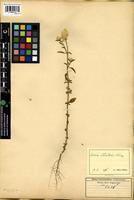
Isotype of Celosia welwitschii Schinz [family AMARANTHACEAE]
Previous
Next

Name

Identification
Celosia welwitschii Schinz [family AMARANTHACEAE ] Hermbstaedtia angolensis C.B.Clarke [family AMARANTHACEAE ] (stored under name);
Related name
  • Hermbstaedtia angolensis
  • Celosia welwitschii

Flora

Entry for Hermbstaedtia angolensis C.B. Clarke [family AMARANTHACEAE]
Herbarium
Royal Botanic Gardens, Kew (K)
Collection
Flora Zambesiaca
Resource Type
Reference Sources
Entry From
FZ, Vol 9, Part 1, page 28, (1988) Author: C. C. Townsend
Names
Hermbstaedtia angolensis C.B. Clarke [family AMARANTHACEAE], in F.T.A. 6, 1: 29 (1909).
Celosia welwitschii Schinz [family AMARANTHACEAE], in Engl. Bot. Jahrb. 21: 189 (1895); in Engl. & Prantl Pflanzenfam. ed. 2, 16 C: 30 (1934) non Hermbstaedtia welwitschii Baker in Kew Bull. 1897: 278 (1897) quid est H. argenteiformis Schinz. Type from Angola.
Information
Erect annual herb, c. 0.2–0.75 m. tall, simple to considerably branched from the base or in the upper half only, branches at c. 30 degrees from the stem, stem and branches more or less angled, striate, moderately furnished with multicellular hairs. Inflorescences terminal on the stem and branches, whitish, very densely spicate and remaining so in fruit, 1.5–7×1.25–1.5 cm., the axis (not visible until fruit-fall) more or less densely furnished with whitish, multicellular hairs. Bracts narrowly lanceolate, 4–5 mm. long, hyaline with a narrow white central band, glabrous or ciliate, often slightly erose-denticulate, reaching over halfway along the perianth; bracteoles almost identical; bracts and bracteoles clothing the rhachis with a dense scaly mass after fruit fall. Tepals narrowly elliptic, 5–7 mm. long, glabrous, all more or less similar, with narrow hyaline margins, a shortly excurrent midrib, a pair of long lateral veins and 1–2 shorter pairs. Stamens fused into a tube for about half their length, less than half as long as the perianth, with no free pseudostaminodes, the free portions of the tube rounded into the antheriferous apex or the latter longer than the short blunt teeth on each side of it. Ovary 10–18-ovulate, rounded above; stigmas 3, spreading or recurved and shorter than the finally exserted, 1.5–2 mm. long style. Capsule c. 5–6 mm. long, circumcissile, the apex rather shortly narrowed to the style and sometimes with a slight shoulder, glabrous or rarely (not in the Flora Zambesiaca area?) with a few colourless papillose hairs. Seeds c. 1 mm. in diam.
Habitat
On sandy soil in woodland or seasonally damp grassland.
Distribution
Zimbabwe C Nkai Distr., Gwampa Forest Reserve. 910 m., v.1956, Goldsmith 111/56 (K; LISC; SRGH).Zambia W Masese, 10.v.1961, Fanshawe 6551 (K; LISC; SRGH).Zimbabwe W Hwange Distr., Impofu Area, c. 6 km. NW. of Main Camp. Hwange Nat. Park, 18.iii.1969, Rushworth 1708 (K; SRGH).
Distribution (external)
Angola
Namibia
Notes
Only one specimen has been seen with the papillate hairs on the ovary, as mentioned in the description. This is Dinter 7324, from Karakowisa in Namibia (K).

Related Materials

  • Terms and Conditions
  • Privacy Policy
  • Cookie Policy
  • Cookie Settings
  • Accessibility
  • Help
  • Contact Us
  • Facebook
  • Twitter
ITHAKA

JSTOR is part of ITHAKA, a not-for-profit organization helping the academic community use digital technologies to preserve the scholarly record and to advance research and teaching in sustainable ways.

©2000-2026 ITHAKA. All Rights Reserved. JSTOR®, the JSTOR logo, JPASS®, Aluka®, and ITHAKA® are registered trademarks of ITHAKA.

╳