JSTOR Global Plants Home
  • Home
  • Browse
  • About
  • Access
  • Account
    • Saved Items
    • Profile
  • Log in

Global Plants

Skip to Main Content
  • JSTOR Global Plants Home
  • Global Plants

    • Browse
    • About
    • Access
    • Account
      • Saved Items
      • Profile
Log in
  • Browse
  • About
  • Access
  • Account
    • Saved Items
    • Profile
Advanced Search

Compilation
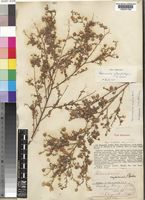
Hermannia glanduligera

13 Images see all

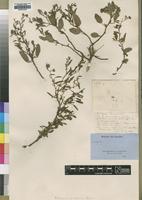
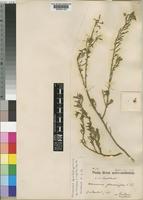
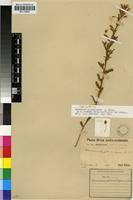
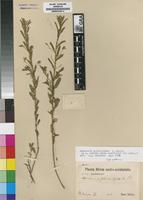
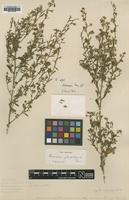
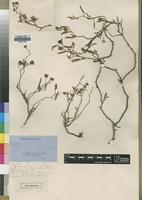
Syntype of Hermannia viscosa Hiern [family STERCULIACEAE]
Filed as Hermannia glanduligera K.Schum. [family MALVACEAE]
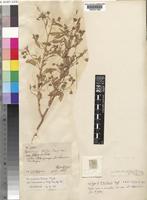
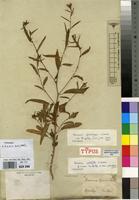
Isotype of Hermannia teitensis Engl. [family STERCULIACEAE]
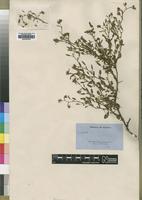
Isotype of Hermannia cyclophylla K.Schum. [family STERCULIACEAE]
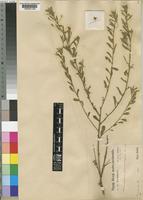
Syntype of Hermannia viscosa Hiern [family STERCULIACEAE]
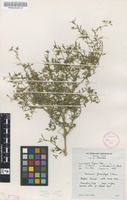
Hermannia glanduligera K.Schum. [family STERCULIACEAE]
Isotype of Hermannia glanduligera K.Schum. [family STERCULIACEAE]
Type of Hermannia viscosa sensu Burtt Davy [family STERCULIACEAE]
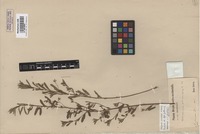
Type of Hermannia glanduligera K.Schum. [family STERCULIACEAE]
Type? of Hermannia glanduligera K. Schum. ex Schinz [family STERCULIACEAE]
Hermannia glanduligera K.Schum. [family STERCULIACEAE]
Syntype of Hermannia viscosa Hiern [family STERCULIACEAE]
Hermannia glanduligera K.Schum. [family STERCULIACEAE]
Previous
Next

Name

Identification
Hermannia viscosa Hiern [family STERCULIACEAE ] Hermannia glanduligera K.Schum. [family STERCULIACEAE ] (stored under name);
Related name
  • Hermannia viscosa
  • Hermannia glanduligera
  • Hermannia teitensis
  • Hermannia cyclophylla
  • Hermannia kirkii
  • Hermannia nyasica

Flora

Entry for Hermannia glanduligera K.Schum. [family STERCULIACEAE]
Herbarium
Royal Botanic Gardens, Kew (K)
Collection
Flora of Tropical East Africa
Resource Type
Reference Sources
Entry From
Flora of Tropical East Africa, page 1, Author: MARTIN CHEEK AND LAURENCE DORR
Names
Hermannia glanduligera K.Schum. [family STERCULIACEAE], in Verh. Bot. Ver. Prov. Brandenb. 30: 232 (1880) & in E.M. 5: 57 (1900); Wild in F.Z. 1: 545 (1961); Wild & Gonç. in Fl. Mocamb. 27: 31 (1979). Type: Namibia “Olukonda, (Ondongo-Stamm) Amboland” (not located, B †?)
Hermannia teitensis Engl. [family STERCULIACEAE], in E.J. 55: 370 (1919). Type: Kenya, Teita District: Ndara, Hildebrandt 2385 (B, holo., presumed destroyed, K! iso.)
Hermannia viscosa [family STERCULIACEAE], sensu Agnew, U.K.W.F. ed. 2: 96 (1994), non Hiern
Information
Annual herb to short-lived perennial 15–100(–200) cm tall, usually viscid, stem 3–7.5 mm diameter at base, generally with 4–5 subequal ascending and prostrate branches from near the base; branches invested densely with predominantly simple, glandular hairs, sometimes mixed with simple crinkled hairs and with sporadic stellate hairs, less usually almost entirely stellate-hairy. Leaf-blade linear-lanceolate, lanceolate, or linear-oblong, rarely ovate or elliptic, 9–25(–48)≈(2.2–)3–14(–22) mm, apex acute, margin serrate, base obtuse, with (1–)2–9 teeth on each side, nerves 2–4 on each side of the midrib, upper surface with sessile glandular hairs scattered with stellate hairs, lower surface densely covered with simple glandular hairs and stellate hairs; petiole 1–8(–10) mm long; stipules triangular, 1.3–1.8≈0.6–1 mm. Inflorescence with flowers single in the upper axils; peduncle 5.5–18 mm long, indumentum as stem; with 2–3 patent triangular bracts 0.5–1.2≈0.3–0.6 mm at the junction with the pedicel; pedicel 1.5–2(–3) mm long. Flowers pendulous, red, mauve, pink, rarely white or pink with red centre, 5–8 mm wide. Calyx campanulate, 5–6≈5 mm, lobed for 1/2, lobes 3–4.1≈1–1.4 mm, indumentum as stem. Petals obovate or subligulate, (4.2–)5–6≈(1.9–)2.5–3 mm, apex rounded, basal 1/2 to 1/3 ± involute, rarely so involute that petal appears clawed; band of simple hairs above involute zone. Stamens with filaments oblanceolate, 2–3.2≈(0.8–)1.2–1.8 mm, with or without hairs on the distal margin; anthers 2.5–5.5≈0.5–1 mm. Ovary ellipsoid, 1.7–2≈0.9–1.5 mm, truncate, slightly awned, stipe 0.2–0.7 mm; style 3.5–5 mm. Fruit capsule truncate-ovoid, awned, 5–7≈5.5–8 mm, awns patent, 2(–4) mm long, indumentum as stem; seeds reniform, 1.2–1.5≈1–1.2≈1 mm, rugose, densely white papillate.
Range
DISTR. K 4, 6, 7; T 2, 4, 5–7
Altitude range
30–1200(–1400) m
Distribution
KENYA Masai District Nguruman Hills, Lenyora, 27 Sep. 1944, Bally 3835!KENYA Kitui/Tana River District 92 km on Garissa–Nairobi road, Katumba Hill, 14 May 1978, Gilbert & Thulin 1717!KENYA Teita District Ndi, Manga Hill [Simba], 12 April 1978, Verdcourt 5313!TANZANIA Mpanda District Lake Katavi, 10 Feb. 1962, Richards 16054!TANZANIA Kondoa District Kinyasi, 1 Jan 1927, B. Burtt 917!TANZANIA Kilosa District 3 km N of Mbunyi, 30 Aug. 1970, Thulin & Mhoro 810!
Distribution (external)
Angola
Zambia
Malawi
Mozambique
Zimbabwe
Botswana
Namibia
South Africa
Notes
LOCAL USES. Eaten by stock (Hornby 17).  This species is widespread and common, and its habitat either not significantly threatened or (old cultivation) increasing. It is rated here as of “least concern” for conservation.  Most E African material of H. glanduligera has been misidentified as H. kirkii (see key for differences) or as H. viscosa, an Angolan species which lacks the hairy petals of H. glanduligera, as pointed out by Wild in FZ 1: 546 (1961). The indumentum of H. glanduligera is unusually variable in trichome complement for the genus and no assistance to identification. H. glanduligera can be easily recognized within the group of Hermannia in East Africa which are annuals, with single axillary flowers, obovate filaments and awned fruits (H. kirkii, H. modesta and H. tigreensis) by the widely triangular stipules, the presence of bracteoles at the base of the pedicel, the peduncles which are usually only as long or shorter than the leaves and by the petals, which are hairy on the inner surface.

Related Materials

  • Terms and Conditions
  • Privacy Policy
  • Cookie Policy
  • Cookie Settings
  • Accessibility
  • Help
  • Contact Us
  • Facebook
  • Twitter
ITHAKA

JSTOR is part of ITHAKA, a not-for-profit organization helping the academic community use digital technologies to preserve the scholarly record and to advance research and teaching in sustainable ways.

©2000-2026 ITHAKA. All Rights Reserved. JSTOR®, the JSTOR logo, JPASS®, Aluka®, and ITHAKA® are registered trademarks of ITHAKA.

╳