JSTOR Global Plants Home
  • Home
  • Browse
  • About
  • Access
  • Account
    • Saved Items
    • Profile
  • Log in

Global Plants

Skip to Main Content
  • JSTOR Global Plants Home
  • Global Plants

    • Browse
    • About
    • Access
    • Account
      • Saved Items
      • Profile
Log in
  • Browse
  • About
  • Access
  • Account
    • Saved Items
    • Profile
Advanced Search

Compilation
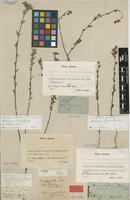
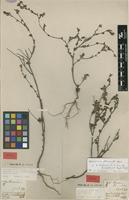
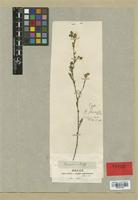
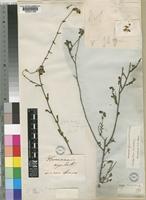
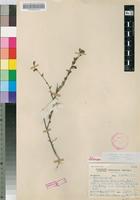
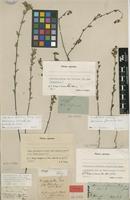
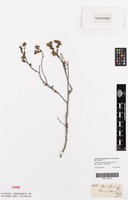
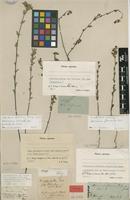
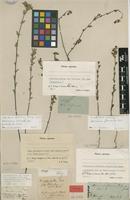
Hermannia flammula

10 Images see all

Filed as Hermannia flammula Harv. [family MALVACEAE]
Syntype of Hermannia flammula Harv. [family MALVACEAE]
Type of Hermannia flammula Harv. [family STERCULIACEAE]
Syntype of Hermannia flammula Harv. [family MALVACEAE]
Hermannia flammula Harv. [family STERCULIACEAE]
Isolectotype of Hermannia flammula Harv. [family MALVACEAE NOM.CONS. SENSU LATO]
Syntype of Hermannia flammula Harv. [family MALVACEAE]
Type of Hermannia flammula Harv. [family MALVACEAE]
Filed as Hermannia odorata Aiton [family MALVACEAE]
Filed as Hermannia flammula Harv. [family MALVACEAE]
Previous
Next

Name

Identification
Hermannia flammula Harv. [family STERCULIACEAE ] (stored under name); Verified by Data not digitized, Hermannia flammula Harv. [family STERCULIACEAE ] Verified by Data not digitized,
Related name
  • Hermannia not on sheet
  • Hermannia trifurca
  • Hermannia angulata
  • Hermannia odorata
  • Hermannia unrecorded
  • Hermannia flammula

Flora

Entry for HERMANNIA flammula Harv. [family STERCULIACEAE]
Herbarium
Royal Botanic Gardens, Kew (K)
Collection
Flora Capensis
Resource Type
Reference Sources
Entry From
Flora Capensis, Vol 1, page 179, (1894) Author: (By W. H. HARVEY).
Names
HERMANNIA flammula Harv. [family STERCULIACEAE]
HERMANNIA trifurca E. & Z. [family STERCULIACEAE], ! 370, ex parte; non Linn. Zey. 2009. Drege, 7287.
Information
erect, shrubby; branches stellulate; leaves sub-sessile, linear-cuneate, three-toothed or entire, densely stellato-pubescent on both sides; stipules linear or lin.-subulate, leafy, not half as long as leaf; peduncles somewhat racemose; one-flowered, as long as leaves; calyx campanulate, angular, stellate, deeply 5- parted, the lobes narrow-triangular, acute; petals twice as long as the calyx, the hispid claw much shorter than the limb; filaments linear-oblong, longer than the obtuse anthers; capsule pubescent, umboned. Very near H. flammea, but with smaller, more densely pubescent leaves, a more deeply parted calyx with narrower and more pointed segments, and smaller flowers. It does not turn black in drying.
Distribution
SOUTH AFRICA Hartebeeste River, Caledon, and Vormansbosch, Zeyher! Swellendam, Thom! (Herb. Hook., Sond.).
Notes
It was formerly cultivated at Kew, and old garden specimens, but without name, are preserved in Herb. Hook. E. & Z., confounded under their “ H. trifurca ,” the present plant, with H. flammea and H. angularis and the following.

Related Materials

  • Terms and Conditions
  • Privacy Policy
  • Cookie Policy
  • Cookie Settings
  • Accessibility
  • Help
  • Contact Us
  • Facebook
  • Twitter
ITHAKA

JSTOR is part of ITHAKA, a not-for-profit organization helping the academic community use digital technologies to preserve the scholarly record and to advance research and teaching in sustainable ways.

©2000-2026 ITHAKA. All Rights Reserved. JSTOR®, the JSTOR logo, JPASS®, Aluka®, and ITHAKA® are registered trademarks of ITHAKA.

╳