JSTOR Global Plants Home
  • Home
  • Browse
  • About
  • Access
  • Account
    • Saved Items
    • Profile
  • Log in

Global Plants

Skip to Main Content
  • JSTOR Global Plants Home
  • Global Plants

    • Browse
    • About
    • Access
    • Account
      • Saved Items
      • Profile
Log in
  • Browse
  • About
  • Access
  • Account
    • Saved Items
    • Profile
Advanced Search

Compilation
Hemizygia transvaalensis

11 Images see all

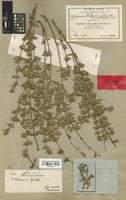
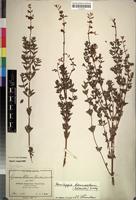
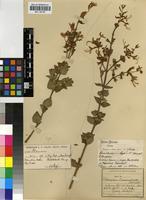
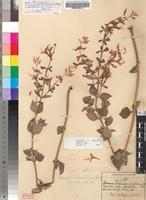
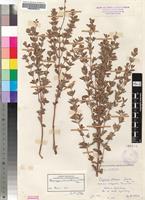
Isosyntype of Ocimum wilmsii Gürke [family LABIATAE]
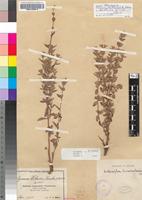
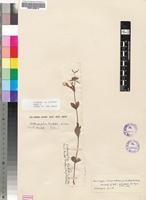
Syntype of Orthosiphon transvaalensis Schltr. [family LAMIACEAE]
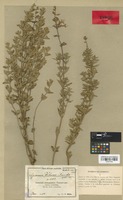
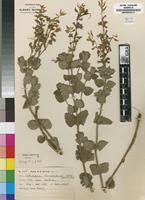
Isosyntype of Ocimum wilmsii Gürke [family LABIATAE]
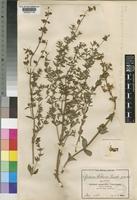
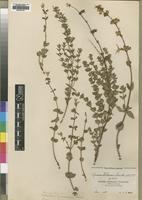
Hemizygia transvaalensis Schltr. [family LABIATAE]
Isosyntype of Ocimum wilmsii Gürke [family LABIATAE]
Syntype of Orthosiphon muddii N.E.Br. [family LAMIACEAE]
Isotype of Orthosiphon transvaalensis Schltr. [family LAMIACEAE]
Type of Ocimum wilmsii Gürke [family LAMIACEAE]
Isotype of Hemizygia transvaalensis (Schltr.) M.Ashby [family LAMIACEAE]
Holotype of Orthosiphon transvaalensis Schltr. [family LAMIACEAE]
Syntype of Orthosiphon transvaalensis Schltr. [family LAMIACEAE]
Previous
Next

Name

Identification
Ocimum wilmsii Gürke [family LAMIACEAE ] Orthosiphon transvaalensis Schltr. [family LAMIACEAE ] Hemizygia transvaalensis (Schltr.) M.Ashby [family LAMIACEAE ] (stored under name);
Related name
  • Hemizygia transvaalensis
  • Orthosiphon muddii
  • Ocimum wilmsii
  • Orthosiphon transvaalensis

Flora

Entry for Hemizygia transvaalensis [family LAMIACEAE]
Herbarium
South African National Biodiversity Institute, Compton Herbarium, Cape Town (SAM)
Collection
Flora of Southern Africa
Resource Type
Reference Sources
Entry From
Flora of South Africa, (2003) Author: Dr J.P. Roux
Names
Hemizygia transvaalensis [family LAMIACEAE]
Common names
Orthosiphon transvaalensis Schltr. in J. Bot., Lond. 35: 281 (1897); N.E. Br. in F.C. 5,1: 244 (1910). Ocimum wilmsii Giirke in Bot. Jb. 26: 79 (1898). Syntypes: Transvaal, Lydenburg, Wilms 1107 (BM; K; PRE!); 1108. Orthosiphon muddii N.E. Br., I.e. 245 (1910). Syntypes: Transvaal, Drakensberg, Mudd s.n. (K; PRE, fragment!); Spitzkop, Bunt Davy 1570 (K).
Information
Soft shrublet 0,3—1 m tall; stems arising annually from a perennial woody rootstock, sparingly to freely branched and sometimes broom-like (in the latter case with many small leaves), sparingly to densely hispid. Leaves sessile or shortly petiolate; blade, in typical form, ovate to broadly ovate, 15-40 x 8-22 mm, in broom-like form ovate-elliptic to ovate, 12—20 x 4—8 mm, concolorous, sparingly to densely pubescent on both surfaces, apex acute to obtuse, base obtuse to rounded, margin serrate-dentate chiefly in the upper two-thirds, rarely with teeth obscure. Inflor­escence paniculate, lax, 70—200 mm long; verticils (2—) 3—6-flowered; bracts ovate to lanceolate, the terminal ones pinkish purp­le, 12—24 x 4—10 mm, often forming a lax coma. Calyx 12—14 mm long at maturity, densely glandular-hispidulous. Corolla whit­ish to mauve or lilac-pink, 18—22 mm long; tube 14—17 mm long, widening to 5 mm at the mouth; lower lip 4—6 mm long, often deflexed. Stamens well exserted beyond the lower-lip; upper pair attached about the middle of the tube, filaments pubescent in the lower half; lower pair united to the apex or nearly so. Stigma bifid.
Habitat
Some specimens branch freely and produce numerous small leaves giving them a broom-like appearance. The type of Ocimum wilmsii is such a specimen. However, there appear to be intermediates between this form and the typical specimens and so separate status for the small-leaved form is not considered justified. There are no floral differences to support a formal subdivision of the species. H. transvaalensis is related to the next two species H. foliosa and H thorncroftii but can usually be distinguished by its more robust stature and the longer corolla (18—22 mm). Depauperate specimens may flower when only 0,2 m tall and these may be confused with H. thorncroftii which, however, usually has narrowly elliptic leaves and the corolla is 14—16 mm long. H. foliosa tends to have decumbent stems with larger, elliptical leaves, 2-flowered verticils, and the corolla is 12—14 mm long.
Use
20. Hemizygia transvaalensis (Schltr.) Ashby in J. Bot., Lond. 73: 349 (1935); Letty, Wild Flow. Transv. 285, t.141, 4 (1962); Codd in Bothalia 12: 15 (1976). Type: Transvaal, Barberton, Galpin 468 (PRE!; SAM!).
Range
Found in the eastern Transvaal from Mariepskop and Lydenburg to Barberton, at medium altitudes of 1 000 to 1 700 m; often locally common on grassy slopes and flats, often among rocks. Map 116.

Related Materials

  • Terms and Conditions
  • Privacy Policy
  • Cookie Policy
  • Cookie Settings
  • Accessibility
  • Help
  • Contact Us
  • Facebook
  • Twitter
ITHAKA

JSTOR is part of ITHAKA, a not-for-profit organization helping the academic community use digital technologies to preserve the scholarly record and to advance research and teaching in sustainable ways.

©2000-2026 ITHAKA. All Rights Reserved. JSTOR®, the JSTOR logo, JPASS®, Aluka®, and ITHAKA® are registered trademarks of ITHAKA.

╳