JSTOR Global Plants Home
  • Home
  • Browse
  • About
  • Access
  • Account
    • Saved Items
    • Profile
  • Log in

Global Plants

Skip to Main Content
  • JSTOR Global Plants Home
  • Global Plants

    • Browse
    • About
    • Access
    • Account
      • Saved Items
      • Profile
Log in
  • Browse
  • About
  • Access
  • Account
    • Saved Items
    • Profile
Advanced Search

Compilation
Helmia dumetorum

10 Images see all

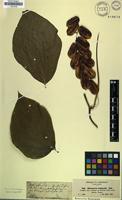
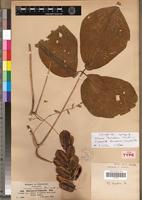
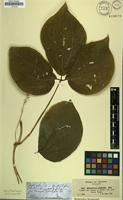
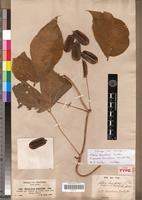
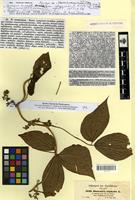
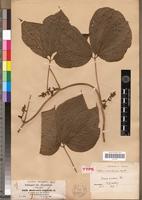
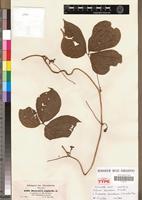
Isosyntype of Helmia dumetorum Kunth [family DIOSCOREACEAE]
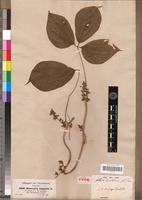
Syntype of Helmia dumetorum Kunth [family DIOSCOREACEAE]
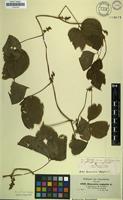
Isosyntype of Helmia dumetorum Kunth [family DIOSCOREACEAE]
Syntype of Helmia dumetorum Kunth [family DIOSCOREACEAE]
Isosyntype of Helmia dumetorum Kunth [family DIOSCOREACEAE]
Syntype of Helmia dumetorum Kunth [family DIOSCOREACEAE]
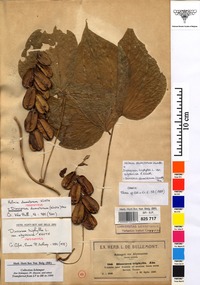
Syntype of dioscorea triphylla L. var. abyssinica R.Knuth [family DIOSCOREACEAE]
Syntype of Helmia dumetorum Kunth [family DIOSCOREACEAE]
Previous
Next

Name

Identification
Helmia dumetorum Kunth [family DIOSCOREACEAE ] Verified by Not on sheet, Dioscorea triphylla L. [family DIOSCOREACEAE ] Verified by Not on sheet, Dioscorea dumetorum (Kunth) Pax [family DIOSCOREACEAE ] (stored under name); Verified by Not on sheet,
Related name
  • helmia dumetorum
  • Dioscorea triphylla
  • Dioscorea dumetorum
  • Helmia dumetorum
  • Dioscorea pentaphylla
  • dioscorea dumetorum
  • dioscorea triphylla

Flora

Entry for DIOSCOREA dumetorum (Kunth) Pax [family DIOSCOREACEAE]
Herbarium
Royal Botanic Gardens, Kew (K)
Collection
Flora of Tropical East Africa
Resource Type
Reference Sources
Entry From
Flora of Tropical East Africa, page 1, (1975) Author: E. MILNE-REDHEAD
Names
DIOSCOREA dumetorum (Kunth) Pax [family DIOSCOREACEAE], in E. & P. Pf. II. 5: 134 (1888); Th. Dur. & Schinz, Consp. Fl. Afr. 5: 274 (1893); Harms in P.O.A. C: 147 (1895); Bak. in F.T.A. 7: 419 (1898); V.E. 2: 359, fig. 254 (1908); De Wild. in B.J.B.B. 4: 349 (1914); F.W.T.A. 2: 382 (1936); Burkill in B.J.B.B. 15: 367 (1939); Miège in F.W.T.A., ed. 2, 3: 151(1968); Verdc. & Trump, Common Poisonous Pl. E. Afr.: 193, figs. 19, 20/k, 1 (1969). Types: Ethiopia, Tigre, Djeladjeranne, Schimper (sect. 3) 1449 (B, isosyn.) & R. Taccaze, Schimper (sect. 2) 786 (B, isosyn.)
Helmia dumetorum Kunth [family ], Enum. Pl. 5: 436 (1850)
Dioscorea triphylla [family DIOSCOREACEAE], [sensu A. Rich., Tent. Fl. Abyss. 2: 316, t. 96/B (1851) non L.]
Dioscorea triphylla (Kunth) R. Knuth var. dumetorum [family DIOSCOREACEAE], in E.P. IV. 43: 132, fig. 28 (1924)
Dioscorea triphylla R. Knuth var. abyssinica [family DIOSCOREACEAE], in E.P. IV. 43: 136 (1924). Types: as D. dumetorum
Dioscorea triphylla R. Knuth var. rotundata [family DIOSCOREACEAE], in E.P. IV. 43: 136 (1924). Type: Tanzania, Tabora District, Kakoma, Boehm 11a (B, holo.)
Information
Tuber replaced annually, much divided with short or cylindric round-ended root-bearing lobes up to 2.5 cm. in diameter, spreading or descending to ± 30 cm. Twining stems up to 10 m. high, pubescent and beset sparsely or rather densely with prickles. Leaves alternate, 3-foliolate; petiole up to 20 cm. long, pubescent, usually with a few scattered prickles; leaflets with petiolule up to 10 mm. long, adpressed pubescent, glabrescent above, discolourous and lanate, rarely sparsely hirsute beneath; median leaflet obovoid, acutely acuminate, cuneate or rounded at the base, conspicuously 3-nerved from just above the base. Male inflorescence paniculate, the ultimate branches spreading in all directions forming dense subsessile cylindric spikelets up to 15 mm. long, subsessile or on peduncles up to 5 mm. long; bracts broadly ovate, adpressed to the perianth and partly concealing it, densely pubescent; perianth subglobose, glabrous, with the 3 inner segments ± 1 mm. long and the 3 outer considerably smaller and thinner. Stamens 6. Female inflorescence pendulous, spicate, 5–10 cm. long, with the flowers close together at first, the internodes elongating greatly in age; flowers directed downwards; perianth depressed subglobose, ± 2 mm. in diameter, pubescent; lobes subequal. Ovary ± 7 mm. long, densely pubescent. Capsule as fig. 2/3, p. 5, (3–)4(–5) cm. long, rather sparsely pubescent. Seeds (fig. 2/3a) ± 2 cm. long, with wing on the basal side only.
Range
DISTR. U1–4; K7; T1, 3, 4, 6–8; Z Senegal to Ethiopia and south to Angola and Rhodesia, Mozambique and South Africa (Transvaal)
Altitude range
0–1650 m.
Distribution
KENYA Kilifi District Rabai, Aug. 1937 (fr.), V. G. van Someren in C.M. 7175 ! & 1886, W. E. Taylor !TANZANIA Ngara District Rusumo ferry, 18 Mar. 1960 (fr.), Tanner 4795 !TANZANIA Tanga District Magunga Estate, 27 June 1952 (♂ & ♀ fl., fr.), Faulkner 968 !TANZANIA Songea District 32 km. E. of Songea by R. Mkurira [Mkukira], 13 Mar. 1956 (♂ & ♀ fl.), Milne-Redhead & Taylor 9148 ! & 9147 !TANZANIA Zanzibar I., Chwaka, 5 June 1931, Vaughan 1938 !UGANDA W. Nile District Amua, 7 June 1936 (♂ fl.), A. S. Thomas 1952 !UGANDA Bunyoro District Budongo Forest, Nov. 1935 (unripe fr.), Eggeling 2315 !UGANDA Mubende District Kasambya, 16 May 1957 (♂fl.), Griffiths 22 !
Notes
VARIATION. The varieties accepted by R. Knuth are based on leaflet shape and density of indumentum on the lower surface of the leaflets, characters which, in my opinion, are of no taxonomic significance in this species. It is of interest to that the Syntypes of var. abyssinica are the gatherings selected by Kunth as the types of his Helmia dumetorum. D. dumetorum has been slightly ennobled by cultivation, resulting in races less poisonous than the wild stock. Careful processing makes the tubers edible, and they are then eaten in times of famine.

Related Materials

  • Terms and Conditions
  • Privacy Policy
  • Cookie Policy
  • Cookie Settings
  • Accessibility
  • Help
  • Contact Us
  • Facebook
  • Twitter
ITHAKA

JSTOR is part of ITHAKA, a not-for-profit organization helping the academic community use digital technologies to preserve the scholarly record and to advance research and teaching in sustainable ways.

©2000-2026 ITHAKA. All Rights Reserved. JSTOR®, the JSTOR logo, JPASS®, Aluka®, and ITHAKA® are registered trademarks of ITHAKA.

╳