JSTOR Global Plants Home
  • Home
  • Browse
  • About
  • Access
  • Account
    • Saved Items
    • Profile
  • Log in

Global Plants

Skip to Main Content
  • JSTOR Global Plants Home
  • Global Plants

    • Browse
    • About
    • Access
    • Account
      • Saved Items
      • Profile
Log in
  • Browse
  • About
  • Access
  • Account
    • Saved Items
    • Profile
Advanced Search

Compilation
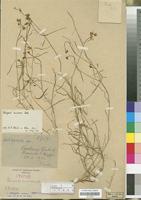
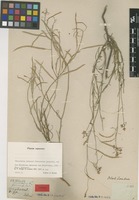
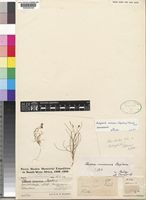
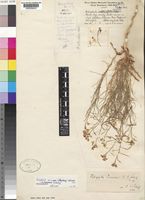
Heliophila minima

8 Images see all

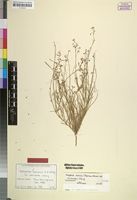
Type? of Heliophila simplicifolia Dinter nom. nud. [family CRUCIFERAE/BRASSICACEAE]
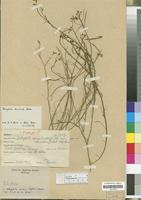
Filed as Heliophila minima (Stephens) Marais [family BRASSICACEAE]
Heliophila minima (Stephens) Marais [family CRUCIFERAE]
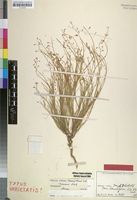
Isotype of Heliophila pearsonii var. edentata Hainz [family CRUCIFERAE]
Holotype of Heliophila pearsonii var. edentata Hainz [family CRUCIFERAE]
Type? of Heliophila simplicifolia Dinter nom. nud. [family CRUCIFERAE/BRASSICACEAE]
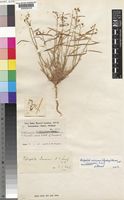
Heliophila minima (Stephens) Marais [family CRUCIFERAE]
Previous
Next

Name

Identification
Heliophila minima (Stepehens) Marais [family CRUCIFERAE/BRASSICACEAE ] (stored under name); Verified by HBG-formal name change, 2008 Heliophila deserticola Schltr. [family CRUCIFERAE/BRASSICACEAE ] Verified by Not on sheet, Heliophila simplicifolia Dinter nom. nud. [family CRUCIFERAE/BRASSICACEAE ] Verified by Not on sheet,
Related name
  • Cleome minima
  • Heliophila simplicifolia
  • Heliophila pearsonii
  • Heliophila deserticola
  • Heliophila minima
  • Heliophila crithmifolia

Flora

Entry for Heliophila minima [family BRASSICACEAE]
Herbarium
South African National Biodiversity Institute, Compton Herbarium, Cape Town (SAM)
Collection
Flora of Southern Africa
Resource Type
Reference Sources
Entry From
Flora of South Africa, (2003) Author: Dr J.P. Roux
Names
Heliophila minima [family BRASSICACEAE]
Common names
Cleome minima Stephens in Ann. S. Afr. Mus. 9:35 (1912). H. pearsonii O. E. Schulz in Bot. Archiv 31 : 528 (1931). Syntypes : Karasberg, Pearson 7869 (B!; BOL!; K!); Pearson 9007 (BOL!; K!). var. prageri O. E. Schulz, I.e. (1931), as to Range 507. H. edentula prol. macrosperma O. E. Schulz, I.e. (1931), partly as to Dinter 923. H. deserticola sensu O. E. Schulz, I.e. : 526 (1931), partly, as to Dinter 3727. ? H. deserticola var. rangei O. E. Schulz, I.e. 527 (1931). Type : Range 1771. H. suavissima var. velu-tina O. E. Schulz, I.e. 541 (1931). Type : Zeylwr 43 (K!). var. incana Sond. in F. C. 1 : 49 (1860).
Information
Annual or perennial herbs 5-60 cm high, erect, usually much branched; basal part of stem and young shoots puberulous or shortly hairy. Leaves 2-12 cm long, 0-5-1-5 mm broad, linear or linear-filiform, simple or 2-3-fid, often glaucous, puberulous or shortly hairy on the upper surface; each subtended by 2 minute, filiform, caducous stipules. Racemes lax, elongating in fruit. Pedicels glabrous or sparsely puberulous, in flower 0-8-1-2 cm long, erect; in fruit 1-2 cm long, spreading or recurved; with 2 minute bracts similar to the stipules. Sepals 3-8-5-5 mm long, 1-2-1-8 mm broad, narrowly oblong, semi-persistent; the outer 2 cucullate, some­times thickened at the apex, with a mem­branous margin; inner 2 saccate, with a broad membranous margin. Petals 6-8 • 8 mm long, 1 • 2-4 • 5 mm broad, mostly narrowly elliptic but sometimes obovate, clawed, sub­acute or rounded, without or with a small appendage. Filaments 3-4-4-1 mm and 4-4-5 mm long; the short ones mostly with an appendage, sometimes without; the long ones papillate or smooth. Anthers 1-5-2-5 mm long. Ovary linear-oblong
Use
14. Heliophila minima (Stephens) Marais in Bothalia 8 : 166 (1964); Schreiber in F.S.W.A. 48 : 7 (1966). Type : S.W.A., Schakalskuppe, Pearson 4791 (K!).
Range
Extending from the southern parts of South West Africa through the northern Cape into the Free State. Usually found on sandy soils. Flowering seems to be entirely dependent on rain, but the main period is from August to September, with a second flush in April and May. The flowers are variously described as pale mauve, pale lilac, pale purple, pale blue or white. According to Acocks the flowers are sweetly scented.

Related Materials

  • Terms and Conditions
  • Privacy Policy
  • Cookie Policy
  • Cookie Settings
  • Accessibility
  • Help
  • Contact Us
  • Facebook
  • Twitter
ITHAKA

JSTOR is part of ITHAKA, a not-for-profit organization helping the academic community use digital technologies to preserve the scholarly record and to advance research and teaching in sustainable ways.

©2000-2026 ITHAKA. All Rights Reserved. JSTOR®, the JSTOR logo, JPASS®, Aluka®, and ITHAKA® are registered trademarks of ITHAKA.

╳