JSTOR Global Plants Home
  • Home
  • Browse
  • About
  • Access
  • Account
    • Saved Items
    • Profile
  • Log in

Global Plants

Skip to Main Content
  • JSTOR Global Plants Home
  • Global Plants

    • Browse
    • About
    • Access
    • Account
      • Saved Items
      • Profile
Log in
  • Browse
  • About
  • Access
  • Account
    • Saved Items
    • Profile
Advanced Search

Compilation
Heliophila carnosa

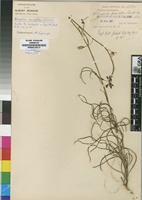
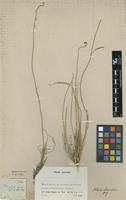
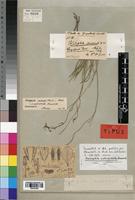
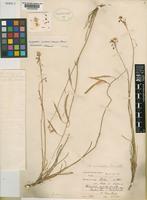
15 Images see all

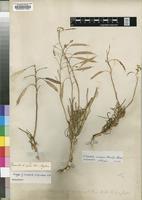
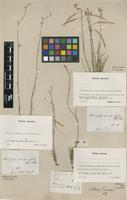
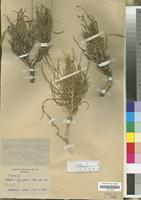
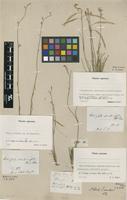
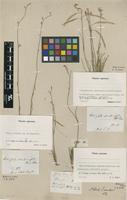
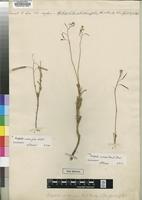
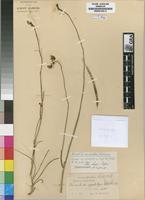
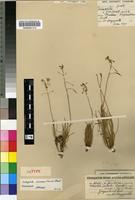
Holotype of Heliophila platysiliqua R.Br. [family BRASSICACEAE]
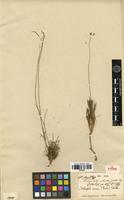
Type? of Heliophila abrotanifolia Banks ex DC. [family BRASSICACEAE]
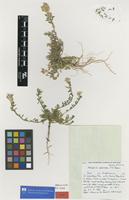
Type? of Heliophila pugioniformis Dinter nom. nud. [family CRUCIFERAE/BRASSICACEAE]
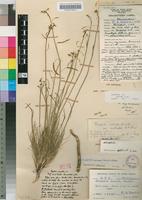
Type? of Heliophila abrotanifolia Banks ex DC. [family BRASSICACEAE]
Isotype of Heliophila abrotanifolia DC. [family BRASSICACEAE]
Type of Heliophila ephemera P.A.Bean [family BRASSICACEAE]
Holotype of Heliophila sulcata Conrath [family BRASSICACEAE]
Type of Heliophila grandiflora Schltr. [family BRASSICACEAE]
Type of Heliophila abrotanifolia Banks ex DC. [family BRASSICACEAE]
Type of Heliophila subcornuta Beauverd [family BRASSICACEAE]
Heliophila carnosa (Thunb.) Steud. [family CRUCIFERAE]
Type of Heliophila abrotanifolia DC. [family BRASSICACEAE]
Isotype of Heliophila grandiflora Schltr. [family BRASSICACEAE]
Syntype of Heliophila carnosa (Thunb.) Steud. [family BRASSICACEAE]
Previous
Next

Name

Identification
Heliophila abrotanifolia DC. [family BRASSICACEAE ] Heliophila carnosa (Thunb.) Steud. [family BRASSICACEAE ] (stored under name); Verified by Marais,W., 1964
Related name
  • Heliophila carnosa
  • Heliophila sulcata
  • Heliophila pugioniformis
  • Heliophila abrotanifolia
  • Heliophila platysiliqua
  • Heliophila subcornuta
  • Heliophila grandiflora
  • Heliophila ephemera

Flora

Entry for Heliophila carnosa [family BRASSICACEAE]
Herbarium
South African National Biodiversity Institute, Compton Herbarium, Cape Town (SAM)
Collection
Flora of Southern Africa
Resource Type
Reference Sources
Entry From
Flora of South Africa, (2003) Author: Dr J.P. Roux
Names
Heliophila carnosa [family BRASSICACEAE]
Common names
Clieiranthus carnosus Thunb., Prodr. 108 (1800). C. gramineus Thunb., I.e. (1800). Type : Thunberg Herb. No. 15157 (UPS!). Heliophila tripartita Thunb., I.e. (1800). Type : Thunberg Herb. No. 15227 (UPS!). H. platysillqua R.Br, in Ait.f., Hort. Kew ed. 2, 4 : 99 (1812); DC, Syst. 2 : 692 (1821). Type : Masson s.n. (BM!). H. graminea (Thunb.) DC, I.e. 697 (1821); Sond. in Abh. Ges. Naturw. Hamb. 1 : 239 (1846); F.C. 1 : (1860). H. abrotanifolia Banks ex DC, I.e. 690 (1821), excluding description of fruit and seed; Sond. in Abh. Ges. Naturw. Hamb. 1 : 244 (1846); F.C. 1 : (1860), Type : Masson s.n., partly, excluding the fruiting material (BM!). H. trijurca Burch. ex DC, I.e. 688 (1821), partly, as to syn. H. tripartita Thunb. H. succulcnta Banks ex Sond. in Abh. Ges. Naturw. Hamb. I : 249 (1846); F.C. 1 : 50 (1860). nom. illegit. H. abrotanifolia var. tripartita (Thunb.) Sond. in Abh. Ges. Naturw. Hamb. 1 : 244 (1846); F.C. 1 : 48 (1860). Type as for H. tripartita.—var. heterophvlla (Thunb.) Sond. in Abh. Ges. Naturw. Hamb. I : 244 (1846); F.C.
Information
Erect, glabrous shrublets up to 60 cm high, woody at the base from which arise annual flowering shoots with the leaves mostly crowded near the base, or tussock-forming plants with the leaves in a dense rosette; lower part of the annual stems often reddish or purplish. Leaves 3-20 cm long, 0-5-4 mm broad, entire, filiform to strap-shaped or lobed in the upper half with the lobes short (3-5 mm), or long (up to 3 cm), or finely to coarsely pinnately lobed, often somewhat fleshy, acute or acuminate, the midribs of the basal leaves peristent. Stipules subulate-filiform, caducous except on the lower leaves where they are united with the expanded, sheath-like base. Peduncles 8-35 cm long, nearly naked or sparsely and re­motely leafy, simple or laxly branched; racemes contracted in the early stages, lengthening to up to 20 cm in fruit. Pedicels 0-7-2-5 cm long in flower, erect, thickened at the apex, subtended by 2 caducous sub­ulate bracts; 1-2-8 cm long in fruit, recurved. Sepals 4-8-5 mm long, 1-3-3-5 mm broad, oblong; outer 2 cucullate and shortly horn-tipped; inner 2 saccate, with broad mem­branous margins. Petals 6-5-13-5 mm long, 4-9-5 mm broad, narrowly obovate to obo-vate-circular, rounded, the claw thick, often minutely papillate. Filaments 3-5-5-3 mm and 3 • 8-5 • 8 mm long, the 2 short ones some­times minutely papillate at the base. Anthers 2-4 mm long. Ovary linear-oblong; stigma small, capitate; ovules 14-30. Fruits 2-5-8 cm long, 2-5-5 (-6) mm broad, broadly linear with straight margins; valves 1-nerved, faintly reticulate, flat; style 3-10 mm long, straight. Seeds 2-5-4 x 2-8-5-5 mm, sub-circular or broadly oblong, narrowly winged. Fig. 9:2.
Habitat
The flowering period of the plants from the western districts is from August to October, while the plants from the eastern part of the distribution area flower mostly from September to January, occasionally also in the autumn. The flowers are variously described as white, pale mauve or pink, occasionally as purple or blue. The few labels giving more detail suggest that the petals are violet or mauve in bud, white when expanded, and become tinged with violet or mauve as they fade.
Use
50. Heliophila carnosa (Thunb.) Steud., Norn. ed. 2, 1 : 742 (1840); Schreiber in F.S.W.A. 48 : 6 (1966). Type : Thunberg Herb. No. 15141 (UPS!).
Range
The most widespread species, extending from the southern part of South West Africa to Worcester, along the mountains to the eastern and north-eastern Cape, into East Griqualand, Lesotho, the southern and eastern Orange Free State, northern Natal and southern Transvaal. The habitat seems to be in­variably dry and is usually given as among grass or bushes on sandy, gravelly, rocky or shale soil, frequently on slopes or koppies.

Related Materials

  • Terms and Conditions
  • Privacy Policy
  • Cookie Policy
  • Cookie Settings
  • Accessibility
  • Help
  • Contact Us
  • Facebook
  • Twitter
ITHAKA

JSTOR is part of ITHAKA, a not-for-profit organization helping the academic community use digital technologies to preserve the scholarly record and to advance research and teaching in sustainable ways.

©2000-2026 ITHAKA. All Rights Reserved. JSTOR®, the JSTOR logo, JPASS®, Aluka®, and ITHAKA® are registered trademarks of ITHAKA.

╳