JSTOR Global Plants Home
  • Home
  • Browse
  • About
  • Access
  • Account
    • Saved Items
    • Profile
  • Log in

Global Plants

Skip to Main Content
  • JSTOR Global Plants Home
  • Global Plants

    • Browse
    • About
    • Access
    • Account
      • Saved Items
      • Profile
Log in
  • Browse
  • About
  • Access
  • Account
    • Saved Items
    • Profile
Advanced Search

Compilation
Helichrysum wilmsii

6 Images see all

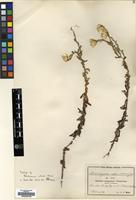
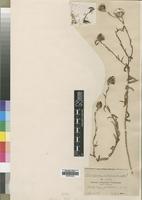
Syntype of Helichrysum wilmsii Moeser [family COMPOSITAE]
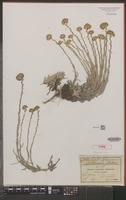
Type of Helichrysum truncatum Burtt Davy [family COMPOSITAE]
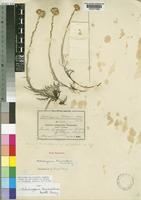
Isotype of Helichrysum wilmsii Moeser [family COMPOSITAE]
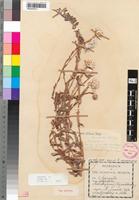
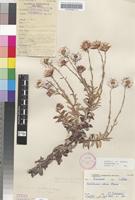
Syntype of Helichrysum wilmsii Moeser [family ASTERACEAE]
Filed as Helichrysum wilmsii Moeser [family ASTERACEAE]
Previous
Next

Name

Identification
Helichrysum wilmsii Moeser [family ASTERACEAE ] (stored under name); Helichrysum adenocarpum DC. [family ASTERACEAE ]
Related name
  • Helichrysum adenocarpum
  • Helichrysum wilmsii
  • Helichrysum truncatum

Flora

Entry for Helichrysum wilmsii [family ASTERACEAE]
Herbarium
South African National Biodiversity Institute, Compton Herbarium, Cape Town (SAM)
Collection
Flora of Southern Africa
Resource Type
Reference Sources
Entry From
Flora of South Africa, (2003) Author: Dr J.P. Roux
Names
Helichrysum wilmsii [family ASTERACEAE]
Information
Soft-wooded subshrub, branches long, loose, straggling or sprawling, glandularr pubescent, white-cobwebby as well, partic­ularly on young parts, leafy. Leaves mostly 12—30 x 3—9 mm, smaller and more distant upwards, narrowly panduriform to oblong becoming lanceolate-acuminate upwards, apex obtuse to acute, apiculate, base broad, more or less cordate-clasping, margins scarcely re volute, upper surface glandular-pubescent, sometimes greyish-white cob­webby as well, lower white-woolly or cobwebby. Heads heterogamous, campanu­late, c. 13—20 mm long, nearly double that across the radiating bracts, solitary at the tips of long laxly leafy then bracteate branchlets. Involucral bracts in c. 10 series, graded, imbricate, inner much exceeding flowers, acute, glossy, outer pale or rich chestnut brown sometimes with a rosy overcast, inner white sometimes tinged rose. Receptacle shortly honeycombed. Flowers 219-483, 18-39 ("female"), 188-445 ("bisexual"). Achenes 0,75 mm long, glabrous. Pappus bristles many, equalling corolla, barbellate above, bases not cohering.
Habitat
Compton 31491 (NBG; PRE) from Emlembe Mountain, Barberton Mts, is possibly H. wilmsii x H. cooperi (no. 240) or a species allied to H. cooperi. Hilliard & Burtt 14319 (E; K; NU; PRE; S), from the summit of the Wolkberg, is a hybrid between H. wilmsii and H. confertifolium (no. 220), both of which also grow on the summit of the Wolkberg. The hybrid (one plant only seen) has the habit of H. wilmsii and was in full flower when H. wilmsii, growing nearby, was only budding. The foliage is intermediate between that of H. wilmsii and H. confertifolium and the heads are borne either singly or in loose open corymbs, as in H. confertifolium.
Use
216. Helichrysum wilmsii Moeser in Bot. Jb. 44: 333 (1910); Compton, Fl. Swaziland 636 (1976). Lectotype: Eastern Transvaal, between Spitzkop & Komati River, July 1884, Wilms 707 (E!; G!).
Range
Ranges from Magoebaskloof and Woodbush in the NE. Transvaal south along the mountains to the Barberton Mountains and the mountains near Mba­bane in Swaziland. Forms straggling tangled clumps in rough rocky grassland and forest margin herbage. Flowering recorded between November and July, at its peak in April and May. Map 210. Ranges from Mount Sheba in the Transvaal Drakensberg to the high country in the SE. Transvaal and neighbouring Swaziland and through the Midlands of Natal to Umzimkulu district in the Transkei and the Suurberg near Weza in southernmost Natal. Grows in large tangled clumps in grassland, particularly among outcropping rocks; flowering between November and April. Map 211.

Related Materials

  • Terms and Conditions
  • Privacy Policy
  • Cookie Policy
  • Cookie Settings
  • Accessibility
  • Help
  • Contact Us
  • Facebook
  • Twitter
ITHAKA

JSTOR is part of ITHAKA, a not-for-profit organization helping the academic community use digital technologies to preserve the scholarly record and to advance research and teaching in sustainable ways.

©2000-2026 ITHAKA. All Rights Reserved. JSTOR®, the JSTOR logo, JPASS®, Aluka®, and ITHAKA® are registered trademarks of ITHAKA.

╳