JSTOR Global Plants Home
  • Home
  • Browse
  • About
  • Access
  • Account
    • Saved Items
    • Profile
  • Log in

Global Plants

Skip to Main Content
  • JSTOR Global Plants Home
  • Global Plants

    • Browse
    • About
    • Access
    • Account
      • Saved Items
      • Profile
Log in
  • Browse
  • About
  • Access
  • Account
    • Saved Items
    • Profile
Advanced Search

Compilation
Helichrysum pandurifolium

12 Images see all

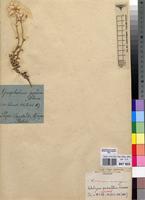
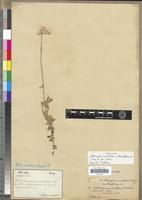
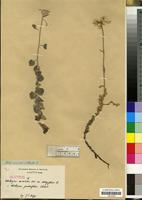
Isotype of Helichrysum pandurifolium Schrank [family ASTERACEAE]
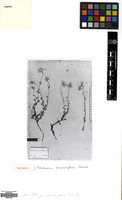
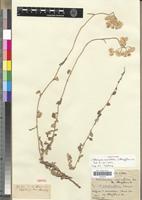
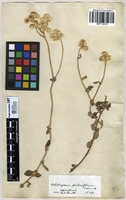
Type of Helichrysum pandurifolium Schrank [family COMPOSITAE]
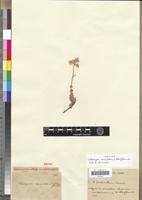
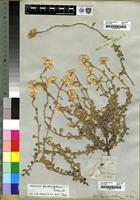
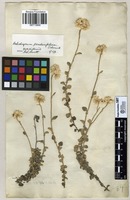
Isotype of Helichrysum auriculatum (Thunb.) Less. [family COMPOSITAE]
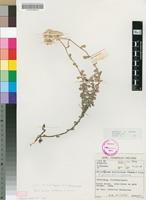
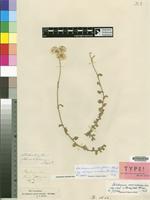
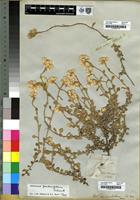
Isotype of Helichrysum auriculatum (Thunb.) Less. var. oblongifolium DC. [family ASTERACEAE]
Filed as Helichrysum pandurifolium Schrank [family ASTERACEAE]
Isotype of Helichrysum auriculatum (Thunb.) Less. var. oblongifolium DC. [family ASTERACEAE]
Filed as Helichrysum pandurifolium Schrank [family ASTERACEAE]
Isotype of Helichrysum auriculatum Less. var. oblongifolium DC. [family COMPOSITAE/ASTERACEAE]
Filed as Helichrysum pandurifolium Schrank [family ASTERACEAE]
Previous
Next

Name

Identification
Isotype of Helichrysum pandurifolium Schrank [family ASTERACEAE ] (stored under name); Verified by Not on sheet,
Related name
  • Helichrysum pandurifolium
  • Helichrysum auriculatum

Flora

Entry for Helichrysum pandurifolium [family ASTERACEAE]
Herbarium
South African National Biodiversity Institute, Compton Herbarium, Cape Town (SAM)
Collection
Flora of Southern Africa
Resource Type
Reference Sources
Entry From
Flora of South Africa, (2003) Author: Dr J.P. Roux
Names
Helichrysum pandurifolium [family ASTERACEAE]
Common names
Gnaphalium auriculatum Thunb., Prodr. 151 (1800), Fl. Cap. 657 (1823), non Lam. 1788. Helichrysum auriculatum Less., Syn. Comp. 311 (1832); DC, Prodr. 6: 209 (1838); Harv. in F.C. 3: 253 (1865) excl. var. panduratum Harv.; Moeser in Bot. Jb. 44: 311 (1910); Levyns in Adamson & Salter, Fl. Cape Penins. 785 (1950). Type: Cape, Table Mountain, Thunberg (sheet 19103, UPS, nolo.!). H. auriculatum var. oblongifolium DC, Prodr. 6: 209 (1838). Type: Cape, Table Mtn, Drege 295 (G-DC, nolo.!; BM, iso.!).
Information
A loosely branched, soft-wooded shrub, branches long, slender, thinly grey-woolly, leafy becoming pedunculoid and distantly bracteate below the inflorescence. Leaves mostly 8-16 x 8-10 mm, orbicular to broadly ovate abruptly narrowed to a broad petiole-like ear-clasping base, mar­gins markedly crisped-undulate, both sur­faces grey-woolly. Heads homogamous, broadly campanulate, c. 5—8 x 6—10 mm (—14 mm when fully radiating), few to many in loose terminal corymbose panicles. Involucral bracts in c. 6 series, graded, loosely imbricate, outer sometimes palest brown, inner exceeding the flowers, backs loosely woolly above stereome, radiating, tips acute or subacute, somewhat crisped, opaque milk-white, sometimes suffused with rose. Receptacle with fimbrils exceed­ing ovaries. Flowers 12—39, yellow. Achenes 0,75 mm, barrel-shaped, glabrous. Pappus bristless many, scabrid, about equalling corolla, bases cohering strongly by patent cilia. Fig. 40: 3.
Habitat
Can be confused with both H. patulum (below) and H. petiolare (no. 132) but distinguished by its more pointed involucral bracts.
Use
130. Helichrysum pandurifolium Schrank in Denkschr. K. Akad. Wiss. Munch. 8: 169 (1824). Type: Cape of Good Hope, Brehm s.n. (M, nolo.!).
Range
Ranges from the Cape Peninsula, Bainskloof and Waboom's River through the coastal districts to the Tsitsikama and Kouga Mountains, on hill and mountain slopes in sandy or rocky places, from near sea level to c. 1 500 m. Flowers between September and January, but mainly from October to December. Map 135.

Related Materials

  • Terms and Conditions
  • Privacy Policy
  • Cookie Policy
  • Cookie Settings
  • Accessibility
  • Help
  • Contact Us
  • Facebook
  • Twitter
ITHAKA

JSTOR is part of ITHAKA, a not-for-profit organization helping the academic community use digital technologies to preserve the scholarly record and to advance research and teaching in sustainable ways.

©2000-2026 ITHAKA. All Rights Reserved. JSTOR®, the JSTOR logo, JPASS®, Aluka®, and ITHAKA® are registered trademarks of ITHAKA.

╳