JSTOR Global Plants Home
  • Home
  • Browse
  • About
  • Access
  • Account
    • Saved Items
    • Profile
  • Log in

Global Plants

Skip to Main Content
  • JSTOR Global Plants Home
  • Global Plants

    • Browse
    • About
    • Access
    • Account
      • Saved Items
      • Profile
Log in
  • Browse
  • About
  • Access
  • Account
    • Saved Items
    • Profile
Advanced Search

Compilation
Helichrysum molestum

4 Images see all

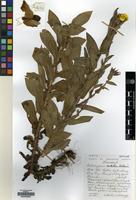
Isotype of Helichrysum molestum Hilliard [family COMPOSITAE]
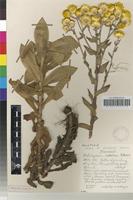
Holotype of Helichrysum molestum Hilliard [family ASTERACEAE]
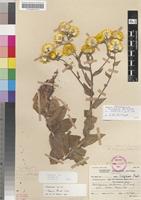
Filed as Helichrysum molestum Hilliard [family ASTERACEAE]
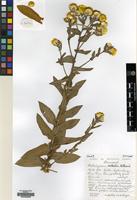
Isotype of Helichrysum molestum Hilliard [family COMPOSITAE]
Previous
Next

Name

Identification
Isotype of Helichrysum molestum Hilliard [family COMPOSITAE ] (stored under name); Verified by Not on sheet,
Related name
  • Helichrysum molestum

Flora

Entry for Helichrysum molestum [family ASTERACEAE]
Herbarium
South African National Biodiversity Institute, Compton Herbarium, Cape Town (SAM)
Collection
Flora of Southern Africa
Resource Type
Reference Sources
Entry From
Flora of South Africa, (2003) Author: Dr J.P. Roux
Names
Helichrysum molestum [family ASTERACEAE]
Information
Perennial herb up to c. 1 m tall, stems several from the base, simple below, branching above into the compound in­florescence, stout, glandular-setose, upper­most parts sometimes cobwebby as well, closely leafy. Leaves mostly 65 — 100 x 18—32 mm, smaller on the inflorescence branches, oblong or oblong-ovate, upper­most ovate-lanceolate, apex acute, mucro­nate, base cordate-clasping, shortly decur­rent, both surfaces glandular setose, mar­gins and midline sometimes thinly white-woolly (sometimes one or both surfaces thinly woolly: see notes below). Heads heterogamous, depressed-globose, c. 11 — 14 mm long, 22—30 mm across the radiating bracts, many in a large leafy spreading corymbose panicle. Involucral bracts in c. 9 series, graded, imbricate, much exceeding the flowers, glossy, bright yellow. Recep­tacle shortly honeycombed. Flowers c. 1000-1300, 65-135 ("female"), 1035-1235 ("bisexual"). Pappus bristles many, equalling corolla, tips barbellate, shaft scabrid, bases cohering by patent cilia.
Habitat
H. molestum can easily be confused with H. difficile (no. 241), but is usually more robust, with broader leaves; it is distinguished from H. cooperi (no. 240) by its perennial habit and usually larger heads.
Use
242. Helichrysum molestum Hilliard in Notes R. bot. Gdn Edinb. 40: 260 (1982). Type: Transvaal, 2530 BA, Sabie to Lydenburg road, Long Tom Pass, Whisky Spruit, marshy ground by stream, 15 iii 1981, Hilliard & Burtt 14364 (NU, holo.!; E; PRE, iso.!).
Range
Recorded with certainty from the highlands of the eastern Transvaal, from Mount Anderson south to the Barberton mountains, but possibly ranges as far north as the Soutpansberg, west along the Magaliesberg, and south to northern Natal (see notes below). Favours moist ground in rough grassland or at the margins of scrub or forest patches; flowering mainly in March and April. Map 236.

Related Materials

  • Terms and Conditions
  • Privacy Policy
  • Cookie Policy
  • Cookie Settings
  • Accessibility
  • Help
  • Contact Us
  • Facebook
  • Twitter
ITHAKA

JSTOR is part of ITHAKA, a not-for-profit organization helping the academic community use digital technologies to preserve the scholarly record and to advance research and teaching in sustainable ways.

©2000-2026 ITHAKA. All Rights Reserved. JSTOR®, the JSTOR logo, JPASS®, Aluka®, and ITHAKA® are registered trademarks of ITHAKA.

╳