JSTOR Global Plants Home
  • Home
  • Browse
  • About
  • Access
  • Account
    • Saved Items
    • Profile
  • Log in

Global Plants

Skip to Main Content
  • JSTOR Global Plants Home
  • Global Plants

    • Browse
    • About
    • Access
    • Account
      • Saved Items
      • Profile
Log in
  • Browse
  • About
  • Access
  • Account
    • Saved Items
    • Profile
Advanced Search

Compilation
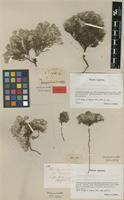
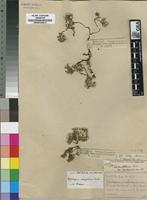
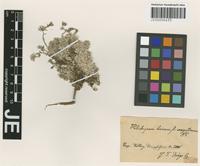
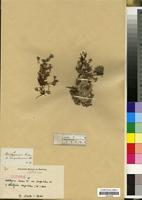
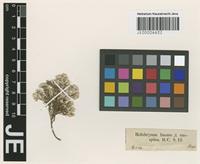
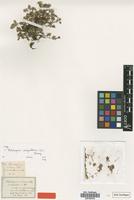
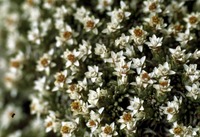
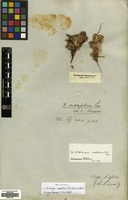
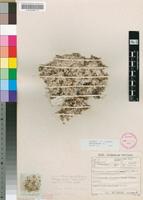
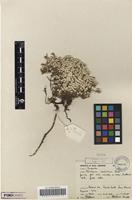
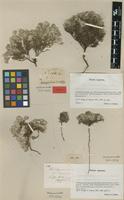
Helichrysum caespititium

15 Images see all

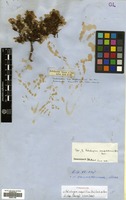
Filed as Helichrysum lineare DC. var. caespititium DC. [family ASTERACEAE]
Type of Helichrysum caespititium Sond. [family ASTERACEAE]
Type? of Helichrysum caespititium (DC.) Harv. [family ASTERACEAE]
Helichrysum caespititium (DC.) Harv.
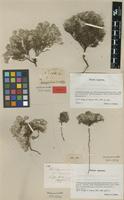
Isotype of Helichrysum caespititium (DC.) Harv. [family COMPOSITAE/ASTERACEAE]
Type? of Helichrysum caespititium (DC.) Harv. [family ASTERACEAE]
Type of Helichrysum caespititium (DC.) Harv. [family ASTERACEAE]
Helichrysum caespititium (DC.) Harv.
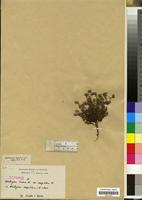
Isosyntype of Helichrysum caespititium (DC.) Sond. ex Harv. [family COMPOSITAE]
Filed as Helichrysum caespititium (DC.) Harv. [family ASTERACEAE]
Isotype of Helichrysum lineare DC. var. caespititium DC. [family ASTERACEAE]
Isosyntype of Helichrysum caespititium (DC.) Sond. ex Harv. [family COMPOSITAE]
Filed as Helichrysum lineare DC. var. caespititium DC. [family ASTERACEAE]
Isotype of Helichrysum caespititium (DC.) Harv. [family COMPOSITAE/ASTERACEAE]
Previous
Next

Name

Identification
Helichrysum caespititium (DC.) Harv. [family ASTERACEAE ] (stored under name); Verified by Wagenitz, G., 1977 Helichrysum lineare DC. [family ASTERACEAE ] Verified by Not on Sheet,
Related name
  • Helichrysum lineare
  • Helichrysum caespititium

Flora

Entry for Helichrysum caespititium [family ASTERACEAE]
Herbarium
South African National Biodiversity Institute, Compton Herbarium, Cape Town (SAM)
Collection
Flora of Southern Africa
Resource Type
Reference Sources
Entry From
Flora of South Africa, (2003) Author: Dr J.P. Roux
Names
Helichrysum caespititium [family ASTERACEAE]
Common names
H. lineare DC. var. caespititium DC, Prodr. 6: 172 (1838). H. metalasioides DC, Prodr. 6: 171 (1838) p.p. quoad Burchell 2272 (G-DC!).
Information
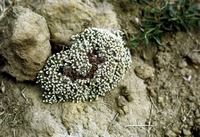
Prostrate perennial mat-forming herb, profusely branched, densely tufted, branch-lets c. 10 mm tall, closely leafy. Leaves more or less patent, up to c. 5 — 10 x 0,5 mm, linear, subacute or obtuse, base broad, clasping, margins revolute, both surfaces enveloped in silvery 'tissue-paper-like' in­dumentum breaking down to wool, rarely loosely woolly, dotted with orange glands. Heads homogamous. cylindric-turbinate, c. 5x2 mm, solitary to several clustered at the branchlet tips. Involucral bracts in c. 6 series, outermost short, pellucid, webbed together and to the surrounding leaves with wool, persistent, inner series subequal, tips opaque white or sometimes pale pink, slightly exceeding the flowers, minutely radiating, soon deciduous. Receptacle with flattened tubercles. Flowers 11—24, yellow, often tipped pink. Achenes 0,75 mm, elliptic, with myxogenic duplex hairs. Pappus bristles many, equalling corolla, scabrid, bases with minute patent cilia not cohering.
Habitat
Distinguished from H. lineare (above) by its caespitose habit, narrower leaves, larger heads with usually more flowers but fewer heads clustered together, and minutely radiating bracts. Sometimes confused with H. paronychioides (no. 98). Map 85.
Use
61. Helichrysum caespititium (DC.) Harv. in F.C. 3: 217 (1865); Moeser in Bot. Jb. 44: 299 (1910); Hilliard, Compositae in Natal 209 (1977). Type: Tambukiland, Klipplaat River, Shiloh, Ecklon 1503 (not Drege, as quoted by DC.) (G-DC, nolo.!; E, iso.!).
Range
From about Kuruman and Griqualand West in the Northern Cape to the Orange Free State, Lesotho, NE. Cape, E. Griqualand and Natal, Swaziland and the Transvaal (Highveld, Drakensberg, Waterberg, Soutpansberg) between c. 650 and 1 900 m above sea level. Also in the eastern highlands of Zimbabwe. Forms big mats on bare or sparsely grassed areas, often on disturbed sites; flowering between August and December. Closely allied to H. asperum (no. 59) but distinguished by its different habit, minutely radiating involucral bracts, and often more flowers in the head.

Related Materials

  • Terms and Conditions
  • Privacy Policy
  • Cookie Policy
  • Cookie Settings
  • Accessibility
  • Help
  • Contact Us
  • Facebook
  • Twitter
ITHAKA

JSTOR is part of ITHAKA, a not-for-profit organization helping the academic community use digital technologies to preserve the scholarly record and to advance research and teaching in sustainable ways.

©2000-2026 ITHAKA. All Rights Reserved. JSTOR®, the JSTOR logo, JPASS®, Aluka®, and ITHAKA® are registered trademarks of ITHAKA.

╳