JSTOR Global Plants Home
  • Home
  • Browse
  • About
  • Access
  • Account
    • Saved Items
    • Profile
  • Log in

Global Plants

Skip to Main Content
  • JSTOR Global Plants Home
  • Global Plants

    • Browse
    • About
    • Access
    • Account
      • Saved Items
      • Profile
Log in
  • Browse
  • About
  • Access
  • Account
    • Saved Items
    • Profile
Advanced Search

Compilation
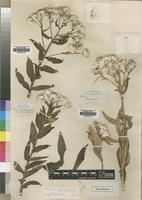
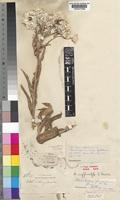
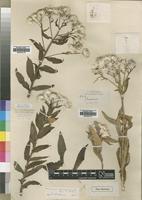
Helichrysum argyrocotyle

3 Images see all

Type? of Helichrysum argyrocotyle S.Moore [family ASTERACEAE]
Helichrysum formosissimum (Sch.Bip.) Sch.Bip. ex A.Rich. [family COMPOSITAE]
Type of Helichrysum argyrocotyle S.Moore [family ASTERACEAE]
Previous
Next

Name

Identification
Helichrysum argyrocotyle S.Moore [family ASTERACEAE ] Helichrysum formosissimum Sch.Bip. [family ASTERACEAE ] (stored under name);
Related name
  • Helichrysum argyrocotyle
  • Helichrysum formosissimum
  • Helichrysum unrecorded

Flora

Entry for HELICHRYSUM formosissimum var. formosissimum [family COMPOSITAE]
Herbarium
Royal Botanic Gardens, Kew (K)
Collection
Flora of Tropical East Africa
Resource Type
Reference Sources
Entry From
Flora of Tropical East Africa, page 315, (2002) Author: H.J. BEENTJE
Names
HELICHRYSUM formosissimum var. formosissimum [family COMPOSITAE], ; A.V.P.: 214, 347 (1957)
Gnaphalium formosissimum Sch. Bip. [family COMPOSITAE], in Bot. Zeit. 3: 173 (1845) & in Schweinf., Beitr. Fl. Aethiop.: 148 (1867)
Helichrysum formosissimum A. Rich. var. latifolium [family COMPOSITAE], Tent. Fl. Abyss. 1: 422 (1848). Type: Ethiopia, Shewa, Petit s.n. (P!, holo., K!, iso.)
Helichrysum elegantissimum [family COMPOSITAE], [sensu Oliv. & Hiern in F.T.A. 3: 350 (1877), non DC.]
Helichrysum elegantissimum Oliv. & Hiern var. majus [family COMPOSITAE], [in F.T.A. 3: 350 (1877). Type as for H. formosissimum ]
Helichrysum volkensii O. Hoffm. [family COMPOSITAE], in P.O.A. C: 410 (1895); Moeser in E.J. 44: 328 (1910). Type: Tanzania, Kilimanjaro, above Kiboscho, Volkens 1519 (B†, holo., BM!, BR!, K!, iso.)
Helichrysum argyrocotyle S. Moore [family COMPOSITAE], in J.L.S. 38: 260 (1908). Type: Uganda, E Ruwenzori, Wollaston s.n. (BM!, holo.)
Helichrysum cruentum S. Moore [family COMPOSITAE], in J. B. 54: 255 (1916). Type: Kenya, Mt Kenya, Orde Browne s.n. (BM!, holo.)
Helichrysum lychnophorum Mattf. [family COMPOSITAE], in E.J. 59, Beibl. 133: 15 (1924). Type: Uganda, Elgon, Dummer 3320 (B†, holo., K!, iso.)
Helichrysum formosissimum (O. Hoffm.) Hedberg var. volkensii [family COMPOSITAE], A.V.P.: 215, 347 (1957), nov.
Information
Leaves scabrid and glandular above, sometimes also arachnoid, 2–13 cm long, 0.5–4.5 cm wide. 
Range
DISTR. U 2, 3; K 2–5; T 2, 3
Altitude range
(1800–)2100–4350(–4700) m
Distribution
UGANDA Kigezi District Behungi, Dec. 1933, A. S. Thomas 1188!;KENYA Trans-Nzoia District Cherangani Hills, Dec. 1959, Bogdan 5000!;TANZANIA Mbulu District Hanang, Sep. 1932, Burtt 4044! & Elanairobi Volcano, Sep. 1932, Burtt 4169!;UGANDA Mbale District Elgon, Nov. 1933, Tothill 2420! & June 1949, Osmaston 3995!KENYA Naivasha District Kinangop, July 1948, Hedberg 1624!KENYA S Nyeri District Kamweti, Nov. 1971, Robertson 1628!TANZANIA Moshi District Kilimanjaro, above Peters hut, June 1948, Hedberg 1204!
Distribution (external)
; Congo (Kinshasa)
Rwanda
Sudan
Ethiopia
Notes
On the Ruwenzori all plants of this species have white phyllaries, on Elgon they are usually white but pink ones sometimes occur, while on Mt Hanang they are usually pink and the white ones are rare; on other mountains both types co-occur. Plants on Kilimanjaro often have rather long, narrow leaves, but variation with the normal type (which also occurs there) is continuous.Hedberg (1957) reduced H. volkensii to a variety, but remarked on the continuous variation in leaf shape (which was the only distinguishing character). I am reducing it here to a full synonym. The degree of revoluteness of the leaf margin and density of leaves is, according to Hedberg, environmentally conditioned and of no taxonomic value; hence the reduction of H. lychnophorum and H. cruentum by Hedberg.

Related Materials

  • Terms and Conditions
  • Privacy Policy
  • Cookie Policy
  • Cookie Settings
  • Accessibility
  • Help
  • Contact Us
  • Facebook
  • Twitter
ITHAKA

JSTOR is part of ITHAKA, a not-for-profit organization helping the academic community use digital technologies to preserve the scholarly record and to advance research and teaching in sustainable ways.

©2000-2026 ITHAKA. All Rights Reserved. JSTOR®, the JSTOR logo, JPASS®, Aluka®, and ITHAKA® are registered trademarks of ITHAKA.

╳