JSTOR Global Plants Home
  • Home
  • Browse
  • About
  • Access
  • Account
    • Saved Items
    • Profile
  • Log in

Global Plants

Skip to Main Content
  • JSTOR Global Plants Home
  • Global Plants

    • Browse
    • About
    • Access
    • Account
      • Saved Items
      • Profile
Log in
  • Browse
  • About
  • Access
  • Account
    • Saved Items
    • Profile
Advanced Search

Compilation
Helianthus tephrodes

2 Images see all

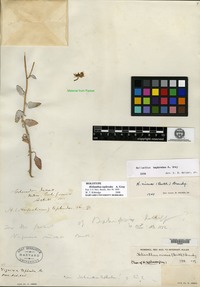
Holotype of Helianthus tephrodes A. Gray [family ASTERACEAE]
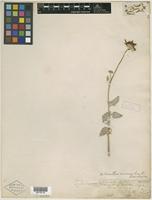
Type of Helianthus tephrodes A. Gray [family ASTERACEAE]
Previous
Next

Name

Identification
Helianthus tephrodes A. Gray [family ASTERACEAE ] (stored under name); Verified by C. B. Heiser, 1954 Helianthus tephrodes A. Gray [family ASTERACEAE ] Verified by A. Gray, Helianthus tephrodes A. Gray [family ASTERACEAE ] Verified by A. Gray, Viguiera nivea Bentham & Hooker f. [family ASTERACEAE ] Verified by A. Gray, Viguiera tephrodes (A. Gray) A. Gray [family ASTERACEAE ] Verified by A. Gray, Helianthus tephrodes A. Gray [family ASTERACEAE ] Verified by A. Gray, Helianthus niveus (Bentham) Brandegee [family ASTERACEAE ] Verified by S. F. Blake, 1917 Helianthus niveus (Bentham) Brandegee [family ASTERACEAE ] Verified by C. B. Heiser, 1949
Related name
  • Helianthus niveus
  • Viguiera tephrodes
  • Viguiera nivea
  • Helianthus tephrodes
Common name
  • Algodones or Algodones dunes sunflower, Flora of North America Vol. 21

Flora

Entry for Helianthus niveus (Bentham) Brandegee subsp. tephrodes (A. Gray) Heiser [family COMPOSITAE]
Herbarium
Flora of North America (FNA)
Collection
Flora of North America
Resource Type
Reference Sources
Entry From
Flora of North America, Vol 21,
Names
Helianthus niveus (Bentham) Brandegee subsp. tephrodes (A. Gray) Heiser [family COMPOSITAE], Mem. Torrey Bot. Club, 22(3): 43. 1969
Helianthus tephrodes A. Gray [family COMPOSITAE], in W. H. Emory, Rep. U.S. Mex. Bound., 2(1): 90. 1859
Treatment Author(s)
Edward E. Schilling
Information
Annuals or perennials, 50–150 cm (taproots stout). Stems erect or decumbent, sericeo-villous (hairs white). Leaves mostly cauline; mostly alternate; petioles 1.5–3.5 cm; blades deltate or deltate-ovate, 3–7 × 2–4 cm, bases cuneate, margins entire or serrulate, abaxial faces densely sericeous, gland-dotted. Heads 1–3. Peduncles 4–17 cm. Involucres hemispheric, 8–28 mm diam. Phyllaries 18–21, lanceolate, 8–10 × 1–3.5 mm, apices shortly attenuate, abaxial faces densely white-canescent. Paleae 8–11 mm, subentire to 3-toothed. Ray florets 10–13; laminae 16–25 mm. Disc florets 50+; corollas 4.5–6 mm, lobes reddish; anthers brownish red, appendages reddish (style branches reddish). Cypselae 4–8 mm, ± villous; pappi of 2(–3) lanceolate scales 1.5–3 mm plus 2–4 obtuse scales 0.5–1 mm. 2n = 34.
Conservation Status
of conservation concern;
Phenology
dec-feb (winter), mar-may (spring), sep-nov (fall)
Altitude range
50–300 m;
Distribution
Mexico (Sonora).USA Ariz.USA Calif.
Discussion
Subspecies tephrodes differs from subsp. niveus, which is not known to occur north of Mexico, by having less densely hairy phyllaries and generally broader leaves (larger leaves more than 3 cm broad). Both differ from H. petiolaris subsp. canescens (H. niveus subsp. canescens) by lacking the conspicuous white-villous tufts (“beard”) of the median cusp of the paleae in the center of the head that characterize H. petiolaris.
Subspecies tephrodes is in the Center for Plant Conservation’s National Collection of Endangered Plants.

Related Materials

  • Terms and Conditions
  • Privacy Policy
  • Cookie Policy
  • Cookie Settings
  • Accessibility
  • Help
  • Contact Us
  • Facebook
  • Twitter
ITHAKA

JSTOR is part of ITHAKA, a not-for-profit organization helping the academic community use digital technologies to preserve the scholarly record and to advance research and teaching in sustainable ways.

©2000-2026 ITHAKA. All Rights Reserved. JSTOR®, the JSTOR logo, JPASS®, Aluka®, and ITHAKA® are registered trademarks of ITHAKA.

╳