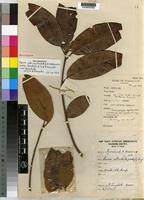
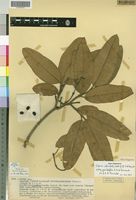
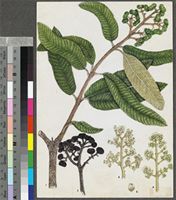
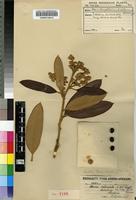
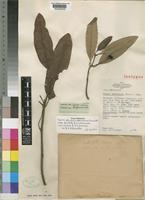
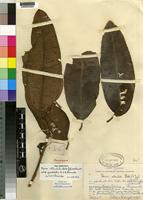
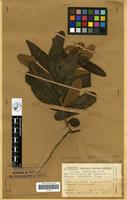
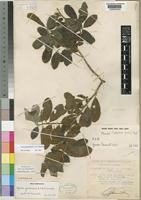
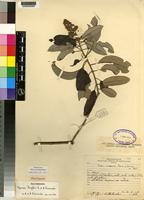
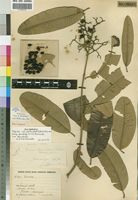
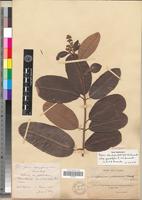
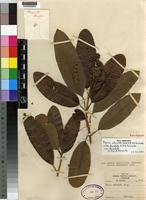
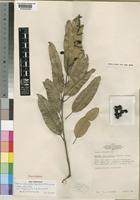
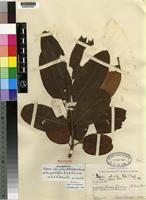
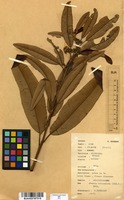
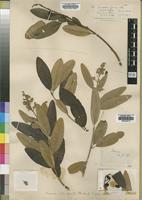
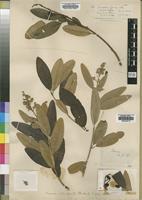
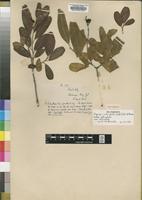
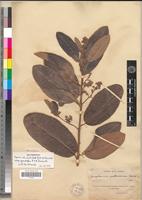
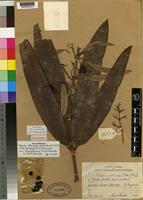
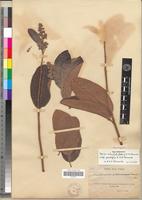
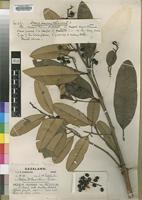
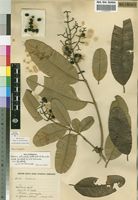
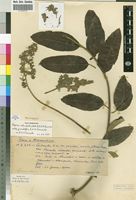
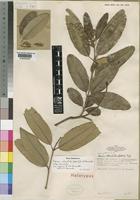
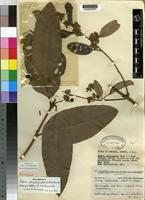
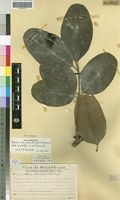
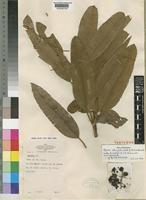
A much-branched tree up to 15 m. tall or sometimes a shrub; branches brownish, ochraceous or greyish, cylindric or grooved, rarely angled, puberulous to ± densely yellowish-villous, the oldest glabrescent and lenticellate. Leaves alternate or in whorls of 3; petiole subterete, flattened at the base, grooved to the apex on the upper side, densely villous to puberulous; lamina nearly concolorous to very discolorous, very variable in size and shape (see subspecies and varieties), usually 2·5–4 times as long as broad, obtuse or acute and mucronate at the apex, rounded or acute at the base, subcoriaceous to coriaceous; upper surface glabrous or puberulous to villous only on the nerves or ± velvety; under surface ± densely villous, usually with double indumentum; midrib impressed above, much raised below; lateral nerves ± raised below; reticulation ± prominent beneath, concealed or not by the indumentum. Panicles terminal and axillary, up to 17 cm. long, much branched, many-flowered, with the axis and branches puberulous to ± densely villous; bracts 3–4(10) mm. long, subulate; pedicels 1–1·5 mm. long, villous. Sepals 1·5–3·7 × 0·75–1·5 mm., ovate or ovate-triangular, somewhat acute, externally ± villous. Petals whitish or yellowish, 2·2–4 × 1–2 mm., oblong, obtuse and flat at the apex, dorsally appressed-pilose. Ovary compressed. Drupes black, shining, 7–8 × 9–11 mm., transversely ellipsoid, compressed, wrinkled.A very polymorphic species, the polymorphism probably due mainly to mutation and hybridization. Subspp. foveolata and grandifolia may prove to be distinct species.