JSTOR Global Plants Home
  • Home
  • Browse
  • About
  • Access
  • Account
    • Saved Items
    • Profile
  • Log in

Global Plants

Skip to Main Content
  • JSTOR Global Plants Home
  • Global Plants

    • Browse
    • About
    • Access
    • Account
      • Saved Items
      • Profile
Log in
  • Browse
  • About
  • Access
  • Account
    • Saved Items
    • Profile
Advanced Search

Compilation
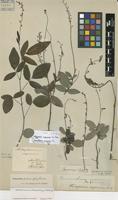
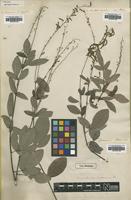
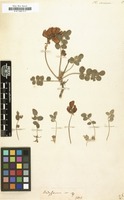
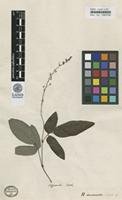
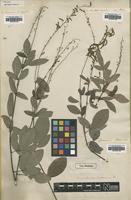
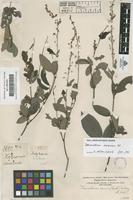
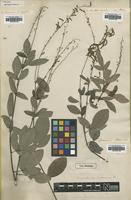
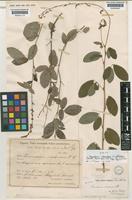
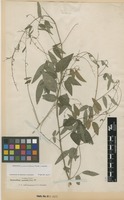
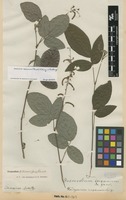
Hedysarum incanum

22 Images see all

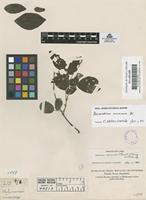
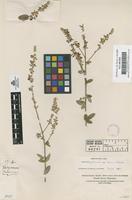
Filed as Desmodium scorpiurus (Sw.) Desv. [family FABACEAE]
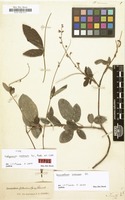
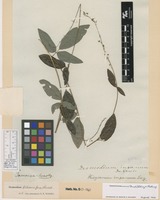
Filed as Desmodium incanum DC. [family FABACEAE]
Filed as Desmodium incanum DC. [family LEGUMINOSAE-PAPILIONOIDEAE]
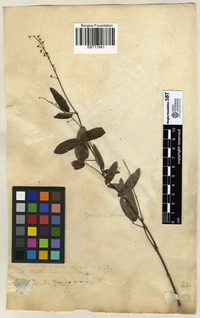
Type of Hedysarum supinum Sw. [family FABACEAE]
Not a type of Hedysarum canescens Mill. [family LEGUMINOSAE]
Filed as Desmodium incanum DC. [family FABACEAE]
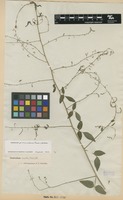
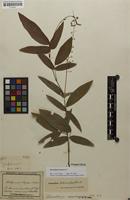
Type of Hedysarum canescens Mill. [family LEGUMINOSAE]
Filed as Desmodium incanum DC. [family LEGUMINOSAE-PAPILIONOIDEAE]
Not a type of Hedysarum canescens Mill. [family LEGUMINOSAE]
Desmodium adscendens (Sw.) DC. f. glabrescens Schindl. [family LEGUMINOSAE-PAPILIONOIDEAE]
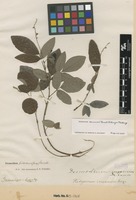
Type? of Hedysarum incanum Sw. [family FABACEAE]
Filed as Desmodium canum (J.F. Gmel.) Schinz. & Thell. [family LEGUMINOSAE-PAPILIONOIDEAE]
Filed as Hedysarum incanum [family LEGUMINOSAE-PAPILIONOIDEAE]
Type of Hedysarum incanum Sw. [family LEGUMINOSAE]
Filed as Desmodium procumbens (Mill.) Hitchc. [family FABACEAE]
Filed as Desmodium plicatum Schldl. & Cham. [family LEGUMINOSAE-PAPILIONOIDEAE]
Filed as Desmodium incanum DC. [family LEGUMINOSAE]
Filed as Desmodium incanum DC. [family FABACEAE]
Filed as Desmodium procumbens (Mill.) Hitchc. [family FABACEAE]
Filed as Desmodium incanum DC. [family FABACEAE]
Previous
Next

Name

Identification
Desmodium incanum DC. [family LEGUMINOSAE ] (stored under name); Hedysarum incanum Sw. [family LEGUMINOSAE ]
Related name
  • Desmodium incanum
  • Hedysarum incanum
  • Desmodium plicatum

Flora

Entry for DESMODIUM canum (J. F. Gmel.) Schinz & Thell. [family LEGUMINOSAE-PAPILIONOIDEAE]
Herbarium
Royal Botanic Gardens, Kew (K)
Collection
Flora of Tropical East Africa
Resource Type
Reference Sources
Entry From
Flora of Tropical East Africa, page 1, (1971) Author: J. B. GILLETT, R. M. POLHILL & B. VERDCOURT
Names
DESMODIUM canum (J. F. Gmel.) Schinz & Thell. [family LEGUMINOSAE-PAPILIONOIDEAE], in Schellenb., Schinz & Thell., Mem. Soc. Neuchâtel. 5: 371 (1913) & in F.R. 12: 428 (1913); Schubert in F.C.B. 5: 184 (1954); Hepper in F.W.T.A., ed. 2, 1: 584 (1958). Type: Plumier, Pl. Amer., ed. J. Burm., t. 149/1 (1756)
Hedysarum racemosum Aubl. [family LEGUMINOSAE-PAPILIONOIDEAE], Hist. Pl. Guiane Fr. 2: 774 (1775), non Thunb. (1784). Type: as for species; this name preoccupied in Desmodium by D. racemosum (Thunb.) DC. (1825)
Hedysarum frutescens [family LEGUMINOSAE-PAPILIONOIDEAE], [sensu Jacq., Hort. Bot. Vindob. 3: 47, t. 89 (1776), non L. (1753)]
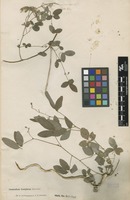
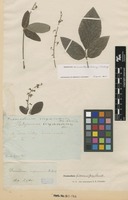
Hedysarum supinum Sw. [family LEGUMINOSAE-PAPILIONOIDEAE], Prodr. Veg. Ind. Occ.: 106 (1788) & Fl. Ind. Occ. 3: 1264 (1806), non Villars (1779–80). Type: Jamaica, Swartz (S, holo. !, GH, photo. !)
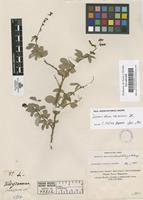
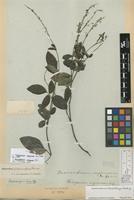
Hedysarum incanum Sw. [family LEGUMINOSAE-PAPILIONOIDEAE], Prodr. Veg. Ind. Occ.: 107 (1788) & Fl. Ind. Occ. 3: 1265 (1806), non Thunb. (1784). Type: Jamaica, Swartz (S, holo. !, GH, photo. !)
Hedysarum canum J. F. Gmel. [family LEGUMINOSAE-PAPILIONOIDEAE], in L., Syst. Nat., ed.13, 2 (2): 1124 (1791), non Lunan (1814)
Desmodium incanum (Sw.) DC. [family LEGUMINOSAE-PAPILIONOIDEAE], Prodr. 2: 332 (1825)
Desmodium supinum (Sw.) DC. [family LEGUMINOSAE-PAPILIONOIDEAE], Prodr. 2: 332 (1825)
Meibomia supina (Sw.) Britton [family LEGUMINOSAE-PAPILIONOIDEAE], Ann. New York Acad. 7: 83 (1892)
Meibomia incana (Sw.) Vail [family LEGUMINOSAE-PAPILIONOIDEAE], Bull. Torrey Bot. Cl. 19: 118 (1892)
Desmodium frutescens [family LEGUMINOSAE-PAPILIONOIDEAE], [sensu Schindl. in F.R. 21: 9 (1925), non Hedysarum frutescens L.]
Information
Spreading to ascending or erect perennial herb, or becoming a wiry or stout subshrub or shrub, 0.3–3 m. tall; stem striate to angular, reddish, uncinulate-puberulent to pubescent and somewhat pilose at least above. Leaves 3-foliolate; stipules partially connate abaxially, at least when young, obliquely ovate-acuminate, truncate at base, 3–11 mm. long, 1.5–3 mm. wide, soft puberulent on the outer surface, long-persistent; stipels subulate to linear-attenuate, 1–5.5 mm. long, ciliate and puberulent; petioles uncinulate-puberulent and long spreading pilose, 0.8–3.5 cm. long; leaf-rhachis similar, shorter, to 1.5 cm. long; petiolules rugose, rather densely stiff pilose, 1–3 mm. long; leaflets very variable, often nearly orbicular at base, becoming successively oval, oblong, and nearly lanceolate above, mostly ± elliptic, acute at apex, rounded at base, rather lustrous and dark above, or with a paler streak along midrib, pubescence not conspicuous, pale beneath and rather densely pilose; terminal leaflets 2–9 cm. long, 1.5–4.5 cm. wide, the lateral up to 6 cm. long and 3 cm. wide. Inflorescence of terminal and axillary racemes, the rhachis angular, ridged and grooved, densely uncinulate-puberulent; pedicels usually solitary but sometimes borne in fascicles of 3, the central flower not always developing to maturity, each pedicel (or fascicle) subtended by 1 primary bract and (if solitary) by 2 lateral secondary bracts, all of which are persistent; primary bracts lanceolate-acuminate, 2.2–4.5 mm. long, 0.5–0.8 mm. wide, puberulent on the outer surface; secondary bracts similar, 1–2 mm. long, to 0.5 mm. wide; pedicels densely uncinulate-puberulent and sometimes pilose, 4–10 mm. long. Calyx uncinulate-puberulent and abundantly pilose, the teeth of both lobes finely ciliate, 2–4 mm. long. Corolla blue or red to purple; standard obovate, retuse, 3–5.5 mm. long, 4–5 mm. wide; wings ± oblong, clawed for one-third their length, 3.5–6 mm. long, 1.5–2 mm. wide; keel-petals ± scythe-shaped, obtuse at apex, scarcely auricled, equalling the wings. Fruit stipitate, up to 8-articled; stipe 1.5–2.5 mm. long; articles essentially straight above, indented about two-thirds their width at the isthmi (below), uncinulate-pubescent throughout, 3.5–5 mm. long, 2–3.5 mm. wide. Seed obtusely oblong, 1 mm. long, 0.5 mm. wide.
Range
DISTR. U4; T2, 6; Z scattered throughout tropical Africa where it is probably introduced or an escape from cultivation; widespread in the warmer parts of America from southern Florida and Texas to Uruguay and Argentina; occasional throughout tropical areas of the world
Altitude range
0–1050 m.
Distribution
TANGANYIKA Arusha District Temi R., 28 Oct. 1962, Frahm-Leliveld 62107!TANGANYIKA Rufiji District Mafia I., Kirongwe, 26 Aug. 1937, Greenway 5168 !UGANDA Mengo District Kampala, Makerere College, 13 Oct. 1968, Hindorf 812! & Kawanda, 2 June 1969, Tiley 907 !ZANZIBAR Zanzibar I., Mwera, 27 Nov. 1962, Faulkner 3135 ! & Marahubi, 30 Nov. 1930, Vaughan 1711 ! & Ndagaa, 24 Oct. 1963, Faulkner 3295 !
Notes
This widespread and variable species has been described many times as is evident from the extensive synonymy, somewhat reduced here. Variations with very narrow leaflets have been named but have not been found in Africa. The texture of the leaflets is distinctive and quite constant; the characters of the fruit are the least variable of all.

Related Materials

  • Terms and Conditions
  • Privacy Policy
  • Cookie Policy
  • Cookie Settings
  • Accessibility
  • Help
  • Contact Us
  • Facebook
  • Twitter
ITHAKA

JSTOR is part of ITHAKA, a not-for-profit organization helping the academic community use digital technologies to preserve the scholarly record and to advance research and teaching in sustainable ways.

©2000-2026 ITHAKA. All Rights Reserved. JSTOR®, the JSTOR logo, JPASS®, Aluka®, and ITHAKA® are registered trademarks of ITHAKA.

╳