JSTOR Global Plants Home
  • Home
  • Browse
  • About
  • Access
  • Account
    • Saved Items
    • Profile
  • Log in

Global Plants

Skip to Main Content
  • JSTOR Global Plants Home
  • Global Plants

    • Browse
    • About
    • Access
    • Account
      • Saved Items
      • Profile
Log in
  • Browse
  • About
  • Access
  • Account
    • Saved Items
    • Profile
Advanced Search

Compilation
Hedysarum heterocarpon

10 Images see all

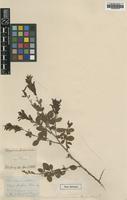
Lectotype of Hedysarum heterocarpon L. [family FABACEAE]
Type? of Hedysarum polycarpon Poir. [family FABACEAE]
Filed as Desmodium heterocarpon (L.) DC. [family FABACEAE]
Type of Hedysarum purpureum Buch.-Ham. [family LEGUMINOSAE]
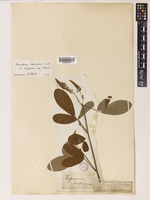
Original material of Hedysarum heterocarpon L. [family FABACEAE]
Desmodium heterocarpon (L.) DC. var. strigosum Meeuwen [family LEGUMINOSAE-PAPILIONOIDEAE]
Hedysarum heterocarpon L. [family FABACEAE]
Filed as Hedysarum heterocarpon L. [family FABACEAE]
Original material of Hedysarum heterocarpon L. [family FABACEAE]
Previous
Next

Name

Identification
Hedysarum heterocarpon L. [family FABACEAE ] (stored under name); Desmodium heterocarpon (L.) DC. [family FABACEAE ] Verified by Henry Trimen,
Related name
  • Hedysarum heterocarpon
  • Desmodium heterocarpon

Flora

Entry for DESMODIUM heterocarpon (L.) DC. [family LEGUMINOSAE-PAPILIONOIDEAE]
Herbarium
Royal Botanic Gardens, Kew (K)
Collection
Flora of Tropical East Africa
Resource Type
Reference Sources
Entry From
Flora of Tropical East Africa, page 1, (1971) Author: J. B. GILLETT, R. M. POLHILL & B. VERDCOURT
Names
DESMODIUM heterocarpon (L.) DC. [family LEGUMINOSAE-PAPILIONOIDEAE], Prodr. 2: 337 (1825); Knaap-van Meeuwen in Reinwardtia 6: 93–96, 251 (1961). Types: Ceylon, Herb. Hermann 2: 32, 3: 39 & 4: 20 (BM, syn.!)
Hedysarum heterocarpon L. [family LEGUMINOSAE-PAPILIONOIDEAE], Sp. Pl.: 747 (1753)
Hedysarum polycarpon Poir. [family LEGUMINOSAE-PAPILIONOIDEAE], in Lam., Encycl. 6: 413 (1804). Type: plant from E. Indies grown at Paris (P–LA, holo.!)
Desmodium polycarpon (Poir.) DC. [family LEGUMINOSAE-PAPILIONOIDEAE], Prodr. 2: 335 (1825), as “ polycarpum ”
Information
Suffruticose, with shrubby or procumbent habit; stems terete, striate, strigose, to 1–2 m. Leaves 3-foliolate; stipules obliquely ovate-attenuate, 9–12 mm. long, 2–3.5 mm. wide, glabrous; petiole appressed pilose, 1.5– 2.8 cm. long; rhachis similar, 0.7–1 cm. long; leaflets slightly obovate, retuse, rounded to truncate at apex, cuneate at base, prominently reticulate and glabrous to moderately pilose above, paler on the lower surface, sparsely to abundantly pilose; terminal leaflet 4.5–6 cm. long, ± half as wide; lateral leaflets with same proportions, 3.5–4 cm. long. Inflorescence composed of densely flowered terminal and axillary racemes; rhachides uncinulate-puberulent or silky strigose; primary bracts ovate-acuminate, 3.5–8.5 mm. long, 2–2.5 mm. wide, glabrous to puberulent, each subtending 2 pedicels; pedicels glabrous to minutely puberulent just below calyx, 2–4 mm. long. Flowers pink to dark purple. Calyx glabrous to puberulent; central tooth of lower lobe ± 2.5 mm. long; lateral teeth usually slightly shorter; upper bifid lobe 2 mm. long. Standard obovate, retuse, narrowed to the shortly clawed base, 4.5–5.5 mm. long, 3–5.5 mm. wide; wings oblong, auricled, shortly clawed, 4.5 mm. long, 1.5–2 mm. wide; keel-petals scythe-shaped, long-clawed, 5–6.5 mm. long, 1.5–2 mm. wide. Fruit shortly stipitate, 2–6-articled; stipe 1 mm. long; articles quadrangular to semi-elliptic, straight along the upper suture, somewhat curved below between the isthmi, separating from each other and then dehiscing, 2.5–4.5 mm. long, 2.5–3 mm. wide, uncinulate-puberulent on the sutures and across the mid-section of the surface, or uncinulate-puberulent throughout. Seed almost quadrate, cream to orange, ± 2 mm. long, 1.5 mm. wide.
Range
DISTR. (of species as a whole). T6; Z; P eastern and south-eastern Asia, Malesia, Melanesia, New Caledonia, Polynesia
Notes
Var. heterocarpon is not known from East Africa except in cultivation. The work of Knaap-van Meeuwen has been studied carefully and many collections from various localities throughout the range have been examined. Her conclusions seem basically sound.

Related Materials

  • Terms and Conditions
  • Privacy Policy
  • Cookie Policy
  • Cookie Settings
  • Accessibility
  • Help
  • Contact Us
  • Facebook
  • Twitter
ITHAKA

JSTOR is part of ITHAKA, a not-for-profit organization helping the academic community use digital technologies to preserve the scholarly record and to advance research and teaching in sustainable ways.

©2000-2026 ITHAKA. All Rights Reserved. JSTOR®, the JSTOR logo, JPASS®, Aluka®, and ITHAKA® are registered trademarks of ITHAKA.

╳