JSTOR Global Plants Home
  • Home
  • Browse
  • About
  • Access
  • Account
    • Saved Items
    • Profile
  • Log in

Global Plants

Skip to Main Content
  • JSTOR Global Plants Home
  • Global Plants

    • Browse
    • About
    • Access
    • Account
      • Saved Items
      • Profile
Log in
  • Browse
  • About
  • Access
  • Account
    • Saved Items
    • Profile
Advanced Search

Compilation
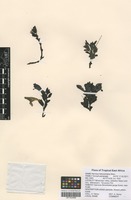
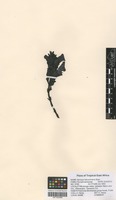
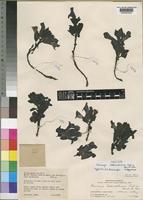
Harveya liebuschiana

3 Images see all

Filed as Harveya liebuschiana Engl. ex Hemsl. & Skan [family SCROPHULARIACEAE]
Neotype of Harveya liebuschiana Engl. ex Hemsl. et Skan [family SCROPHULARIACEAE]
Previous
Next

Name

Identification
Harveya liebuschiana Engl. ex Hemsl. et Skan [family SCROPHULARIACEAE ] (stored under name); Verified by Ghazanfar, S.A.,
Related name
  • Harveya liebuschiana

Flora

Entry for HARVEYA liebuschiana Engl. MSS. [family SCROPHULARIACEAE]
Herbarium
Royal Botanic Gardens, Kew (K)
Collection
Flora of Tropical Africa
Resource Type
Reference Sources
Entry From
Flora of Tropical Africa, Vol IV, Part 2, page 264, (1905) Author: (By W. Botting Hemsley and S. A. Skan).
Names
HARVEYA liebuschiana Engl. MSS. [family SCROPHULARIACEAE]
Information
A nearly quite glabrous herb; stem simple, about 4 1/2 in. high, erect, leafless. Flowers several, forming a short terminal raceme. Pedicels 2–2 1/2 lin. long. Calyx tubular-campanulate, oblique, 11–15 lin. long, 5–6 lin. broad at the top of the tube, very sparingly pulverulent; lobes triangular, 3–4 1/2 lin. long, 1 1/2–3 lin. broad at the base, acute or shortly acuminate, very minutely few-toothed. Corolla 1 1/2–1 3/4 in. long; tube funnel-shaped, curved, about 1/6 in. broad near the base, 1/2 in. broad at the apex; limb about 1 in. in diam.; lobes short and broad. Style nearly 2 in. long; stigma suborbicular, about 1 1/4 lin. in diam.
Distribution
German East Africa Mozamb. Dist. Usambara; Lutindi, Liebusch!

Related Materials

  • Terms and Conditions
  • Privacy Policy
  • Cookie Policy
  • Cookie Settings
  • Accessibility
  • Help
  • Contact Us
  • Facebook
  • Twitter
ITHAKA

JSTOR is part of ITHAKA, a not-for-profit organization helping the academic community use digital technologies to preserve the scholarly record and to advance research and teaching in sustainable ways.

©2000-2026 ITHAKA. All Rights Reserved. JSTOR®, the JSTOR logo, JPASS®, Aluka®, and ITHAKA® are registered trademarks of ITHAKA.

╳