JSTOR Global Plants Home
  • Home
  • Browse
  • About
  • Access
  • Account
    • Saved Items
    • Profile
  • Log in

Global Plants

Skip to Main Content
  • JSTOR Global Plants Home
  • Global Plants

    • Browse
    • About
    • Access
    • Account
      • Saved Items
      • Profile
Log in
  • Browse
  • About
  • Access
  • Account
    • Saved Items
    • Profile
Advanced Search

Compilation
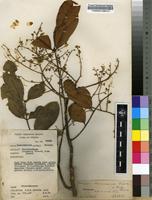
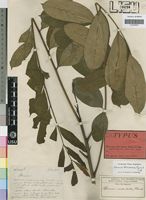
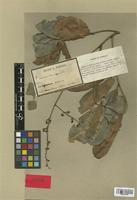
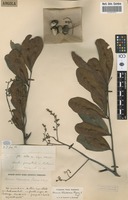
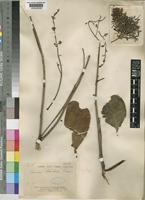
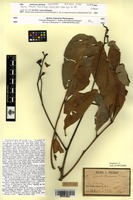
Hannoa klaineana

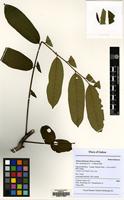
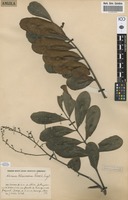
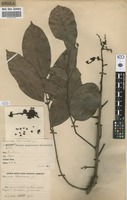
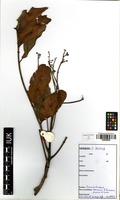
18 Images see all

Filed as Hannoa klaineana Pierre ex Engl. [family SIMAROUBACEAE]
Filed as Hannoa klaineana Pierre & Engl. [family SIMAROUBACEAE]
Filed as Hannoa klaineana Pierre&Engl. [family SIMAROUBACEAE]
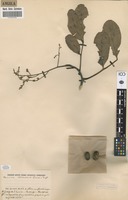
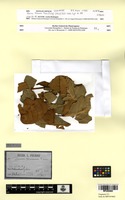
Isotype of Hannoa klaineana Pierre & Engl. apud Engl. var. welwitschii Engl. [family SIMAROUBACEAE]
Filed as Hannoa klaineana Pierre & Engl. [family SIMAROUBACEAE]
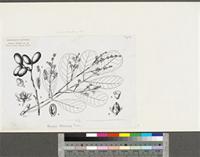
Hannoa klaineana Pierre ex Engl.; original illustration from FWTA
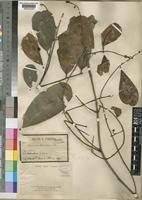
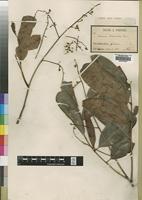
Syntype of Hannoa klaineana Pierre & Engl. [family SIMAROUBACEAE]
Isotype of Hannoa klaineana Pierre & Engl. apud Engl. var. welwitschii Engl. [family SIMAROUBACEAE]
Type of Hannoa klaineana Pierre & Engl. [family SIMAROUBACEAE]
Filed as Hannoa klaineana Pierre & Engl. [family SIMAROUBACEAE]
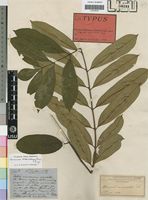
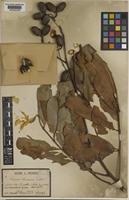
Isosyntype of Hannoa klaineana Pierre et Engl. [family SIMAROUBACEAE]
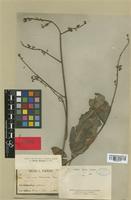
Type of Hannoa klaineana Pierre [family SIMAROUBACEAE]
Quassia undulata (Guill. & Perr.) F.Dietr. [family SIMAROUBACEAE]
Type of Hannoa klaineana Pierre & Engl. [family SIMAROUBACEAE]
Quassia undulata (Guill. & Perr.) F.Dietr. [family SIMAROUBACEAE]
Isosyntype of Hannoa klaineana Pierre et Engl. [family SIMAROUBACEAE]
Previous
Next

Name

Identification
Hannoa klaineana Pierre ex Engl. [family SIMAROUBACEAE ]
Related name
  • Hannoa klaineana
Common name
  • hotoro (auctt.) hotorohotoro (FRI: E&A) (GHANA, AKAN-ASANTE), Burkill, H.M. 1985. The useful plants of west tropical Africa, Vol. 5
  • hotorohotoro the forest species; cf. Quassia undulata (E&A) (GHANA, TWI), Burkill, H.M. 1985. The useful plants of west tropical Africa, Vol. 5

Flora

Entry for Quassia undulata (Guill. & Perr.) D. Dietr. [family SIMAROUBACEAE]
Herbarium
Royal Botanic Gardens, Kew (K)
Collection
Flora of Tropical East Africa
Resource Type
Reference Sources
Entry From
Flora of Tropical East Africa, page 1, (2000) Author: Brian Stannard
Names
Quassia undulata (Guill. & Perr.) D. Dietr. [family SIMAROUBACEAE], Syn. Pl. 2: 1416 (1840); Noot. in Blumea 11: 519 (1962); Koenders, Fl. Pemba I.: 47 (1992); K.T.S.L.: 376, fig. (1994). Type: Gambia, Gambia R., near Albreda, Perrottet & Leprieur ?435 (P, holo., ?K!, iso.)
Simaba undulata Guill. & Perr. [family SIMAROUBACEAE], in Guill., Perr. & A. Rich., Fl. Seneg. Tent.: 136, t. 34 (1831)
Hannoa undulata (Guill. & Perr.) Planch. [family SIMAROUBACEAE], in Hook., Lond. Journ. Bot. 5: 567 (1846); Oliv. in F.T.A. 1: 309 (1868); E.J. 46: 283 (1911); Keay, F.W.T.A., ed. 2, 1: 691 (1958)
Hannoa ferruginea Engl. [family SIMAROUBACEAE], in E.J. 32: 122 (1902); Keay, F.W.T.A., ed. 2, 1: 691 (1958). Type: Cameroon, Bangwa, Conrau 53 (B†, holo.)
Hannoa chlorantha Engl. & Gilg [family SIMAROUBACEAE], in Warb., Kunene-Sambesi-Exped.: 270 (1903); E.J. 46: 284 (1911); Exell & Mendonça, C.F.A. 1: 277 (1951); G.C.C. Gilbert in F.C.B. 7: 124 (1958); Wild & J.B. Phipps in F.Z. 2: 218, t. 40 (1963). Type: Angola, on the Longa R. above the Lazingua R., Baum 674 (B†, holo.)
Odyendea longipes Sprague [family SIMAROUBACEAE], in J.L.S. 37: 505 (1906); Burtt Davy, Check-lists For. Trees & Shrubs Brit. Emp. 1, Uganda: 113 (1935); I.T.U., ed. 2: 411 (1952). Type: Uganda, Toro, Dawe 458 (K!, holo.)
Odyendea zimmermannii Engl. [family SIMAROUBACEAE], in E.J. 46: 280, fig. 2 (1911); T.T.C.L.: 573 (1949); U.O.P.Z.: 383 (1949); K.T.S.: 536 (1961). Type: Tanzania, Lushoto District, Amani, Zimmermann 2621 (B†, holo., EA, K!, iso.)
Hannoa klaineana Pierre & Engl. [family SIMAROUBACEAE], in E.J. 46: 282 (1911); Exell & Mendonça, C.F.A. 1: 277 (1951); Keay, F.W.T.A., ed. 2, 1: 691 (1958); G.C.C. Gilbert in F.C.B. 7: 123 (1958); Aubrév., Fl. For. Côte d’Ivoire, ed. 2, 2: 134, t. 177 (1959). Type: Gabon, Corisco Bay region and hinterland, Klaine 1333 (?P/?B, lecto., K!, isolecto.)
Hannoa njariensis G.C.C. Gilbert [family SIMAROUBACEAE], in B.J.B.B. 28: 382 (1958) & in F.C.B. 7: 124 (1958). Type: Congo (Kinshasa), Kasai District, Kanga Forest, Njari valley, Devred 2809 (BR, holo.)
Hannoa kitombetombe G.C.C. Gilbert [family SIMAROUBACEAE], in B.J.B.B. 28: 382 (1958) & in F.C.B. 7: 124 (1958); Wild & J.B. Phipps in F.Z. 2: 216 (1963). Type: Congo (Kinshasa), Haut-Katanga District, source of the Muye, de Witte 3643 (BR, holo., K!, photo.)
Hannoa longipes (Sprague) G.C.C. Gilbert [family SIMAROUBACEAE], in F.C.B. 7: 122 (1958); Hamilton, Field Guide Uganda For. Trees: 207 (1981)
Information
Shrub to high forest tree; branchlets glabrous. Leaves alternate, imparipinnate, 2–5(–8)-jugate, 8–40(–55) cm long; leaflets opposite or subopposite, drying greenish brown above, paler beneath, terminal and basal leaflets usually smaller than the other laterals; leaflet-blade narrowly to broadly elliptic or obovate, 2–20 cm long, 1–8 cm wide, emarginate or rounded to shortly acuminate at the apex, rounded to cuneate, often oblique at the base, coriaceous, glabrous, often with pitted glands on the upper surface, nervation indistinct, impressed, margin entire, sometimes slightly wavy; petiolule 1–40 mm, very variable within the species but fairly constant for each specimen; rachis terete. Flowers in terminal and axillary thyrses, inflorescence branches pubescent to glabrous; pedicels 1.5–10 mm long. Calyx 2–4.5 mm long, 2–5-lobed (often fissuring irregul­arly to give variable number of lobes), glabrous inside, glabrous to puberulent outside. Petals 5, imbricate, narrowly ovate to oblong, 3–7 mm long, 1–2.5 mm wide, subacute, puberulent outside, puberulent to pilose inside. Stamens from 1.5–3 mm long in female or bisexual flowers, up to 7 mm in male flowers; appendage 1/2–2/3 as long as the whole stamen, pilose with short free tip; anther ± 1 mm long, broadly elliptic. Disc annular to sub-cylindrical, 0.2–1.5 mm thick, 1.2–2.5 mm in diameter, furrows on outside to accommodate stamens, partially enveloping the ovary in male flowers. Ovary 0.8–1.5 mm long in female or bisexual flowers, reduced in male flowers; carpels 5, free, each containing 1 ovule; styles 0.3–2 mm long, cohering. Fruits drupaceous mericarps 1–3(–4) together on fruiting pedicels, ± ellipsoidal to oblong, apex obtusely pointed, base rounded, often slightly bicarinate and somewhat flattened, 15–35 mm long, 9–20 mm wide. Seed 1 per mericarp. Fig. 4.
Range
DISTR. U 2; K 7; T 3, 6; P tropical Africa from Senegal to Nigeria, E Cameroon, Central African Republic, Congo (Kinshasa), Angola and Zambia;
Altitude range
(0–)150–2500 m
Distribution
UGANDA Toro, 6 Sept. 1905, Dawe 458!;KENYA Kwale District Shimba Hills, Mwele Mdogo forest, 12 Feb. 1953, Drummond & Hemsley 1173A! (fruit only at K) & 13 Jan. 1972, Faden & Faden 72/70!TANZANIA Lushoto District E Usambara Mts, Kwamkoro Forest Reserve, 2 Feb. 1960, Msuya 16! & 1 Mar. 1960, Bryce 131!;UGANDA Kigezi District without further locality, 1949, St. Clair-Thompson 2517!TANZANIA Pemba I. , Ngezi Forest, 11 Jan. 1943, Briant H3/43!
Notes
The above synonyms of Quassia undulata were variously separated on the basis of length of petiolules, number and shape of leaflets or size of inflorescences and fruits. In some cases they have been maintained as distinct species by recent authors. Closer examination of the material available, however, leads me to agree with Nooteboom’s view (Blumea 11: 519 (1962)) that these characters are unreliable and that these species should all be considered conspecific. Nooteboom places Quassia undulata in his Quassia sect. Simaba .

Related Materials

  • Terms and Conditions
  • Privacy Policy
  • Cookie Policy
  • Cookie Settings
  • Accessibility
  • Help
  • Contact Us
  • Facebook
  • Twitter
ITHAKA

JSTOR is part of ITHAKA, a not-for-profit organization helping the academic community use digital technologies to preserve the scholarly record and to advance research and teaching in sustainable ways.

©2000-2026 ITHAKA. All Rights Reserved. JSTOR®, the JSTOR logo, JPASS®, Aluka®, and ITHAKA® are registered trademarks of ITHAKA.

╳