JSTOR Global Plants Home
  • Home
  • Browse
  • About
  • Access
  • Account
    • Saved Items
    • Profile
  • Log in

Global Plants

Skip to Main Content
  • JSTOR Global Plants Home
  • Global Plants

    • Browse
    • About
    • Access
    • Account
      • Saved Items
      • Profile
Log in
  • Browse
  • About
  • Access
  • Account
    • Saved Items
    • Profile
Advanced Search

Compilation
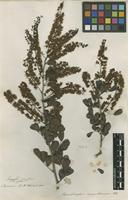
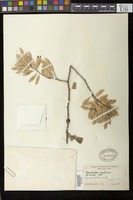
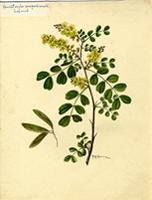
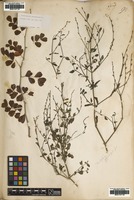
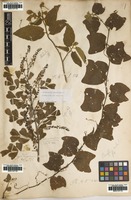
Haematoxylon campechianum

5 Images see all

Filed as Haematoxylon campechianum L. [family FABACEAE]
Haematoxylon campechianum
Filed as Haematoxylon campechianum L. [family FABACEAE]
Previous
Next

Name

Identification
Haematoxylon campechianum L. [family CAESALPINIACEAE ]
Related name
  • Haematoxylon campechianum
Common name
  • bois de campêche (Berhaut)., Burkill, H.M. 1985. The useful plants of west tropical Africa, Vol. 3
  • logwood., Burkill, H.M. 1985. The useful plants of west tropical Africa, Vol. 3

Flora

Entry for Haematoxylon campechianum L. [family ]
Herbarium
Royal Botanic Gardens, Kew (K)
Collection
Flora of Tropical East Africa
Resource Type
Reference Sources
Entry From
Flora of Tropical East Africa, page 1, (1967) Author: J. P. M. Brenan
Names
Haematoxylon campechianum L. [family ]
Information
A smallish tree, with closely veined obovate-emarginate or subtruncate leaflets (sometimes the lowest pair replaced by a pair of 1–2-jugate pinnae), rather small yellow flowers in axillary racemes, and rather small flattened elliptic-oblong pods which open down the middle of the valves.
Notes
, the Logwood, native of Central America, the West Indies and ? French Guiana, is cultivated in Uganda, Kenya and Tanganyika (Dale, Introd. Trees Uganda: 44 (1953); T.T.C.L.: 103 (1949)).

Related Materials

  • Terms and Conditions
  • Privacy Policy
  • Cookie Policy
  • Cookie Settings
  • Accessibility
  • Help
  • Contact Us
  • Facebook
  • Twitter
ITHAKA

JSTOR is part of ITHAKA, a not-for-profit organization helping the academic community use digital technologies to preserve the scholarly record and to advance research and teaching in sustainable ways.

©2000-2026 ITHAKA. All Rights Reserved. JSTOR®, the JSTOR logo, JPASS®, Aluka®, and ITHAKA® are registered trademarks of ITHAKA.

╳