JSTOR Global Plants Home
  • Home
  • Browse
  • About
  • Access
  • Account
    • Saved Items
    • Profile
  • Log in

Global Plants

Skip to Main Content
  • JSTOR Global Plants Home
  • Global Plants

    • Browse
    • About
    • Access
    • Account
      • Saved Items
      • Profile
Log in
  • Browse
  • About
  • Access
  • Account
    • Saved Items
    • Profile
Advanced Search

Compilation
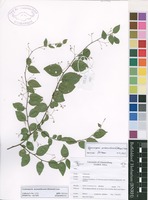
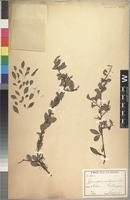
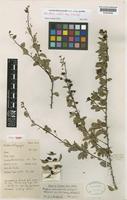
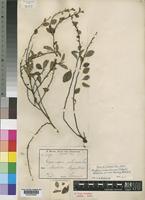
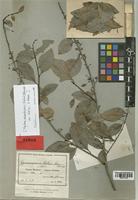
Gymnosporia mossambicensis

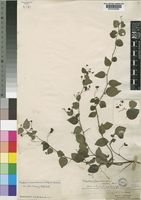
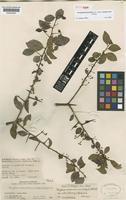
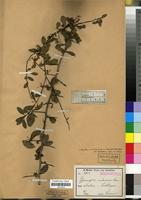
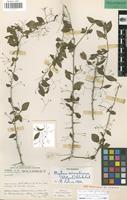
13 Images see all

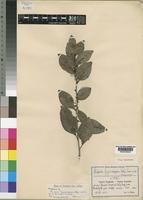
Maytenus mossambicensis (Klotzsch) Blakelock var. ruber (Harv.) Blakelock [family CELASTRACEAE]
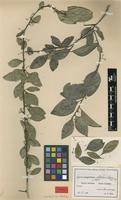
Holotype of Gymnosporia gracilis Loes. subsp. usambarensis Jordaan [family CELASTRACEAE]
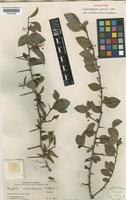
Isosyntype of Maytenus mossambicensis (Klotzsch) Blakelock var. ambonensis (Loes.) N. Robson [family CELASTRACEAE]
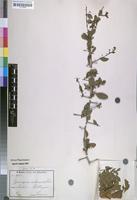
Isoneotype of Gymnosporia mossambicensis (Klotzsch) Loes. [family CELASTRACEAE]
Filed as Gymnosporia mossambicensis (Klotzsch) Loes. [family CELASTRACEAE]
Syntype of Maytenus mossambicensis (Klotzsch) Blakelock variety ambonensis (Loes.) N. Robson [family CELASTRACEAE]
Neotype of Gymnosporia gracilis Loes. subsp. gracilis [family CELASTRACEAE]
Maytenus mossambicensis (Klotzsch) Blakelock var. ambonensis (Loes.) N.Robson [family CELASTRACEAE]
Maytenus mossambicensis (Klotzsch) Blakelock var. stolzii N.Robson [family CELASTRACEAE]
Type of Maytenus mossambicensis (Klotzsch) Blakelock var. stolzii N.Robson [family CELASTRACEAE]
Holotype of Gymnosporia gracilis Loes. subsp. usambarensis Jordaan [family CELASTRACEAE]
Isosyntype of Maytenus mossambicensis (Loes.) N.Robson var. ambonensis [family CELASTRACEAE]
Maytenus mossambicensis N. Robson var. stolzii [family CELASTRACEAE]
Previous
Next

Name

Identification
Gymnosporia mossambicensis (Klotzsch) Loes. [family CELASTRACEAE ] (stored under name); Verified by Pinto Basto, M.F., 2007
Related name
  • Gymnosporia mossambicensis

Flora

Entry for Maytenus mossambicensis Klotzsch Blakelock [family CELASTRACEAE]
Herbarium
Royal Botanic Gardens, Kew (K)
Collection
Flora Zambesiaca
Resource Type
Reference Sources
Entry From
FZ, Vol 2, Part 2, page 355, (1966) Author: N. K. Robson
Names
Maytenus mossambicensis Klotzsch Blakelock [family CELASTRACEAE], in Kew Bull. 12: 37 (1957). — Marais in Bothalia, 7: 385 (1960). Type: Mozambique, Inhambane and Lourenço Marques (Delagoa Bay), 23°-26° S., Peters (B †).
Celastrus mossambicensis Klotzsch [family CELASTRACEAE], in Peters, Reise Mossamb., Bot. 1: 112 (1861). — Oliv., F.T.A. 1: 362 (1868). — Bak. f. in Journ. Linn. Soc., Bot. 40: 44 (1911). — Eyles in Trans. Roy. Soc. S. Afr. 5: 404 (1916). Syntypes as above.
Gymnosporia mossambicensis Klotzsch Loes. [family CELASTRACEAE], in Engl., Bot. Jahrb. 17: 547 (1893). — Hutch., Botanist in S. Afr.: 464 (1946). Syntypes as above.
Gymnosporia harveyana Loes. [family CELASTRACEAE], in Bull. Herb. Boiss. 4: 430 (1896). — Davison in Bothalia, 2: 313 (1927). — Burtt Davy, F.P.F.T. 2: 448 (1932). — Hutch., op. cit.: 668 (1946). Type from Natal.
Celastrus concinnus N.E. Br. [family CELASTRACEAE], in Kew Bull. 1906: 16 (1906). — Bak. f., loc. cit. Type from Natal.
Celastrus huillensis? [family CELASTRACEAE], sensu Steedman, Trees, etc. S. Rhod.: 41, t. 40 (1933).
Information
Shrublet or shrub or small tree (0·3)1–8 m. high, sometimes sarmentose, with spines up to 8 cm. long, axillary or terminating short axillary branches, without latex; branches 4-lined, reddish-purple to reddish-brown with numerous pale somewhat prominent lenticels and sometimes puberulous when young, becoming eventually terete, pale grey or cream, glabrous, slender. Leaves fasciculate or not, petiolate; lamina bright green, slightly paler below, 1–6·6(9·7) × 0·6–3·5(4·3) cm., ovate or lanceolate to elliptic or subcircular, acute or rarely shortly and obtusely acuminate to obtuse or more rarely rounded at the apex, with margin shallowly and ± irregularly rounded-serrulate to acutely incurved-denticulate, rounded or rarely subcordate to cuneate or angustate at the base, submembranous to chartaceous, with lateral nerves and ± lax reticulate venation more prominent below than above; petiole 1·5–6(9) mm. long. Cymes dichasial at first, becoming monochasial, solitary, axillary, or 1–4 on short axillary shoots, ± slender, with peduncle (5)7–23 mm. long, glabrous or rarely puberulous; pedicels 2–5·5 mm. long, glabrous or rarely puberulous, articulated usually in the lower 1/2; flowers (1)3-c. 55 in each cyme, 2·5–4(5) mm. in diam., bisexual. Sepals 5, unequal, 0·4–1 mm. long, triangular to semicircular, obtuse to rounded, glabrous or rarely puberulous outside, with margin ciliolate to subentire. Petals 5, white (in our area), (1)1·5–2·7 mm. long, oblong to oblong-elliptic, with margin finely ciliolate to entire. Stamens 5, with filaments 0·7–1 mm. long, slender, arising below the disk. Disk yellow, small, convex, 5-lobed. Ovary 3-locular, subglobose, c. 1/4-immersed in the disk; style very short, with 3 large divergent stigmas. Capsule white when immature, pink to red when ripe, 7–13 mm. long, pyriform to obconic-3-gonous or subglobose, rounded, subcoriaceous to somewhat fleshy, smooth. Seeds 3, reddish-brown, rugulose, completely enclosed by a bright orange aril.
Habitat
In understorey of evergreen forest, forest margins, fringing forest and sometimes deciduous woodland
Range
From SE. Kenya, E. Tanganyika and Zanzibar to the Transvaal, Natal and E. Cape Prov.
Altitude range
150–1950 m. in our area.
1950
150
Notes
M. mossambicensis is a variable species which has given rise to four distinct pubescent varieties. Only one of these occurs in our area.

Related Materials

  • Terms and Conditions
  • Privacy Policy
  • Cookie Policy
  • Cookie Settings
  • Accessibility
  • Help
  • Contact Us
  • Facebook
  • Twitter
ITHAKA

JSTOR is part of ITHAKA, a not-for-profit organization helping the academic community use digital technologies to preserve the scholarly record and to advance research and teaching in sustainable ways.

©2000-2026 ITHAKA. All Rights Reserved. JSTOR®, the JSTOR logo, JPASS®, Aluka®, and ITHAKA® are registered trademarks of ITHAKA.

╳