JSTOR Global Plants Home
  • Home
  • Browse
  • About
  • Access
  • Account
    • Saved Items
    • Profile
  • Log in

Global Plants

Skip to Main Content
  • JSTOR Global Plants Home
  • Global Plants

    • Browse
    • About
    • Access
    • Account
      • Saved Items
      • Profile
Log in
  • Browse
  • About
  • Access
  • Account
    • Saved Items
    • Profile
Advanced Search

Compilation
Grindelia subincisa

11 Images see all

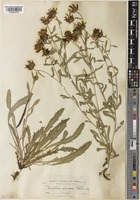
Grindelia decumbens Greene var. subincisa (Greene) Steyerm. [family COMPOSITAE]
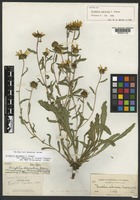
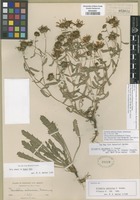
Type of Grindelia subincisa Greene [family ASTERACEAE]
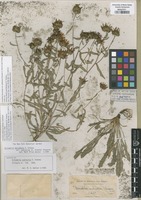
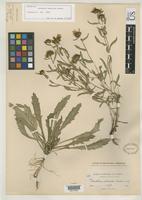
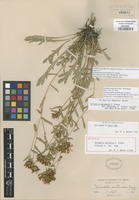
Isotype of Grindelia subincisa Greene [family ASTERACEAE]
Isotype of Grindelia subincisa Greene, E.L. 1900 [family ASTERACEAE]
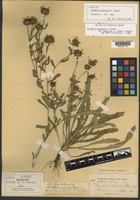
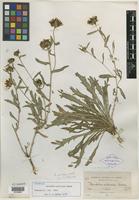
Isotype of Grindelia subincisa Greene [family ASTERACEAE]
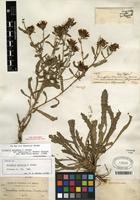
Type of Grindelia subincisa Greene [family ASTERACEAE]
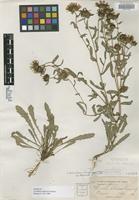
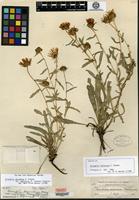
Isotype of Grindelia decumbens var. subincisa (Greene) Steyerm. [family ASTERACEAE]
Previous
Next

Name

Identification
Isotype of Grindelia subincisa Greene [family ASTERACEAE ] (stored under name); Verified by Not on sheet,
Related name
  • Grindelia subincisa
  • Grindelia decumbens

Flora

Entry for Grindelia decumbens Greene [family COMPOSITAE]
Herbarium
Flora of North America (FNA)
Collection
Flora of North America
Resource Type
Reference Sources
Entry From
Flora of North America, Vol 20,
Names
Grindelia decumbens Greene [family COMPOSITAE], Pittonia, 3: 102. 1896
Grindelia decumbens var. subincisa (Greene) Steyermark [family COMPOSITAE]
Grindelia subincisa Greene [family COMPOSITAE]
Treatment Author(s)
John L. Strother
Mark A. Wetter
Information
Perennials, 15–50(–80) cm. Stems erect, stramineous, glabrous. Cauline leaf blades oblong, spatulate, oblanceolate, lanceolate, or linear, 15–40(–80) mm, lengths 3–7(–15) times widths, bases ± cuneate or clasping, margins serrate (teeth mostly distal, apiculate) or entire, apices obtuse to acute, faces glabrous, moderately gland-dotted. Heads in open, paniculiform arrays. Involucres broadly urceolate to hemispheric, 5–9(–11) × 6–10(–15+) mm. Phyllaries in 4–5(–6) series, slightly spreading to appressed, lance-oblong or lance-linear to lance-subulate, apices hooked or strongly recurved to nearly straight, subterete to subulate, slightly to moderately resinous. Ray florets 12–24; laminae 7–12 mm. Cypselae light brown to stramineous, 3–3.5 mm, apices smooth or coronate, faces striate; pappi of 2–4 straight or slightly contorted, smooth or barbellulate, setiform awns or subulate scales 3.5–5 mm, shorter than to equaling disc corollas. 2n = 12.
Phenology
jul-aug (summer), sep (fall)
Altitude range
1200–3000 m;
Distribution
USA Colo.USA N.Mex.
Discussion
Plants of Grindelia decumbens with leaf blades oblanceolate or lanceolate to linear with lengths 6–15 times widths (versus oblong or spatulate to oblanceolate with lengths 3–7 times widths) and phyllary apices gradually (versus abruptly) recurved have been called var. subincisa. Hybrids between G. decumbens and G. squarrosa (G. nuda) are known from Colorado. Plants treated here as G. decumbens are very similar to plants treated here within G. hirsutula.

Related Materials

  • Terms and Conditions
  • Privacy Policy
  • Cookie Policy
  • Cookie Settings
  • Accessibility
  • Help
  • Contact Us
  • Facebook
  • Twitter
ITHAKA

JSTOR is part of ITHAKA, a not-for-profit organization helping the academic community use digital technologies to preserve the scholarly record and to advance research and teaching in sustainable ways.

©2000-2026 ITHAKA. All Rights Reserved. JSTOR®, the JSTOR logo, JPASS®, Aluka®, and ITHAKA® are registered trademarks of ITHAKA.

╳