JSTOR Global Plants Home
  • Home
  • Browse
  • About
  • Access
  • Account
    • Saved Items
    • Profile
  • Log in

Global Plants

Skip to Main Content
  • JSTOR Global Plants Home
  • Global Plants

    • Browse
    • About
    • Access
    • Account
      • Saved Items
      • Profile
Log in
  • Browse
  • About
  • Access
  • Account
    • Saved Items
    • Profile
Advanced Search

Compilation
Grindelia aphanactis

19 Images see all

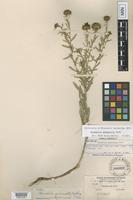
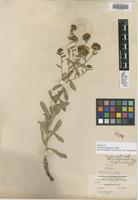
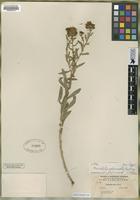
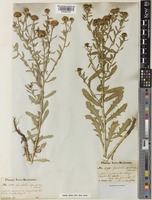
Isotype of Grindelia aphanactis Rydb. [family ASTERACEAE]
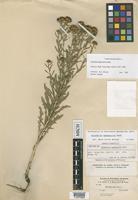
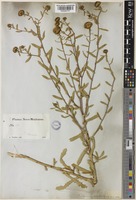
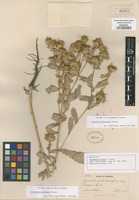
Original material of Grindelia fastigiata Greene [family ASTERACEAE]
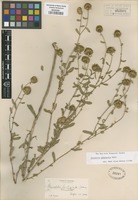
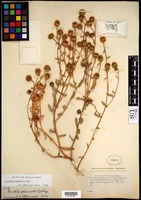
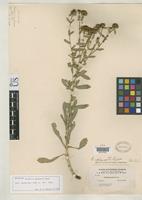
Grindelia aphanactis Rydb. [family COMPOSITAE]
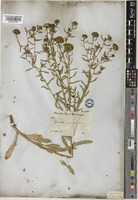
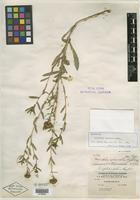
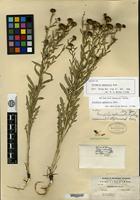
Isotype of Grindelia aphanactis Rydb. [family ASTERACEAE]
Grindelia aphanactis Rydb. [family COMPOSITAE]
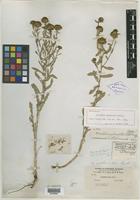
Grindelia aphanactis Rydb. [family ASTERACEAE]
Holotype of Grindelia aphanactis Rydb. [family ASTERACEAE]
Isotype of Grindelia aphanactis Rydberg [family ASTERACEAE]
Isotype of Grindelia aphanactis Rydb. [family ASTERACEAE]
Cotype of Grindelia aphanactis Rydb. [family ASTERACEAE]
Isotype of Grindelia erecta A. Nelson [family ASTERACEAE]
Isotype of Grindelia nuda var. aphanactis (Rydb.) G.L. Nesom [family ASTERACEAE]
Isotype of Grindelia aphanactis Rydberg, P.A. 1904 [family ASTERACEAE]
Isotype of Grindelia aphanactis Rydb. [family ASTERACEAE]
Grindelia aphanactis Rydb. [family COMPOSITAE]
Isotype of Grindelia aphanactis Rydberg [family ASTERACEAE]
Isotype of Grindelia nuda var. aphanactis (Rydb.) G.L. Nesom [family ASTERACEAE]
Previous
Next

Name

Identification
Isotype of Grindelia aphanactis Rydb. [family ASTERACEAE ] (stored under name); Verified by Not on sheet,
Related name
  • Grindelia aphanactis
  • Grindelia nuda

Flora

Entry for Grindelia squarrosa (Pursh) Dunal [family COMPOSITAE]
Herbarium
Flora of North America (FNA)
Collection
Flora of North America
Resource Type
Reference Sources
Entry From
Flora of North America, Vol 20,
Names
Grindelia squarrosa (Pursh) Dunal [family COMPOSITAE], Mém. Mus. Hist. Nat., 5: 50. 1819
Donia squarrosa Pursh [family LEGUMINOSAE-PAPILIONOIDEAE], Fl. Amer. Sept., 2: 559. 1813
Grindelia aphanactis Rydberg [family COMPOSITAE]
Grindelia nuda Alph. Wood [family COMPOSITAE]
Grindelia nuda var. aphanactis (Rydberg) G. L. Nesom [family COMPOSITAE]
Grindelia serrulata Rydberg [family COMPOSITAE]
Grindelia squarrosa var. nuda (Alph. Wood) A. Gray [family COMPOSITAE]
Grindelia squarrosa var. serrulata (Rydberg) Steyermark [family COMPOSITAE]
Treatment Author(s)
John L. Strother
Mark A. Wetter
Information
Biennials, perennials, or subshrubs (perhaps flowering first year, usually short-lived), (10–)40–100 cm. Stems erect, usually whitish or stramineous, sometimes reddish or grayish, glabrous. Cauline leaf blades oval, ovate, obovate, or oblong to spatulate, oblanceolate, lanceolate, or linear, (10–)15–70 mm, lengths 2–5(–10) times widths, bases ± clasping, margins usually crenate to serrate (teeth mostly 3–6+ per cm, rounded to obtuse, resin-tipped), rarely entire, apices obtuse to acute, faces glabrous, strongly gland-dotted. Heads usually in open to crowded, corymbiform arrays, rarely borne singly. Involucres broadly urceolate to hemispheric or globose, 6–11 × 8–20+ mm. Phyllaries in 5–6 series, reflexed to spreading or appressed, filiform or linear to lance-linear or lance-subulate, apices usually looped to hooked, sometimes recurved to nearly straight, subterete to subulate, moderately to strongly resinous. Ray florets 0 or (12–)24–36(–40); laminae 8–14 mm. Cypselae whitish, stramineous, brown, or gray, 1.5–4.5 mm, apices smooth, coronate, or knobby, faces smooth, striate, or ± furrowed; pappi of 2–3(–8), straight or contorted to curled, smooth or barbellulate to barbellate, subulate scales or setiform awns 2.5–5.5 mm, shorter than disc corollas. 2n = 12.
Phenology
jul-aug (summer), sep-oct (fall)
Altitude range
(10–)200–2900 m;
Distribution
Mexico (Chihuahua)introduced in Asia (Ukraine).USA Ariz.USA Ark.USA Calif.USA Colo.USA Conn.USA Del.USA D.C.USA IdahoUSA Ill.USA Ind.USA IowaUSA Kans.USA Ky.USA MaineUSA Md.USA Mass.USA Mich.USA Minn.USA Mo.USA Mont.USA Nebr.USA Nev.USA N.H.USA N.J.USA N.Mex.USA N.Y.USA N.Dak.USA OhioUSA Okla.USA Oreg.USA Pa.USA R.I.USA S.Dak.USA Tex.USA UtahUSA Vt.USA Va.USA Wash.USA Wis.USA Wyo.Canada Alta.Canada B.C.Canada Man.Canada Ont.Canada Que.Canada Sask.
Discussion
Grindelia squarrosa is probably native to the Great Plains and, perhaps, Rocky Mountain areas; it is widely introduced in other areas. Some plants are intermediate between it and G. hirsutula (i.e., between G. squarrosa and G. perennis, which has been treated as a variety of G. squarrosa). Plants of G. squarrosa with relatively narrow leaf blades (lengths mostly 5–8 times widths), mostly from the western part of the range of the species, have been treated as G. squarrosa var. serrulata. G. L. Nesom (1990i) and others have treated discoid plants included here in G. squarrosa as distinct (as G. aphanactis, G. nuda, and/or G. nuda vars. aphanactis and nuda); Nesom reported cypselae to be dimorphic in heads of radiate plants and monomorphic in discoid plants and noted that populations with discoid plants occur mostly south and west of populations with radiate plants. According to Nesom, plants of G. nuda with stems usually reddish (versus sometimes greenish), lengths of blades of mid-cauline leaves 4–10 (versus 1.5–4) times widths, and cypselae ± deeply furrowed (versus striate to shallowly furrowed) should be called G. nuda var. aphanactis.
Hybrids between Grindelia squarrosa (nuda) and G. arizonica have been recorded from Arizona and New Mexico.

Related Materials

  • Terms and Conditions
  • Privacy Policy
  • Cookie Policy
  • Cookie Settings
  • Accessibility
  • Help
  • Contact Us
  • Facebook
  • Twitter
ITHAKA

JSTOR is part of ITHAKA, a not-for-profit organization helping the academic community use digital technologies to preserve the scholarly record and to advance research and teaching in sustainable ways.

©2000-2026 ITHAKA. All Rights Reserved. JSTOR®, the JSTOR logo, JPASS®, Aluka®, and ITHAKA® are registered trademarks of ITHAKA.

╳