JSTOR Global Plants Home
  • Home
  • Browse
  • About
  • Access
  • Account
    • Saved Items
    • Profile
  • Log in

Global Plants

Skip to Main Content
  • JSTOR Global Plants Home
  • Global Plants

    • Browse
    • About
    • Access
    • Account
      • Saved Items
      • Profile
Log in
  • Browse
  • About
  • Access
  • Account
    • Saved Items
    • Profile
Advanced Search

Compilation
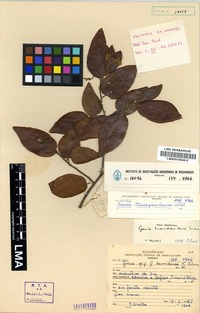
Grewia transzambesica

13 Images see all

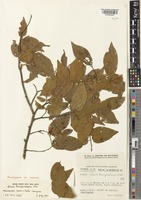
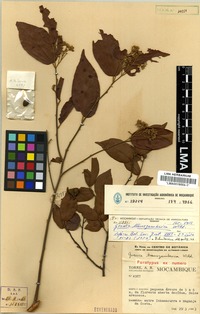
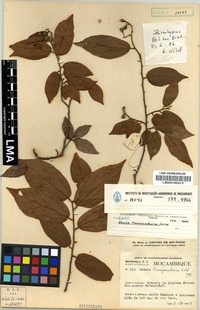
Paratype of Grewia transzambesica Wild [family MALVACEAE]
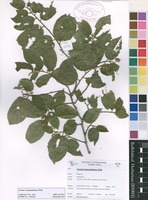
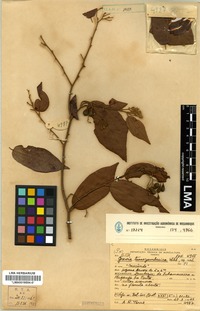
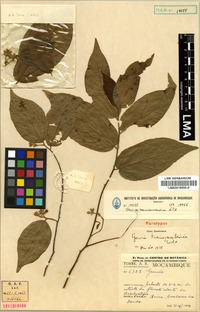
Filed as Grewia transzambesica Wild [family SPARRMANNIACEAE]
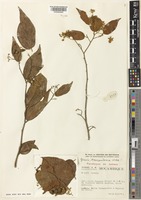
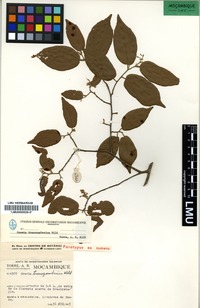
Paratype of Grewia transzambesica Willd. [family TILIACEAE]
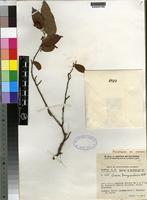
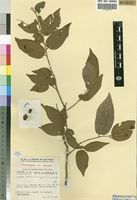
Paratype of Grewia transzambesica Wild [family TILIACEAE]
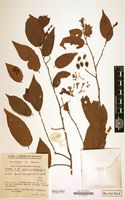
Type of Grewia transzambesica Willd. [family TILIACEAE]
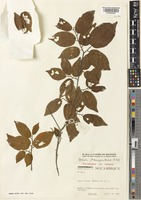
Paratype of Grewia transzambesica Wild [family TILIACEAE]
Paratype of Grewia transzambesica Wild [family MALVACEAE]
Paratype of Grewia transzambesica Wild [family TILIACEAE]
Previous
Next

Name

Identification
Grewia transzambesica Willd. [family TILIACEAE ] (stored under name); Verified by Not on sheet.,
Related name
  • Grewia transzambesica

Flora

Entry for Grewia transzambesica Wild [family TILIACEAE]
Herbarium
Royal Botanic Gardens, Kew (K)
Collection
Flora Zambesiaca
Resource Type
Reference Sources
Entry From
FZ, Vol 2, Part 1, page 33, (1963) Author: H. Wild
Names
Grewia transzambesica Wild [family TILIACEAE], in Bol. Soc. Brot., Sér. 2, 31: 81, t. 1 fig. A (1957). TAB. 4 fig. A. Type: Mozambique, Beira, Simão 1260 (LM; SRGH, holotype).
Information
Shrub or small tree up to 7 m. tall; young branches pale brownish-stellate-pubescent with some caducous longer hairs, later glabrescent and grey-brown. Leaf-lamina 4–10 × 2·5–5·5 cm., lanceolate to ovate-lanceolate; apex acuminate or acute, margin repand-dentate to shallowly crenate (especially towards the apex), base rounded or slightly cordate, ± symmetrical, upper surface with sparsely scattered minute stellate hairs and with a pubescent midrib, lower surface patently pilose with rather prominent nerves; petiole up to 6 mm. long, pubescent. Inflorescences paniculate, terminal or axillary, all parts except the pedicels and flowers themselves with a fine brownish or cream tomentum interspersed with much longer patent hairs; peduncles c. 4 mm. long; pedicels c. 3 mm. long; basal bracts deeply bifid or trifid. Sepals 6–7·5 mm. long, oblong-spathulate, involute in the upper half, boat-shaped, with slightly undulate margins, creamy-velvety outside, pubescent within. Petals white with a triangular lamina 1·75 mm. long, pilose inside and outside, and with a basal nectariferous claw tomentose at the back and around the margin within. Androgynophore 1 mm. long, glabrous, not produced. Ovary ovoid, tomentose, not lobed but somewhat triangular in section, 3-locular with c. 4 ovules per loculus; style 3–5 mm. long, stellate-pilose except towards the apex; stigma no wider than the style.
Habitat
Shrub or small tree of open Brachystegia woodland on the coastal plains to the north and south of the Zambezi.
Range
Apparently confined to Mozambique but it may be the same as G. heterotricha Burret (1914) from Dar es Salaam. The type of this latter species is destroyed but, in any case, the name is invalidated by G. heterotricha Mast. (1875) an Indian species.
Altitude range
100
0
inferred from habitat
Distribution
Mozambique MS Cheringoma, at mile 15 on the Transzambesi Railway, fl. 20.ii.1946, Simão 1260 (LM; SRGH).Mozambique Z between Inhamacurra and Maganja da Costa, fl. 25.iii.1943, Torre 4987 (K; LISC; SRGH).

Related Materials

  • Terms and Conditions
  • Privacy Policy
  • Cookie Policy
  • Cookie Settings
  • Accessibility
  • Help
  • Contact Us
  • Facebook
  • Twitter
ITHAKA

JSTOR is part of ITHAKA, a not-for-profit organization helping the academic community use digital technologies to preserve the scholarly record and to advance research and teaching in sustainable ways.

©2000-2026 ITHAKA. All Rights Reserved. JSTOR®, the JSTOR logo, JPASS®, Aluka®, and ITHAKA® are registered trademarks of ITHAKA.

╳