JSTOR Global Plants Home
  • Home
  • Browse
  • About
  • Access
  • Account
    • Saved Items
    • Profile
  • Log in

Global Plants

Skip to Main Content
  • JSTOR Global Plants Home
  • Global Plants

    • Browse
    • About
    • Access
    • Account
      • Saved Items
      • Profile
Log in
  • Browse
  • About
  • Access
  • Account
    • Saved Items
    • Profile
Advanced Search

Compilation
Grewia decemovulata

6 Images see all

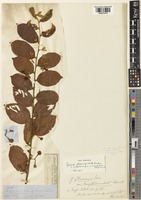
Grewia decemovulata Merxm. [family MALVACEAE]
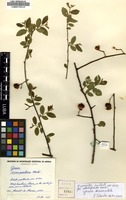
Filed as Grewia decemovulata Merxm. [family TILIACEAE]
Type of Grewia flavescens Burret var. longepedunculata [family TILIACEAE]
Grewia decemovulata Merxm. [family MALVACEAE]
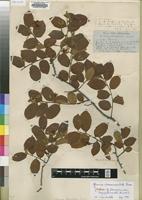
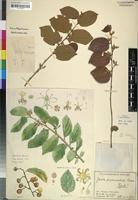
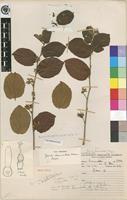
Holotype of Grewia decemovulata Merxm. [family TILIACEAE]
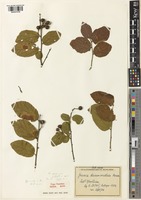
Isotype of Grewia decemovulata Merxm. [family TILIACEAE]
Previous
Next

Name

Identification
Grewia decemovulata Merxm. [family TILIACEAE ] (stored under name); Grewia flavescens Burret [family TILIACEAE ] Verified by Abdalla,N., 1985
Related name
  • Grewia decemovulata
  • Grewia flavescens

Flora

Entry for Grewia decemovulata Merxm. [family TILIACEAE]
Herbarium
Royal Botanic Gardens, Kew (K)
Collection
Flora Zambesiaca
Resource Type
Reference Sources
Entry From
FZ, Vol 2, Part 1, page 33, (1963) Author: H. Wild
Names
Grewia flavescens var. longipedunculata Burret [family TILIACEAE], in Engl., Bot. Jahrb. 45: 169 (1910). Type from Angola.
Grewia trothai [family TILIACEAE], sensu Hutch., Botanist in S. Afr.: 485 (1946).
Grewia flavescens [family TILIACEAE], sensu Exell and Mendonça, C.F.A. 1, 2: 221 (1951) pro parte.
Grewia decemovulata Merxm. [family TILIACEAE], in Proc. & Trans. Rhod. Sci. Ass. 43: 104 (1951). — White, F.F.N.R.: 239, fig. 42E (1962). TAB. 3 fig. D. Type: S. Rhodesia, Marandellas, Dehn 270 (M, holotype; SRGH).
Information
Procumbent or spreading shrub, branching from ground level or occasionally along the stems; young branches yellowish-pubescent. Leaf-lamina 3·5–9 × 2·5–7·5 cm., very broadly oblong, rounded, acute or acuminate at the apex, margin serrate, truncate or subcordate at the base, upper surface bronzed when dry, sparsely appressed-pubescent, more densely pubescent beneath; nerves rather prominent below; petiole 2–3 mm. long, densely pubescent; stipules c. 5 mm. long, subulate, entire or more usually bifid, pubescent. Inflorescences all axillary with 3–5 cymes often crowded in one axil, on thinly pubescent peduncles up to 1·5 cm. long; pedicels similar, up to 5 mm. long; bracts deeply bifid, trifid or occasionally simple, pubescent. Flower-buds oblong, not swollen at the base, somewhat longitudinally sulcate. Sepals c. 7 mm. long, linear-oblong, densely and closely pubescent on the back, glabrous and reddish-yellow within. Petals yellow, somewhat shorter than the sepals, linear-oblong, often bidentate or incised at the apex, with a basal nectariferous claw circumvillous on the margins within setose-pubescent on the back and with a slight ledge above on the inside. Androgynophore 1 mm. long, glabrous, barely elongated above the node but tomentose at the apex and not clasping the ovary-base. Ovary ovoid, not lobed, setose-pubescent; style up to 6 mm. long, glabrous; stigma-lobes 4, short, subulate. Fruit c. 8 mm. in diam., yellowish when ripe, globose or obovoid, finely appressed-stellate-hairy, not lobed.
Habitat
Small bush of open Brachystegia woodland on the central plateaux of N. and S. Rhodesia.
Distribution
Zimbabwe C Charter, fl. 28.xii.1926, Eyles 4571 (K; SRGH).Zambia S Mazabuka, fl. 15.i.1952, White 1925 (FHO; K).Zambia C Chisamba, fl. & fr. 8.iv.1933, Michelmore 663 (K).Zambia W Ndola, fl. & fr. 4.xi.1955, Fanshawe 2586 (K; SRGH).Zambia N Shiwa Ngandu, fl. 3.i.1937, Ricardo 173 (BM).Zimbabwe W Matopos, fl. 18.i.1930, Brain 30 (SRGH).Zambia B near Kabompo pontoon, fr. 23.iii.1961, Drummond & Rutherford-Smith 7235 (K; PRE; SRGH).
Distribution (external)
Angola (Huila).
Notes
Although this species has been confused with G. flavescens Juss., its dwarf habit is quite distinctive and a further minute but important difference is that the androgynophore is in fact very slightly elongated. It therefore falls rather artificially in Burret’s Subsect. Apodogynae with G. flavescens etc. when it would be better placed with G. falcistipula K. Schum. in the Podogynae. The divided bracts of this species point to the same affinity.Grewia trothai Burret to which Hutchinson (loc. cit.) refers Hutchinson &? Gillett 3560 (K) is an unpublished MS name based on von Trotha 25a from Windhoek, SW. Africa. Burret later (in Engl., Bot. Jahrb. 45: 166 (1911)) referred this latter specimen to G. olukondae Schinz.

Related Materials

  • Terms and Conditions
  • Privacy Policy
  • Cookie Policy
  • Cookie Settings
  • Accessibility
  • Help
  • Contact Us
  • Facebook
  • Twitter
ITHAKA

JSTOR is part of ITHAKA, a not-for-profit organization helping the academic community use digital technologies to preserve the scholarly record and to advance research and teaching in sustainable ways.

©2000-2026 ITHAKA. All Rights Reserved. JSTOR®, the JSTOR logo, JPASS®, Aluka®, and ITHAKA® are registered trademarks of ITHAKA.

╳