JSTOR Global Plants Home
  • Home
  • Browse
  • About
  • Access
  • Account
    • Saved Items
    • Profile
  • Log in

Global Plants

Skip to Main Content
  • JSTOR Global Plants Home
  • Global Plants

    • Browse
    • About
    • Access
    • Account
      • Saved Items
      • Profile
Log in
  • Browse
  • About
  • Access
  • Account
    • Saved Items
    • Profile
Advanced Search

Compilation
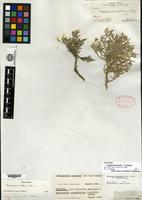
Greggia linearifolia

5 Images see all

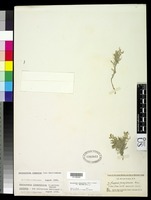
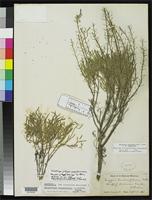
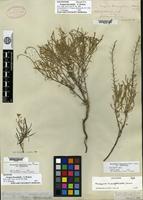
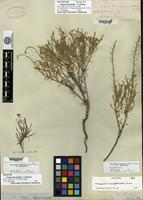
Syntype of Greggia linearifolia Watson, S. 1883 [family BRASSICACEAE]
Isolectotype of Greggia linearifolia Watson, S. 1883 [family BRASSICACEAE]
Syntype of Greggia linearifolia S. Watson [family BRASSICACEAE]
Lectotype of Greggia linearifolia S. Watson [family BRASSICACEAE]
Syntype of Greggia linearifolia S. Watson [family BRASSICACEAE]
Previous
Next

Name

Identification
Greggia linearifolia S. Watson [family BRASSICACEAE ] (stored under name); Verified by S. Watson, 1882 Nerisyrenia linearifolia (S. Watson) Greene [family BRASSICACEAE ] Verified by R. C. Rollins, 1939 Greggia linearifolia S. Watson [family BRASSICACEAE ] Verified by S. Watson, Nerisyrenia linearifolia (S. Watson) Greene [family BRASSICACEAE ] Verified by J. D. Bacon, 1975
Related name
  • Nerisyrenia castillonii
  • Greggia camporum
  • Greggia linearifolia
  • Nerisyrenia camporum
  • Nerisyrenia linearifolia

Flora

Entry for Nerisyrenia linearifolia (S. Watson) Greene [family CRUCIFERAE]
Herbarium
Flora of North America (FNA)
Collection
Flora of North America
Resource Type
Reference Sources
Entry From
Flora of North America, Vol 7,
Names
Nerisyrenia linearifolia (S. Watson) Greene [family CRUCIFERAE], Pittonia, 4: 225. 1900
Greggia linearifolia S. Watson [family ], Proc. Amer. Acad. Arts, 18: 191. 1883
Greggia camporum A. Gray var. angustifolia J. M. Coulter [family ]
Greggia camporum var. linearifolia (S. Watson) M. E. Jones [family ]
Parrasia linearifolia (S. Watson) Greene [family CRUCIFERAE]
Treatment Author(s)
Ihsan A. Al-Shehbaz
Information
Plants with woody caudex; moderately to densely pubescent. Stems (0.5–)1–4 dm, woody proximally, densely to moderately pubescent. Cauline leaves sessile or nearly so; blade linear to linear-oblanceolate, 1.5–7 cm × 1–4.5 mm, (fleshy), base attenuate, margins usually entire, rarely dentate, apex acute to obtuse. Racemes to 3.5 dm in fruit. Fruiting pedicels 0.6–1.4 cm, densely pubescent. Flowers: sepals broadly lanceolate to ovate, 4.8–7.5 × 1–2 mm; petals obovate to spatulate, 8–12(–13) × 5–8.5 mm, (often flattened), claw to 2 mm, (margin dentate); filaments 4–6 mm; anthers 2.5–3.5 mm. Fruits terete to slightly angustiseptate, 0.9–3 cm × 1–2.2 mm; ovules 30–80 per ovary; style 0.9–4 mm. Seeds 0.5–0.7 × 0.4–0.5 mm. 2n = 18, 19, 20, 34, 36.
Phenology
apr-may (spring), jun-aug (summer), sep-nov (fall), dec (winter)
Altitude range
1000–1200 m;
Distribution
Mexico (Coahuila).Mexico (Nuevo León).Mexico (San Luis Potosí).Mexico (Tamaulipas).USA N.Mex.USA Tex.
Discussion
Both J. D. Bacon (1978) and R. C. Rollins (1993) recognized two weakly defined varieties of Nerisyrenia linearifolia distinguished primarily on the position of the widest portion of the fruit. Of those, var. mexicana Bacon (Coahuila, Mexico) has fruits widest near the base instead of the middle.

Related Materials

  • Terms and Conditions
  • Privacy Policy
  • Cookie Policy
  • Cookie Settings
  • Accessibility
  • Help
  • Contact Us
  • Facebook
  • Twitter
ITHAKA

JSTOR is part of ITHAKA, a not-for-profit organization helping the academic community use digital technologies to preserve the scholarly record and to advance research and teaching in sustainable ways.

©2000-2026 ITHAKA. All Rights Reserved. JSTOR®, the JSTOR logo, JPASS®, Aluka®, and ITHAKA® are registered trademarks of ITHAKA.

╳