JSTOR Global Plants Home
  • Home
  • Browse
  • About
  • Access
  • Account
    • Saved Items
    • Profile
  • Log in

Global Plants

Skip to Main Content
  • JSTOR Global Plants Home
  • Global Plants

    • Browse
    • About
    • Access
    • Account
      • Saved Items
      • Profile
Log in
  • Browse
  • About
  • Access
  • Account
    • Saved Items
    • Profile
Advanced Search

Compilation
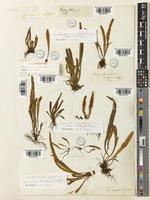
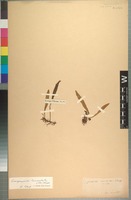
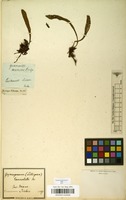
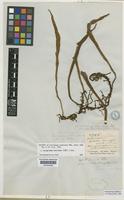
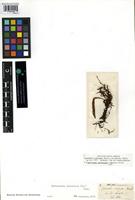
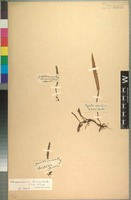
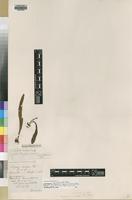
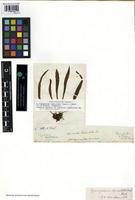
Grammitis lanceolata

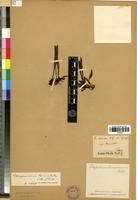
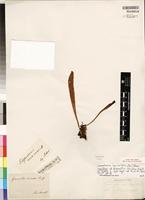
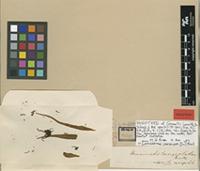
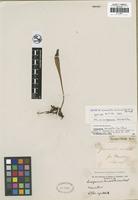
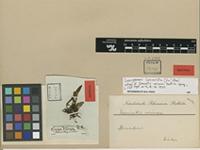
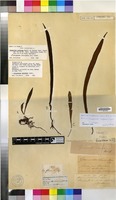
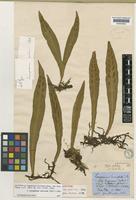
15 Images see all

Grammitis ciliata Colenso [family GRAMMITIDACEAE]
Type of Grammitis coriacea Kaulf. [family GRAMMITIDACEAE]
Type of Grammitis coriacea Kaulf. ex Spreng. [family GRAMMITIDACEAE]
Isotype of Selliguea mexicana Fée [family POLYPODIACEAE]
Isotype of Grammitis coriacea Kaulf. ex Spreng. [family PTERIDOPHYTA]
Isotype of Loxogramme lanceolata (Sw.) C. Presl [family POLYPODIACEAE]
Holotype of Grammitis lanceolata Sw. [family LOXOGRAMMACEAE]
Isotype of Grammitis coriacea Kaulf. ex Spreng. [family POLYPODIACEAE]
Type of Grammitis coriacea Kaulf. [family GRAMMITIDACEAE]
Type of Grammitis coriacea Kaulf. ex Spreng. [family UNKNOWN]
Isotype of Grammitis coriacea Kaulf. ex Spreng. [family POLYPODIACEAE]
Isotype of Grammitis coriacea Kaulf. ex Spreng. [family LOXOGRAMMACEAE]
Holotype of Grammitis coriacea Kaulf. ex Spreng. [family PTERIDOPHYTA]
Loxogramme salvinii (Hook.) Maxon [family POLYPODIACEAE]
Previous
Next

Name

Identification
Loxogramme mexicana (Fée) C.Chr. [family POLYPODIACEAE ] (stored under name); Verified by Price, M.G., Grammitis elongata Sw. [family GRAMMITIDACEAE ] Isotype of Selliguea mexicana Fée [family POLYPODIACEAE ] Verified by Price, M.G., Antrophyum falcatum Mart. & Gal.Mem. [family VITTARIACEAE ] Grammitis lanceolata Schkuhr [family GRAMMITIDACEAE ]
Related name
  • Grammitis lanceolata
  • Selliguea mexicana
  • Loxogramme lanceolata
  • Antrophyum falcatum
  • Loxogramme mexicana
  • Grammitis elongata
Common name
  • Star-scaled fern, Flora of North America Vol. 2

Flora

Entry for Pleopeltis astrolepis (Liebmann) E. Fournier [family POLYPODIACEAE]
Herbarium
Flora of North America (FNA)
Collection
Flora of North America
Resource Type
Reference Sources
Entry From
Flora of North America, Vol 2,
Names
Pleopeltis astrolepis (Liebmann) E. Fournier [family POLYPODIACEAE], Mexic. Pl., 1: 87. 1872
Polypodium astrolepis Liebmann [family POLYPODIACEAE], Kongel. Danske Vidensk. Selsk. Skr., Naturvidensk. Math. Afd., ser., 5, 1: 185. 1849
Grammitis elongata Swartz (not Polypodium elongatum Aiton) [family GRAMMITIDACEAE]
Grammitis lanceolata Schkuhr [family GRAMMITIDACEAE]
Grammitis revoluta Sprengel ex Willdenow [family GRAMMITIDACEAE]
Pleopeltis revoluta (Sprengel ex Willdenow) A. R. Smith [family POLYPODIACEAE]
Treatment Author(s)
Elisabeth G. Andrews
Michael D. Windham
Information
Stems long-creeping, branched, ca. 1 mm diam.; scales round to ovate-lanceolate, centrally clathrate with cell luminae clear, pubescent, hairs reddish brown. Leaves to 20 cm, weakly hygroscopic. Petiole conspicuously flattened, sparsely scaly; scales rarely overlapping, margins fringed. Blade linear-elliptic, simple, to 2 cm wide, margins entire, moderately scaly abaxially, sparsely scaly adaxially; scales bicolored, mostly round, less than 0.5 mm wide, centers brown, clathrate, margins transparent, deeply fringed. Venation complexly anastomosing, fertile areoles with several included veinlets. Sori oval to oblong, discrete or often confluent, surficial to shallowly embossed, soral scales attached to receptacle. Spores shallowly and irregularly papillate to verrucose, ca. 58 µm. 2 n = 136.
Altitude range
0 m
Distribution
MexicoWest IndiesCentral AmericaSouth America.USA Fla.
Discussion
Pleopeltis astrolepis is a common species in tropical America, including the West Indies. The only known North American locality, in Broward County, Florida, was discovered in 1977, and (in 1992) the plants are in danger of extirpation from development.

Related Materials

  • Terms and Conditions
  • Privacy Policy
  • Cookie Policy
  • Cookie Settings
  • Accessibility
  • Help
  • Contact Us
  • Facebook
  • Twitter
ITHAKA

JSTOR is part of ITHAKA, a not-for-profit organization helping the academic community use digital technologies to preserve the scholarly record and to advance research and teaching in sustainable ways.

©2000-2026 ITHAKA. All Rights Reserved. JSTOR®, the JSTOR logo, JPASS®, Aluka®, and ITHAKA® are registered trademarks of ITHAKA.

╳