JSTOR Global Plants Home
  • Home
  • Browse
  • About
  • Access
  • Account
    • Saved Items
    • Profile
  • Log in

Global Plants

Skip to Main Content
  • JSTOR Global Plants Home
  • Global Plants

    • Browse
    • About
    • Access
    • Account
      • Saved Items
      • Profile
Log in
  • Browse
  • About
  • Access
  • Account
    • Saved Items
    • Profile
Advanced Search

Compilation
Gossypianthus tenuiflorus

3 Images see all

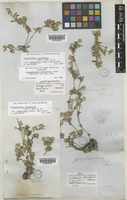
Gossypianthus lanuginosus (Poir.) Moq. [family AMARANTHACEAE]
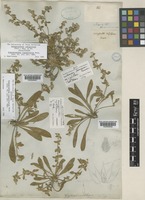
Isolectotype of Gossypianthus rigidiflorus Hook. [family AMARANTHACEAE]
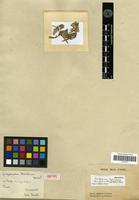
Isotype of Gossypianthus tenuiflorus Hook. [family AMARANTHACEAE]
Previous
Next

Name

Identification
Guilleminea lanuginosa (Poir.) Hook. [family AMARANTHACEAE ] (stored under name); Verified by Mears, J.A., Isotype of Gossypianthus tenuiflorus Hook. [family AMARANTHACEAE ] Verified by Not on sheet,
Related name
  • Gossypianthus tenuiflorus
  • Guilleminea lanuginosa

Flora

Entry for Gossypianthus lanuginosus (Poiret) Moquin-Tandon var. tenuiflorus (Hooker) Henrickson [family AMARANTHACEAE]
Herbarium
Flora of North America (FNA)
Collection
Flora of North America
Resource Type
Reference Sources
Entry From
Flora of North America, Vol 4,
Names
Gossypianthus lanuginosus (Poiret) Moquin-Tandon var. tenuiflorus (Hooker) Henrickson [family AMARANTHACEAE], Sida, 12: 321. 1987
Gossypianthus tenuiflorus Hooker [family AMARANTHACEAE], Icon. Pl., 3: plate 251. 1840
Guilleminea lanuginosa (Poiret) Bentham & Hooker f. var. tenuiflora (Hooker) Mears [family AMARANTHACEAE]
Treatment Author(s)
Steven E. Clemants
Information
Basal leaf blades linear to linear-oblanceolate, (1.8–)3.5–9.7 × (0.2–)0.3–0.6(–0.9) cm, glabrous. Cauline leaf blades oblong-elliptic to oblong, 1–1.7(–2) × (0.1–)0.2–0.5(–0.8) cm, glabrous throughout or with scattered, marginal hairs near base.
Phenology
jun-aug (summer), sep-nov (fall)
Altitude range
0–400 m;
Distribution
USA Ark.USA Okla.USA Tex.
Discussion
Gossypianthus lanuginosus var. tenuiflorus has been reported also from Louisiana, but I have seen no supporting specimens.

Related Materials

  • Terms and Conditions
  • Privacy Policy
  • Cookie Policy
  • Cookie Settings
  • Accessibility
  • Help
  • Contact Us
  • Facebook
  • Twitter
ITHAKA

JSTOR is part of ITHAKA, a not-for-profit organization helping the academic community use digital technologies to preserve the scholarly record and to advance research and teaching in sustainable ways.

©2000-2026 ITHAKA. All Rights Reserved. JSTOR®, the JSTOR logo, JPASS®, Aluka®, and ITHAKA® are registered trademarks of ITHAKA.

╳