JSTOR Global Plants Home
  • Home
  • Browse
  • About
  • Access
  • Account
    • Saved Items
    • Profile
  • Log in

Global Plants

Skip to Main Content
  • JSTOR Global Plants Home
  • Global Plants

    • Browse
    • About
    • Access
    • Account
      • Saved Items
      • Profile
Log in
  • Browse
  • About
  • Access
  • Account
    • Saved Items
    • Profile
Advanced Search

Compilation
Gormania laxa

3 Images see all

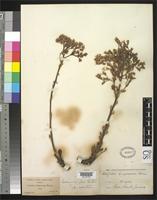
Isotype of Gormania laxa Britton, N.L. 1903 [family CRASSULACEAE]
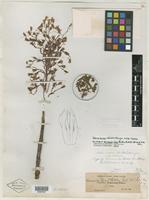
Holotype of Gormania laxa Britton [family CRASSULACEAE]
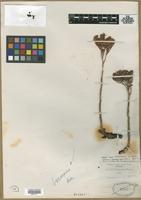
Type? of Cotyledon oregonensis S. Watson [family CRASSULACEAE]
Previous
Next

Name

Identification
Gormania laxa Britton [family CRASSULACEAE ] (stored under name); Verified by Not on sheet,
Related name
  • Sedum laxum
  • Cotyledon oregonensis
  • Gormania laxa

Flora

Entry for Sedum laxum (Britton) A. Berger [family CRASSULACEAE]
Herbarium
Flora of North America (FNA)
Collection
Flora of North America
Resource Type
Reference Sources
Entry From
Flora of North America, Vol 8,
Names
Sedum laxum (Britton) A. Berger [family CRASSULACEAE], in H. G. A. Engler et al., Nat. Pflanzenfam. ed., 2, 18a: 451. 1930,
Gormania laxa Britton [family CRASSULACEAE], in N. L. Britton and J. N. Rose, New N. Amer. Crassul., 29. 1903
Treatment Author(s)
Hideaki Ohba
Information
Herbs, perennial, cespitose or not, glabrous. Stems root-stocks, ascending, much-branched, bearing rosettes. Leaves alternate, erect to spreading, sessile; blade green, glaucous or not, not pruinose, oblanceolate, spatulate, or obovate, subterete or somewhat flattened, 10–50 × (4.5–)6–33 mm, base not spurred, not scarious, apex truncate to rounded or obtuse, emarginate or barely notched. Flowering shoots erect or decumbent, simple or branched, 4–30(–40) cm; leaf blades oblanceolate, spatulate, obovate, or suborbiculate, base not spurred; offsets not formed. Inflorescences elongate, paniculate cymes, 12–80-flowered, monochasially 3+-branched; branches not recurved, 2-forked; bracts similar to leaves, smaller. Pedicels 0.6–6.3 mm. Flowers 5-merous; sepals erect, (closely appressed to corolla tube), slightly connate basally, pale green, ovate or lanceolate, equal, (2–)2.6–5.1 × 2 mm, apex acute or subacute, (rarely obtuse in var. flavidum); petals basally erect, divergent in distal 1/2, connate basally, pink, pinkish white, or white to yellowish white, lanceolate-oblong, oblanceolate-oblong, or elliptic-oblong, not carinate, 4–11 mm, apex obtuse, shortly mucronate or aristate; filaments white, greenish white, or pink; anthers red, reddish purple, red-brown, or yellow; nectar scales white, yellow, or pink, reniform or transversely oblong. Carpels erect in fruit, distinct, brown.
Distribution
w United States.
Discussion
Sedum laxum is unusual in forming offsets in axils of rosette leaves rather than on a rootstock or creeping stem.

Related Materials

  • Terms and Conditions
  • Privacy Policy
  • Cookie Policy
  • Cookie Settings
  • Accessibility
  • Help
  • Contact Us
  • Facebook
  • Twitter
ITHAKA

JSTOR is part of ITHAKA, a not-for-profit organization helping the academic community use digital technologies to preserve the scholarly record and to advance research and teaching in sustainable ways.

©2000-2026 ITHAKA. All Rights Reserved. JSTOR®, the JSTOR logo, JPASS®, Aluka®, and ITHAKA® are registered trademarks of ITHAKA.

╳