JSTOR Global Plants Home
  • Home
  • Browse
  • About
  • Access
  • Account
    • Saved Items
    • Profile
  • Log in

Global Plants

Skip to Main Content
  • JSTOR Global Plants Home
  • Global Plants

    • Browse
    • About
    • Access
    • Account
      • Saved Items
      • Profile
Log in
  • Browse
  • About
  • Access
  • Account
    • Saved Items
    • Profile
Advanced Search

Compilation
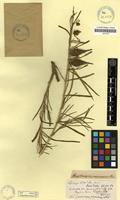
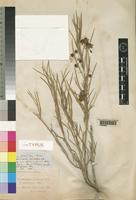
Gomphocarpus purpurascens

6 Images see all

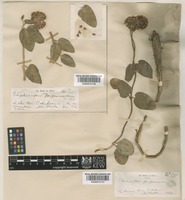
Asclepias solanoana Woodson [family ASCLEPIADACEAE]
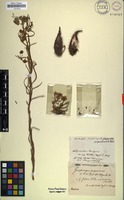
Type of Asclepias albida N.E.Br. [family ASCLEPIADACEAE]
Holotype of Gomphocarpus purpurascens A. Gray [family ASCLEPIADACEAE]
Filed as Gomphocarpus purpurascens A.Rich. [family APOCYNACEAE]
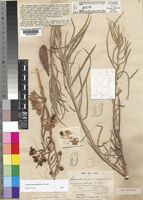
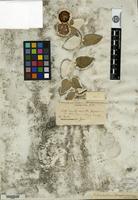
Isotype of Gomphocarpus purpurascens A.Rich. var. purpureus Schweinf. [family ASCLEPIADACEAE]
Isotype of Gomphocarpus purpurascens A.Rich. [family ASCLEPIADACEAE]
Previous
Next

Name

Identification
Isotype of Gomphocarpus purpurascens A.Rich. [family ASCLEPIADACEAE ] (stored under name); Verified by Data not digitized, Isotype of Gomphocarpus fruticosus (L.) W.T.Aiton [family ASCLEPIADACEAE ] Verified by Data not digitized,
Related name
  • Asclepias albida
  • Schizonotus purpurascens
  • Gomphocarpus fruticosus
  • Gomphocarpus abyssinicus
  • Gomphocarpus purpurascens

Flora

Entry for ASCLEPIAS pubiseta N. E. Br. [family ASCLEPIADACEAE]
Herbarium
Royal Botanic Gardens, Kew (K)
Collection
Flora of Tropical Africa
Resource Type
Reference Sources
Entry From
Flora of Tropical Africa, Vol 4, Part 1, page 231, (1904) Author: (By N. E. Brown.)
Names
ASCLEPIAS pubiseta N. E. Br. [family ASCLEPIADACEAE]
Gomphocarpus purpurascens A. Rich. [family ASCLEPIADACEAE], Tent. Fl. Abyss, ii. 38, t. 69; K. Schum. in Engl. & Prantl, Pflanzenfam. iv. ii. 236.
Gomphocarpus fruticosus Schweinf. var. purpureus [family ASCLEPIADACEAE], Beitr. Fl. Aethiop. 129; Engl. Hochgebirgsfl. Trop. Afr. 341; Penzig in Atti Congr. Bot. Internaz. 1892, 349.
Information
A branching shrub; branches purplish, minutely tomentose. Leaves ascending or spreading; petiole 1/2–2 lin. long; blade 2 1/2–6 in. long, 1–2 1/2 lin. broad, linear, acute, mucronate, glabrous on both sides or with the midrib puberulous beneath, and sometimes sparsely and minutely puberulous above. Umbels pedunculate, 5–7-flowered, lateral at the nodes; peduncles 1/2–1 1/4 in. long, puberulous; pedicels 1/2–1 in. long, puberulous. Sepals 2–3 lin. long, 3/4–1 lin. broad, lanceolate, acuminate. Corolla about 1 in. in diam., rotate, 5-lobed nearly to the base; lobes elliptic-lanceolate, acute, purplish outside, pale greenish within. Coronal-lobes arising much above the base of the staminal-column and reaching to its top, complicate, oblong in side view, truncate at the base and apex, with horizontally reflexed teeth from the apices of the inflexed sides, half as long as the upper margin of the lobe, no tooth within. Follicles 2 1/2–3 in. long, 3/4 in. thick, ovoid-lanceolate, attenuate into a beak, setose, pubescent or subtomentose all over, including the setæ, with spreading white hairs, at least when young.
Distribution
Eritrea Nile Land among Olive bushes from Geleb to Bambit Valley and on Lalamba Mountain, near Keren, ex Penzig ,Abyssinia Nile Land Chelicut, Petit (ex Richard); Tigre; between Mai Gouagoua and Debradina, Dillon & Petit, 24! Shireh Province, Dillon & Petit! Samen; near Jaja, Schimper, 1854 (ex Engler), Wadela district, Steudner, 758, 759 (ex Engler), and without precise locality, Schimper, 79!
Notes
This is a somewhat imperfectly known species, of which I have not seen flowers and have compiled my account of them from Richard's description and figure. German authors have placed it under A. fruticosa, Linn., from which it is certainly very distinct and more nearly resembles A. flavida, N. E. Br., from which the very hairy bristles on the fruit will at once distinguish it. There is already an A. purpurascens, Linn.

Related Materials

  • Terms and Conditions
  • Privacy Policy
  • Cookie Policy
  • Cookie Settings
  • Accessibility
  • Help
  • Contact Us
  • Facebook
  • Twitter
ITHAKA

JSTOR is part of ITHAKA, a not-for-profit organization helping the academic community use digital technologies to preserve the scholarly record and to advance research and teaching in sustainable ways.

©2000-2026 ITHAKA. All Rights Reserved. JSTOR®, the JSTOR logo, JPASS®, Aluka®, and ITHAKA® are registered trademarks of ITHAKA.

╳